Home
Department Of Physics text logo
  • Research
    • Our research
    • Our research groups
    • Our research in action
    • Research funding support
    • Summer internships for undergraduates
  • Study
    • Undergraduates
    • Postgraduates
  • Engage
    • For young people
    • For teachers
    • For the public
    • For alumni
    • For business
  • Support
Menu
CMP
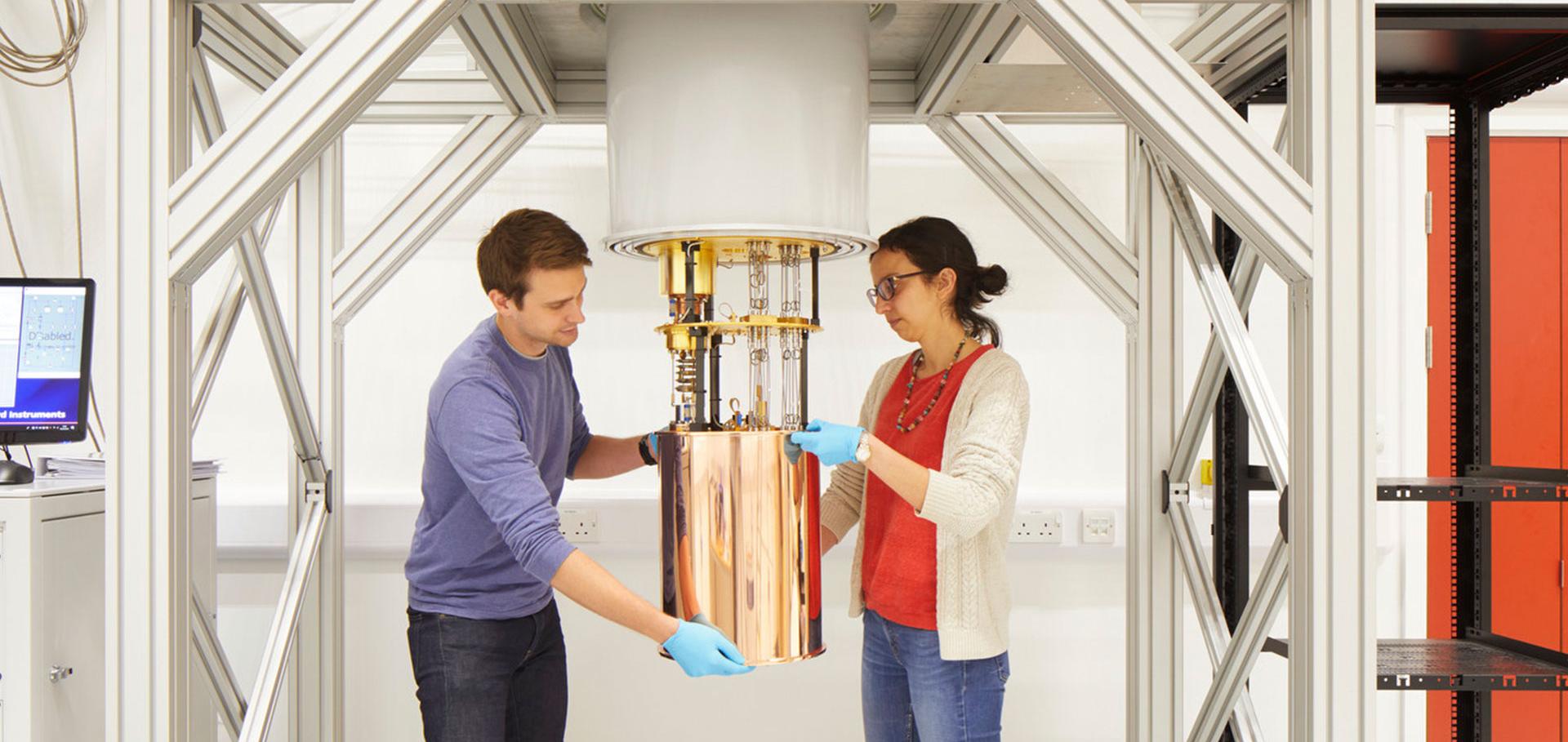
Credit: Jack Hobhouse

Roger Ward

Retired

Sub department

  • Condensed Matter Physics
Roger.Ward@physics.ox.ac.uk
Clarendon Laboratory, room 164
  • About
  • Publications

Spin configurations and negative coercivity in epitaxially grown DyFe2/YFe2 superlattices

Journal of Applied Physics 89:11 II (2001) 6828-6830

Authors:

SN Gordeev, JML Beaujour, GJ Bowden, PAJ De Groot, BD Rainford, RCC Ward, MR Wells

Abstract:

Molecular beam epitaxial methods have been used to grow single crystal Laves phase DyFe2/YFe2 superlattice samples with a (110) growth direction. In particular, the magnetic properties of the YFe2 dominated multilayer samples [wDyFe2/4wYFe2]XN with w=20, 30, 40, 45, 50, and 55 Å are presented and discussed. In principle, the multilayer films should possess similar magnetic properties because they are all nominally Dy0.2Y0.8Fe2. However, it is shown that their magnetic properties depend strongly on the thickness of the DyFe2 layers w. Those films with w≥45 Å possess negative coercivities, while those with w≤40 Å are positive. It is argued that this behavior can be understood in terms of a strong increase of the intrinsic coercivity of the DyFe2/YFe2 superlattice, taken as a whole, as w is reduced. For w≤40 Å almost none of the DyFe2 moments can be flipped over in the available field range (12 T). © 2001 American Institute of Physics.
More details from the publisher
More details

Magnetoelastic stresses in rare-earth thin films and superlattices

Low Temperature Physics AIP Publishing 27:4 (2001) 249-265

Authors:

JI Arnaudas, M Ciria, C de la Fuente, L Benito, A del Moral, RCC Ward, MR Wells, C Dufour, K Dumesnil, A Mougin
More details from the publisher

Negative coercivity in epitaxially grown (110) DyFe2/YFe2 superlattices

Applied Physics Letters 78:7 (2001) 964-966

Authors:

JML Beaujour, SN Gordeev, GJ Bowden, PAJ De Groot, BD Rainford, RCC Ward, MR Wells

Abstract:

Molecular beam epitaxial methods have been used to grow single crystal Laves phase DyFe2/YFe2 superlattice samples with a (110) growth direction. Detailed magnetization curves have been obtained for YFe2 dominated multilayer samples [wDyFe2/4wYFe2]× 16 with w=45, 50, and 55 Å. In particular, it is shown that the formation of magnetic exchange springs in the magnetically soft YFe2 layers, can be used to engineer multilayer samples with a negative coercivity. Further, by using asymmetric field cycling procedures, we have investigated the irreversible parts of the M-B loop, associated with the switching of the DyFe2 multilayers. © 2001 American Institute of Physics.
More details from the publisher
More details

Competing commensurate and incommensurate magnetic structures in dhcp Ce/Nd superlattices

Materials Science Forum 373-376 (2001) 205-208

Authors:

PS Clegg, JP Goff, GJ McIntyre, RCC Ward, MR Wells

Abstract:

The chemical and magnetic structure of Cerium/Neodymium superlattices grown by molecular-beam epitaxy have been determined using x-ray and neutron diffraction techniques. The x-ray studies show that both constituents adopt the dhcp structure, and that the stacking sequence is coherent over many bilayer repeats. The dhcp structure remains intact down to T ∼ 2K; these are the first measurements of magnetic ordering in single-crystal dhcp Ce. The magnetic structure of the samples with thicker Nd layers exhibit incommensurate order and ferromagnetism on separate sublattices in a similar manner to Nd under applied pressure. The superlattice with thickest Ce layers has an incommensurate magnetic structure similar to that predicted for bulk dhcp Ce. These two types of magnetic ordering appear to be mutually exclusive.
More details from the publisher
More details

Effect of exchange springs on the coercivity of DyFe2-YFe 2 superlattices

Journal of Magnetism and Magnetic Materials 226-230:PART II (2001) 1714-1716

Authors:

JML Beaujour, GJ Bowden, S Gordeev, PAJ De Groot, BD Rainford, M Sawicki, RCC Ward, MR Wells

Abstract:

The coercivity of MBE-grown Laves-phase DyFe2-YFe2 thin-layered (≤ 50 Å) superlattice samples, with a (110) growth direction, can be varied by adjusting the relative thickness of the YFe 2 and DyFe2 layers. However, for sufficiently thick layers, the coercivity is found to be dependent on the thickness of the YFe 2 layers, even when the ratio of DyFe2/YFe2 is fixed. This feature is illustrated using the superlattice films [wDyFe 2/wYFe2] x 40, with, w = 75, 100 and 150 A. The underlying reason for the decrease in coercivity with increasing width w, is traced to the action of the magnetic exchange springs in the YFe2 layers. © 2001 Elsevier Science B.V. All rights reserved.
More details from the publisher
More details

Pagination

  • First page First
  • Previous page Prev
  • …
  • Page 18
  • Page 19
  • Page 20
  • Page 21
  • Current page 22
  • Page 23
  • Page 24
  • Page 25
  • Page 26
  • …
  • Next page Next
  • Last page Last

Footer Menu

  • Contact us
  • Giving to the Dept of Physics
  • Work with us
  • Media

User account menu

  • Log in

Follow us

FIND US

Clarendon Laboratory,

Parks Road,

Oxford,

OX1 3PU

CONTACT US

Tel: +44(0)1865272200

University of Oxfrod logo Department Of Physics text logo
IOP Juno Champion logo Athena Swan Silver Award logo

© University of Oxford - Department of Physics

Cookies | Privacy policy | Accessibility statement

Built by: Versantus

  • Home
  • Research
  • Study
  • Engage
  • Our people
  • News & Comment
  • Events
  • Our facilities & services
  • About us
  • Giving to Physics
  • Current students
  • Staff intranet