

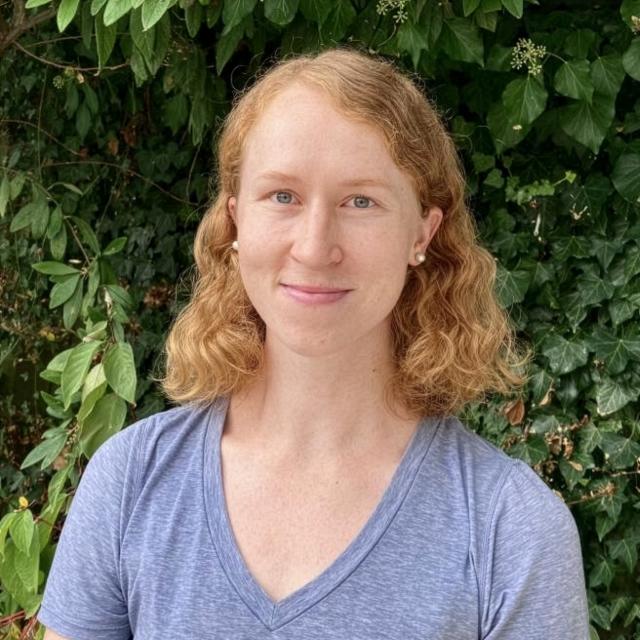
Greta Miller successfully defended her DPhil
Greta Miller successfully passes her DPhil viva
Congratulations to Greta Miller who successfully defended her thesis: "Modeling the Uncertainty of Atmospheric Convection Triggering in Climate Models"
Greta's research tackled one of the biggest challenges in weather and climate modelling: predicting when atmospheric convection—the process responsible for clouds and rainfall—will begin. Because convection happens on scales much smaller than those resolved by weather and climate models, deciding when to trigger it remains a major source of uncertainty.
In her thesis, Greta developed a probabilistic machine learning parameterisation of the convective trigger, learning directly from observations while explicitly representing the uncertainty in whether convection will occur.
As well as improving prediction, Greta used her machine learning model to better understand the physical drivers of convection around the world. Her work produced the first global maps of the predictive uncertainty of convective initiation, revealing where large-scale atmospheric conditions make convection relatively predictable and where its onset is inherently more uncertain.
Finally, Greta implemented the new stochastic convection trigger in the NCAR Community Atmosphere Model (CAM). She showed that it improves the representation of convection triggering, particularly over mountainous regions. It also led to improvements in simulated extreme precipitation.
Greta's work demonstrates how machine learning can both improve the representation of key atmospheric processes and deepen our understanding of the physical mechanisms behind them.
Thanks to Cyril Morcrette (UK Met Office) and Peter Read for acting as examiners.
Congratulations again, Dr Greta Miller. And good luck for the next stage of your career - a postdoc at Los Alamos National Laboratory, NM, USA.