


Breakthrough Listen observations of interstellar object 3I/ATLAS
The interstellar object 3I/ATLAS was discovered on July 1, 2025. There is currently no evidence to suggest that it is anything other than a natural astrophysical object. However, given the small number of such objects known (only three to date), and the plausibility of interstellar probes as a technosignature (a sign of extraterrestrial intelligence), (e.g. Freitas & Valdes 1985), thorough study is warranted (see Davenport et al. 2025).
The Breakthrough Listen Initiative, together with its network of collaborators, has undertaken observations of 3I/ATLAS using a variety of facilities worldwide, starting shortly after its discovery, and continuing through its closest approach to Earth. No technosignatures have been detected in any of these searches.
Allen Telescope Array
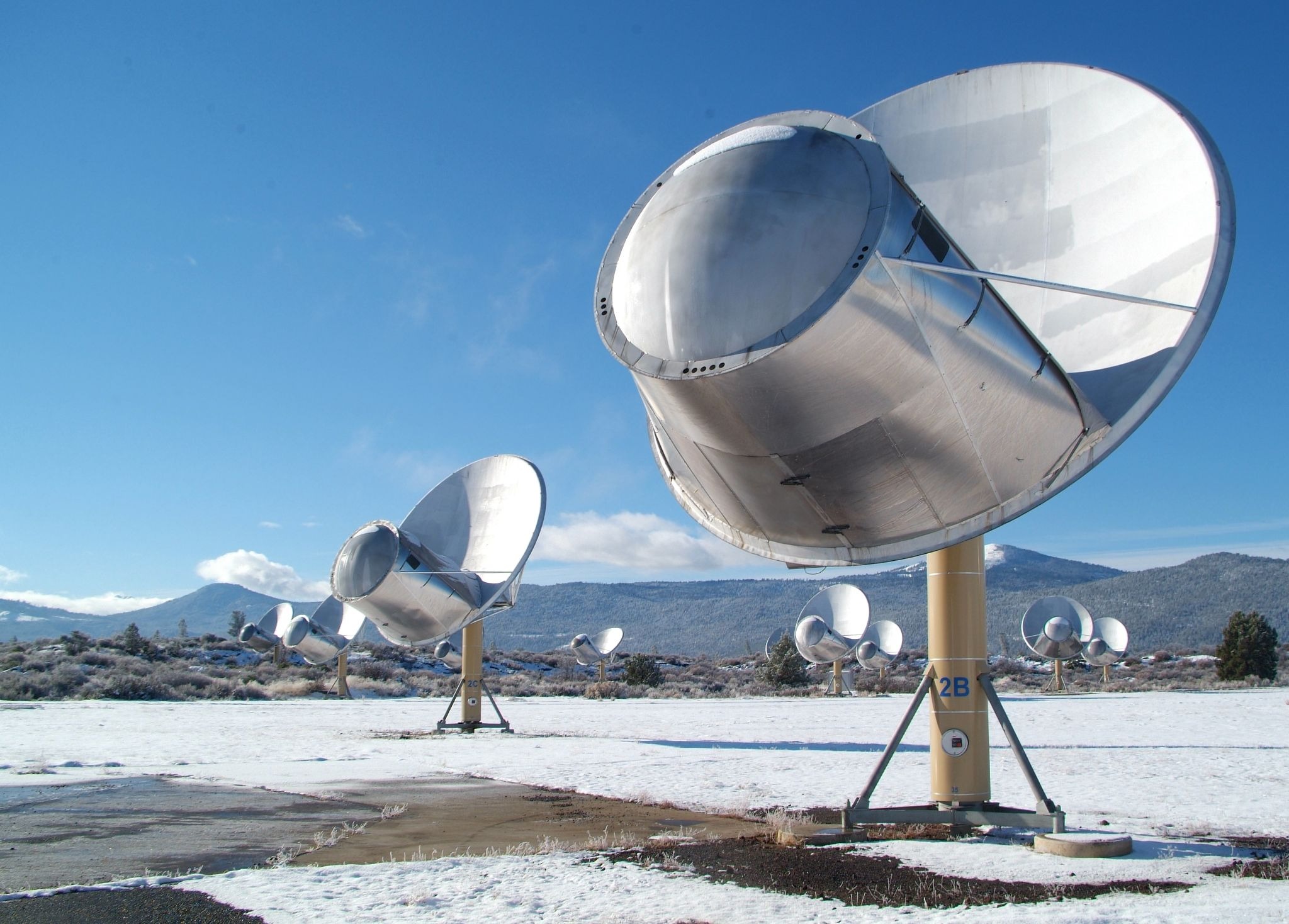
The Allen Telescope Array (photo: Steve Croft / Breakthrough Listen)
Observations of 3I/ATLAS using the Allen Telescope Array were undertaken in early July, 2025, within a few days of discovery. Data were acquired across frequencies of 1 - 9 GHz, reaching sensitivities between 10 - 110 W equivalent isotropic radiated power (EIRP). A publication (Sheikh et al. 2025) reporting the results of the analysis has been submitted for peer review; a preprint is available here.
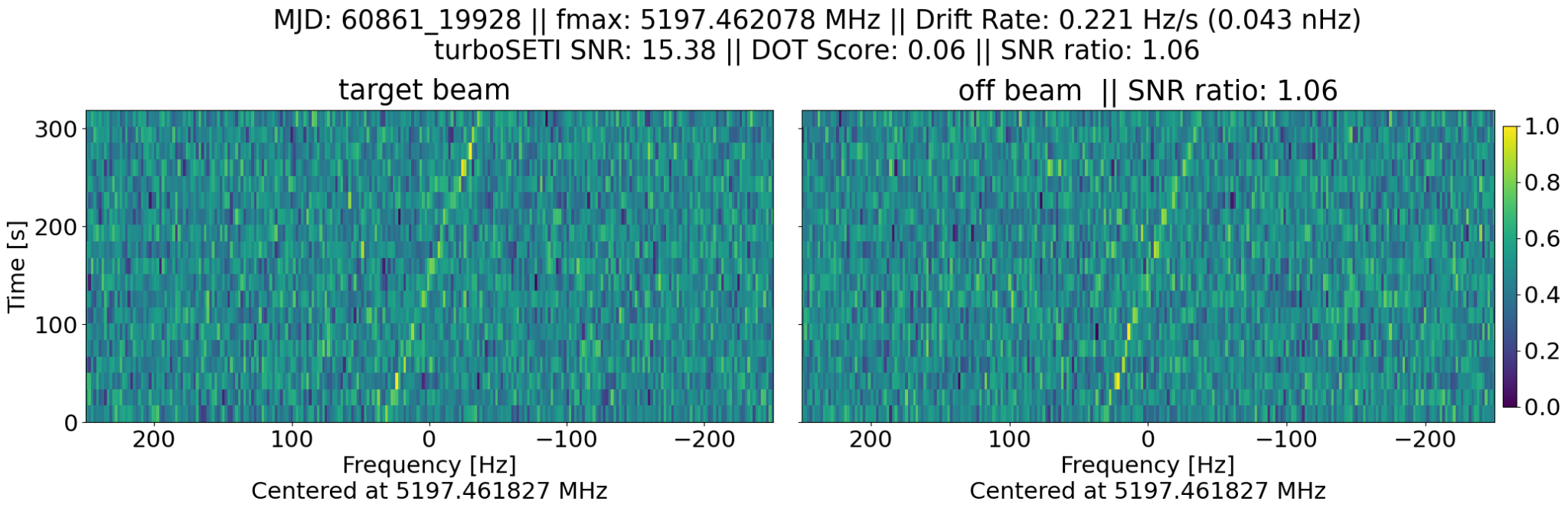
Radio spectrograms from our ATA observations. The diagonal stripe at the center is visible in observations of 3I/ATLAS as well as in off-target observations - characteristics expected from local (human) sources of interference - and hence can be rejected as a candidate technosignature (image: Sheikh et al. 2025).
MeerKAT
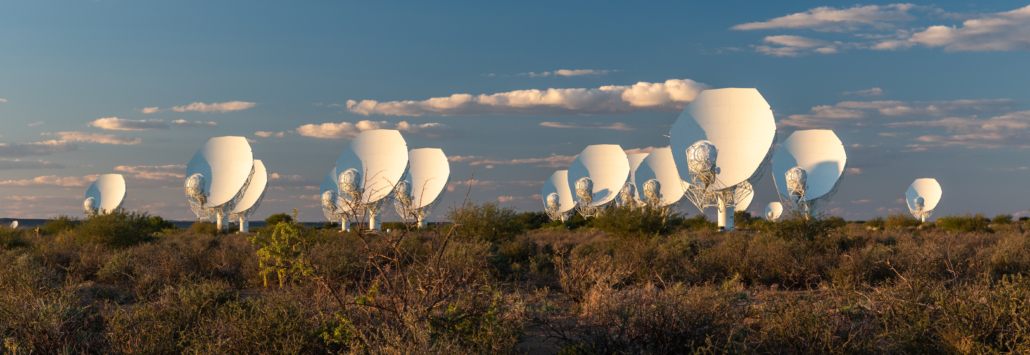
The MeerKAT array (photo: South African Radio Astronomy Observatory (SARAO))
3I/ATLAS was also observed by the MeerKAT telescope, which detected signatures of hydroxyl, which is expected as sunlight breaks down water ice in the comet into its chemical constituents. In parallel with these observations, the BLUSE (Breakthrough Listen User Supplied Equipment) computer at MeerKAT searched the data for technosignatures. A press release is available along with an Astronomer’s Telegram reporting the results of the search. No artificial radio emission was detected at a limit of 0.17 W over the 900 - 1670 MHz range, approximately equivalent to the power output of a mobile phone handset at the distance to 3I/ATLAS.
Rubin
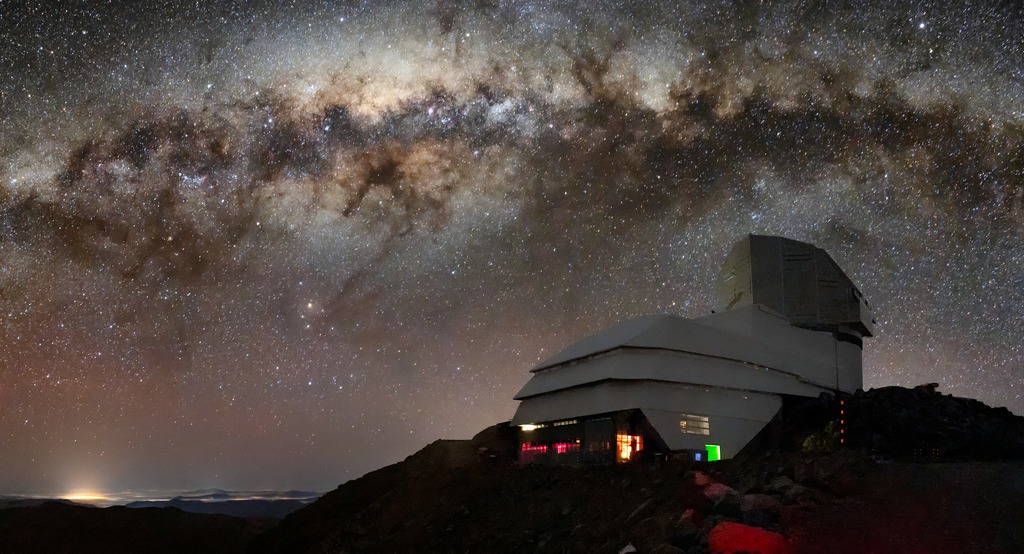
The Vera C. Rubin Observatory (photo: Rubin Observatory)
Breakthrough Listen also participated in optical observations of 3I/ATLAS with the Vera C. Rubin Observatory (reported by Chandler et al. 2025), and our partners continue to monitor it with optical and infrared spectroscopy. These data are used to study the chemistry of the cometary ejecta, and constrain any transient laser signals. No artificial emission was detected.
Parkes
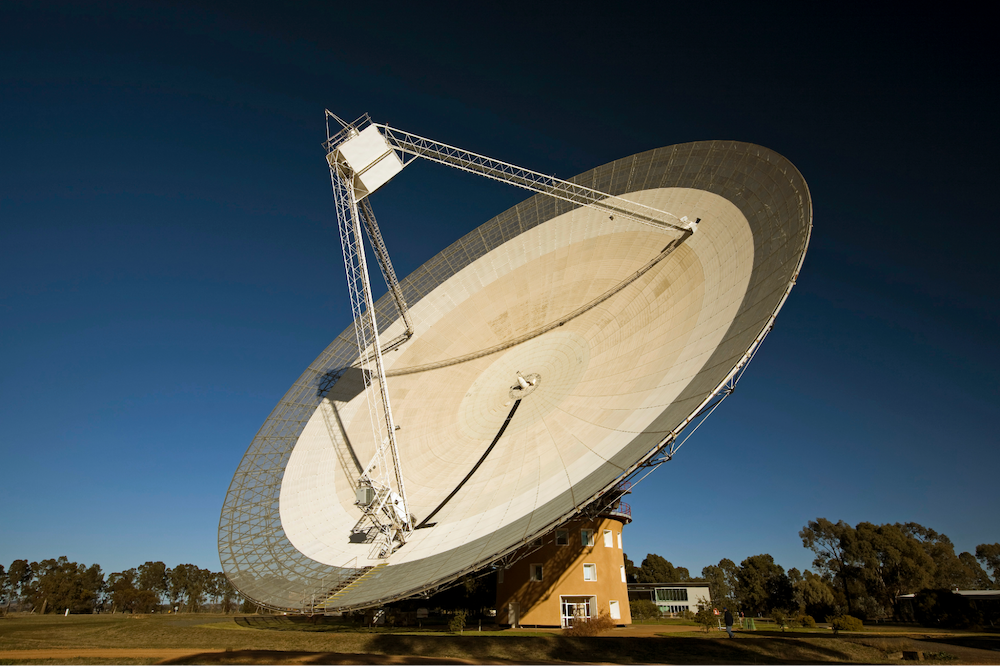
The “Murriyang” Parkes Radio Telescope (photo: CSIRO)
Observations were performed with the Ultra-Wideband Low receiver (sensitive from 704 to 4032 MHz) on the 64-meter Murriyang radio telescope at the Parkes Observatory. Data were recorded on July 31, 2025, September 12, 2025, and October 5, 2025. Of our three Murriyang sessions 3I/ATLAS was closest to Earth on October 5, 2025, with our observations having an expected sensitivity to transmitters with an EIRP of around 5 W. Results of the narrowband search will be posted once this has been completed.
Green Bank

The Green Bank Telescope (photo: Steve Croft / Breakthrough Listen)
On December 19, 2025, 3I/ATLAS reached its closest distance to Earth, at 1.7 AU (167 million miles). To obtain optimum sensitivity, we observed 3I/ATLAS with the largest steerable single-dish radio telescope in the world, the 100-meter Green Bank Telescope, less than 24 hours before the closest approach of 3I/ATLAS, on December 18, 2025. We used four receivers (L, S, C, and X) spanning frequencies of 1 - 12 GHz. At closest approach, the GBT is sensitive to transmitters with an EIRP of approximately 0.1 W, more sensitive than all previous observations. No artificial radio emission localized to 3I/ATLAS was detected. A paper reporting the results (Jacobson-Bell et al. 2025) has been published in Research Notes of the American Astronomical Society.
In summary, 3I/ATLAS continues to behave as expected from natural astrophysical processes. That said, it remains an extremely interesting target for observation given the overall rarity of interstellar objects. We will continue to observe 3I/ATLAS as a part of a broader strategy to thoroughly investigate all interstellar objects, consistent with our goal of conducting humanity’s most sensitive, intensive and comprehensive search for technosignatures.
Public data
Data from our radio observations require specialist software to analyze, including blimpy (loads data into Python) and turboSETI (searches the data for narrowband signals). Our data paper (Lebofsky et al. 2019) provides more information on the data format and contents for Green Bank and Parkes.
Data from the ATA are available here. Analysis is reported in a preprint by Sheikh et al. (2025).
A 90 MB gzipped JSON file containing metadata for just over 2 million hits found during observations at MeerKAT in November is available.
Data from our three Murriyang observing sessions are publicly available (in subdirectories beginning “PKS”). Each session consists of a single cadence, consisting of three repeats of a Source/Reference cycle with 5 minutes on-target per pointing. Three data products are recorded by the Breakthrough Listen backend at Murriyang, a high spectral resolution SETI product, a high time resolution pulsar product, and an intermediate (spectral line) product. Data from the first observing session is recorded in full polarization whereas subsequent observations include total intensity only.
Spectrogram data (HDF5 format) from the GBT observations are publicly available (also in SETI, pulsar, and intermediate resolution products, total intensity only). One six-scan cadence (5 minutes per pointing) is available at each of L (scans numbered 0013 - 0018), S (scans 0029 - 0034), C (scans 0045 - 0050), and X (scans 0061 - 0066) bands. Raw voltage data are in the process of being transferred from Green Bank. Analysis of the GBT data with turboSETI showed no candidate technosignatures; a technical paper has been published in Research Notes of the American Astronomical Society.
Media inquiries