Euclid: Early Release Observations – Dwarf galaxies in the Perseus galaxy cluster

Astronomy and Astrophysics 697 (2025)

Authors:

FR Marleau, JC Cuillandre, M Cantiello, D Carollo, PA Duc, R Habas, LK Hunt, P Jablonka, M Mirabile, M Mondelin, M Poulain, T Saifollahi, R Sánchez-Janssen, E Sola, M Urbano, R Zöller, M Bolzonella, A Lançon, R Laureijs, O Marchal, M Schirmer, C Stone, A Boselli, A Ferré-Mateu, NA Hatch, M Kluge, M Montes, JG Sorce, C Tortora, A Venhola, JB Golden-Marx, N Aghanim, A Amara, S Andreon, N Auricchio, C Baccigalupi, M Baldi, A Balestra, S Bardelli, P Battaglia, R Bender, C Bodendorf, E Branchini, M Brescia, J Brinchmann, S Camera, GP Candini, V Capobianco, C Carbone, J Carretero, S Casas, M Castellano, S Cavuoti, A Cimatti, G Congedo, CJ Conselice, L Conversi, Y Copin, F Courbin, HM Courtois, M Cropper, A Da Silva, H Degaudenzi, G De Lucia, AM Di Giorgio, J Dinis, M Douspis, CAJ Duncan, X Dupac, S Dusini, A Ealet, M Farina, S Farrens, S Ferriol, P Fosalba, S Fotopoulou, M Frailis, E Franceschi, M Fumana, S Galeotta, B Garilli, K George, W Gillard, B Gillis, C Giocoli, P Gómez-Alvarez, A Grazian, F Grupp, L Guzzo, M Hailey, SVH Haugan, J Hoar, H Hoekstra, W Holmes, I Hook, F Hormuth, A Hornstrup, D Hu, P Hudelot, K Jahnke

Abstract:

We make use of the unprecedented depth, spatial resolution, and field of view of the Euclid Early Release Observations (EROs) of the Perseus galaxy cluster to detect and characterise the dwarf galaxy population in this massive system. Using a dedicated annotation tool, the Euclid high-resolution VIS and combined VIS+Near Infrared Spectrometer and Photometer (NISP) colour images were visually inspected and dwarf galaxy candidates were identified. Their morphologies, the presence of nuclei, and their globular cluster (GC) richness were visually assessed richness were visually assessed, complementing an automatic detection of the GC candidates. Structural and photometric parameters, including Euclid filter colours, were extracted from two-dimensional fitting. Based on this analysis, a total of 1100 dwarf candidates were found across the image; 606 of these appear to be new identifications. The majority (96%) are classified as dwarf ellipticals, 53% are nucleated, 26% are GC-rich, and 6% show disturbed morphologies. A relatively high fraction of galaxies, 8%, are categorised as ultra diffuse galaxies. The majority of the dwarfs follow the expected scaling relations of galaxies. Globally, the GC specific frequency, SN, of the Perseus dwarf candidates is intermediate between those measured in the Virgo and Coma clusters. While the dwarf candidates with the largest GC counts are found throughout the Euclid field of view, the dwarfs located around the east–west strip, where most of the brightest cluster members are found, exhibit higher SN values on average. The spatial distribution of the dwarfs, GCs, and intracluster light show a main iso-density and isophotal centre displaced to the west of the bright galaxy light distribution. The ERO imaging of the Perseus cluster demonstrates the unique capability of Euclid to concurrently detect and characterise large samples of dwarf galaxies, their nuclei, and their GC systems, allowing us to construct a detailed picture of the formation and evolution of galaxies over a wide range of mass scales and environments.

Euclid: Early Release Observations – The intracluster light and intracluster globular clusters of the Perseus cluster

Astronomy & Astrophysics EDP Sciences 697 (2025) a13

Authors:

M Kluge, NA Hatch, M Montes, JB Golden-Marx, AH Gonzalez, J-C Cuillandre, M Bolzonella, A Lançon, R Laureijs, T Saifollahi, M Schirmer, C Stone, A Boselli, M Cantiello, JG Sorce, FR Marleau, P-A Duc, E Sola, M Urbano, SL Ahad, YM Bahé, SP Bamford, C Bellhouse, F Buitrago, P Dimauro, F Durret, A Ellien, Y Jimenez-Teja, E Slezak, N Aghanim, B Altieri, S Andreon, N Auricchio, M Baldi, A Balestra, S Bardelli, R Bender, D Bonino, E Branchini, M Brescia, J Brinchmann, S Camera, GP Candini, V Capobianco, C Carbone, J Carretero, S Casas, M Castellano, S Cavuoti, A Cimatti, G Congedo, CJ Conselice, L Conversi, Y Copin, F Courbin, HM Courtois, M Cropper, A Da Silva, H Degaudenzi, J Dinis, CAJ Duncan, X Dupac, S Dusini, M Farina, S Farrens, S Ferriol, P Fosalba, M Frailis, E Franceschi, M Fumana, S Galeotta, B Garilli, W Gillard, B Gillis, C Giocoli, P Gómez-Alvarez, BR Granett, A Grazian, F Grupp, L Guzzo, SVH Haugan, J Hoar, H Hoekstra, W Holmes, I Hook, F Hormuth, A Hornstrup, P Hudelot, K Jahnke, E Keihänen, S Kermiche, A Kiessling, T Kitching, R Kohley, B Kubik, M Kümmel, M Kunz, H Kurki-Suonio, O Lahav, S Ligori, PB Lilje, V Lindholm, I Lloro, E Maiorano, O Mansutti, O Marggraf, K Markovic, N Martinet, F Marulli, R Massey, S Maurogordato, HJ McCracken, E Medinaceli, S Mei, M Melchior, Y Mellier, M Meneghetti, E Merlin, G Meylan, M Moresco, L Moscardini, E Munari, RC Nichol, S-M Niemi, JW Nightingale, C Padilla, S Paltani, F Pasian, K Pedersen, WJ Percival, V Pettorino, S Pires, G Polenta, M Poncet, LA Popa, L Pozzetti, GD Racca, F Raison, R Rebolo, A Renzi, J Rhodes, G Riccio, H-W Rix, E Romelli, M Roncarelli, E Rossetti, R Saglia, D Sapone, B Sartoris, M Sauvage, R Scaramella, P Schneider, T Schrabback, A Secroun, G Seidel, M Seiffert, S Serrano, C Sirignano, G Sirri, J Skottfelt, L Stanco, P Tallada-Crespí, AN Taylor, HI Teplitz, I Tereno, R Toledo-Moreo, F Torradeflot, I Tutusaus, EA Valentijn, L Valenziano, T Vassallo, G Verdoes Kleijn, A Veropalumbo, Y Wang, J Weller, OR Williams, G Zamorani, E Zucca, A Biviano, C Burigana, G De Lucia, K George, V Scottez, P Simon, A Mora, J Martín-Fleitas, F Ruppin, D Scott

Euclid

Astronomy & Astrophysics EDP Sciences 697 (2025) ARTN A2

Authors:

Ms Cropper, A Al-Bahlawan, J Amiaux, S Awan, R Azzollini, K Benson, M Berthe, J Boucher, E Bozzo, C Brockley-Blatt, Gp Candini, C Cara, Ra Chaudery, Re Cole, P Danto, J Denniston, Am Di Giorgio, B Dryer, J-P Dubois, J Endicott, M Farina, E Galli, L Genolet, Jpd Gow, P Guttridge, M Hailey, D Hall, C Harper, H Hoekstra, Ad Holland, B Horeau, D Hu, Re James, A Khalil, R King, T Kitching, R Kohley, C Larcheveque, A Lawrenson, P Liebing, Sj Liu, J Martignac, R Massey, Hj McCracken, L Miller, N Murray, R Nakajima, S-M Niemi, Jw Nightingale, S Paltani

Abstract:

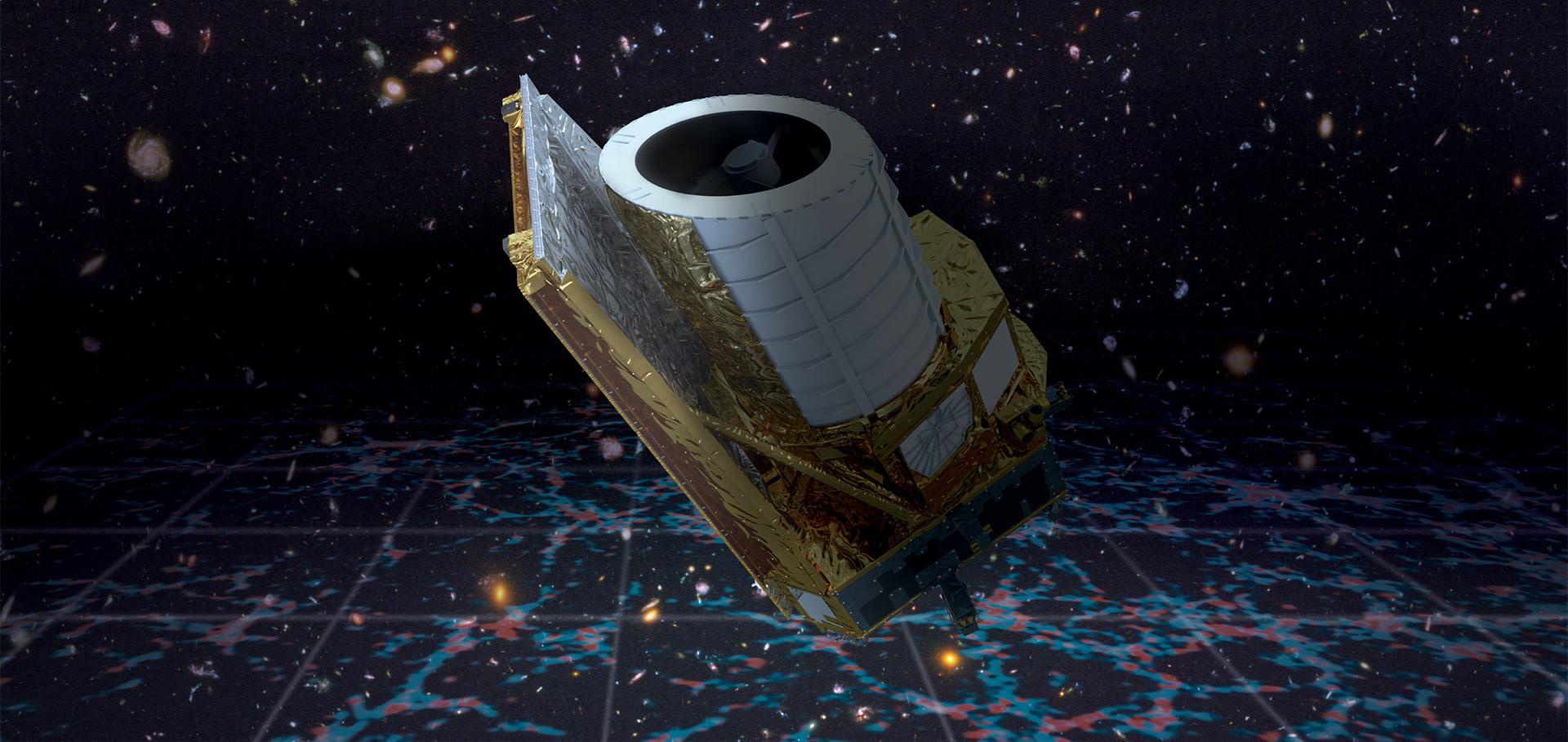
This paper presents the specification, design, and development of the Visible Camera (VIS) on the European Space Agency’s Euclid mission. VIS is a large optical-band imager with a field of view of 0.54 deg2 sampled at 000 . 1 with an array of 609 Megapixels and a spatial resolution of 000 . 18. It will be used to survey approximately 14 000 deg2 of extragalactic sky to measure the distortion of galaxies in the redshift range z = 0.1–1.5 resulting from weak gravitational lensing, one of the two principal cosmology probes leveraged by Euclid. With photometric redshifts, the distribution of dark matter can be mapped in three dimensions, and the extent to which this has changed with look-back time can be used to constrain the nature of dark energy and theories of gravity. The entire VIS focal plane will be transmitted to provide the largest images of the Universe from space to date, specified to reach mAB ≥ 24.5 with a signal-to-noise ratio S/N ≥ 10 in a single broad IE ≃ (r + i + z) band over a six-year survey. The particularly challenging aspects of the instrument are the control and calibration of observational biases, which lead to stringent performance requirements and calibration regimes. With its combination of spatial resolution, calibration knowledge, depth, and area covering most of the extra-Galactic sky, VIS will also provide a legacy data set for many other fields. This paper discusses the rationale behind the conception of VIS and describes the instrument design and development, before reporting the prelaunch performance derived from ground calibrations and brief results from the in-orbit commissioning. VIS should reach fainter than mAB = 25 with S/N ≥ 10 for galaxies with a full width at half maximum of 000 . 3 in a 100 . 3 diameter aperture over the Wide Survey, and mAB ≥ 26.4 for a Deep Survey that will cover more than 50 deg2. The paper also describes how the instrument works with the Euclid telescope and survey, and with the science data processing, to extract the cosmological information.

Euclid

Astronomy & Astrophysics EDP Sciences 697 (2025) ARTN A5

Authors:

Fj Castander, P Fosalba, J Stadel, D Potter, J Carretero, P Tallada-Crespí, L Pozzetti, M Bolzonella, Ga Mamon, L Blot, K Hoffmann, M Huertas-Company, P Monaco, Ej Gonzalez, G De Lucia, C Scarlata, M-A Breton, L Linke, C Viglione, S-S Li, Z Zhai, Z Baghkhani, K Pardede, C Neissner, R Teyssier, M Crocce, I Tutusaus, L Miller, G Congedo, A Biviano, M Hirschmann, A Pezzotta, H Aussel, H Hoekstra, T Kitching, Wj Percival, L Guzzo, Y Mellier, Pa Oesch, Raa Bowler, S Bruton, V Allevato, V Gonzalez-Perez, M Manera, S Avila, A Kovács, N Aghanim, B Altieri, A Amara, L Amendola

Abstract:

We present the Flagship galaxy mock, a simulated catalogue of billions of galaxies designed to support the scientific exploitation of the Euclid mission. Euclid is a medium-class mission of the European Space Agency optimised to determine the properties of dark matter and dark energy on the largest scales of the Universe. It probes structure formation over more than 10 billion years primarily from the combination of weak gravitational lensing and galaxy clustering data. The breadth of Euclid’s data will also foster a wide variety of scientific analyses. The Flagship simulation was developed to provide a realistic approximation to the galaxies that will be observed by Euclid and used in its scientific exploitation. We ran a state-of-the-art N-body simulation with four trillion particles, producing a lightcone on the fly. From the dark matter particles, we produced a catalogue of 16 billion haloes in one octant of the sky in the lightcone up to redshift z = 3. We then populated these haloes with mock galaxies using a halo occupation distribution and abundance-matching approach, calibrating the free parameters of the galaxy mock against observed correlations and other basic galaxy properties. Modelled galaxy properties include luminosity and flux in several bands, redshifts, positions and velocities, spectral energy distributions, shapes and sizes, stellar masses, star formation rates, metallicities, emission line fluxes, and lensing properties. We selected a final sample of 3.4 billion galaxies with a magnitude cut of HE < 26, where we are complete. We have performed a comprehensive set of validation tests to check the similarity to observational data and theoretical models. In particular, our catalogue is able to closely reproduce the main characteristics of the weak lensing and galaxy clustering samples to be used in the mission main cosmological analysis. Moreover, given its depth and completeness, this new galaxy mock also provides the community with a powerful tool for developing a wide range of scientific analyses beyond the Euclid mission.

On the relationship between the cosmic web and the alignment of galaxies and AGN jets

Monthly Notices of the Royal Astronomical Society Oxford University Press 539:3 (2025) 2362-2379

Authors:

S Lyla Jung, IH Whittam, MJ Jarvis, CL Hale, MN Tudorache, T Yasin

Abstract:

The impact of active galactic nuclei (AGNs) on the evolution of galaxies explains the steep decrease in the number density of the most massive galaxies in the Universe. However, the fuelling of the AGN and the efficiency of this feedback largely depend on their environment. We use data from the Low Frequency Array Two-metre Sky Survey Data Release 2 (DR2), the Dark Energy Spectroscopic Instrument Legacy Imaging Surveys, and the Sloan Digital Sky Survey DR12 to make the first study of the orientations of radio jets and their optical counterpart in relation to the cosmic web environment. We find that close to filaments (), galaxies tend to have their optical major axes aligned with the nearest filaments. On the other hand, radio jets, which are generally aligned perpendicularly to the optical major axis of the host galaxy, show more randomized orientations with respect to host galaxies within of filaments. These results support the scenario that massive galaxies in cosmic filaments grow by numerous mergers directed along the orientation of the filaments while experiencing chaotic accretion of gas on to the central black hole. The AGN-driven jets consequently have a strong impact preferentially along the minor axes of dark matter haloes within filaments. We discuss the implications of these results for large-scale radio jet alignments, intrinsic alignments between galaxies, and the azimuthal anisotropy of the distribution of circumgalactic medium and anisotropic quenching.