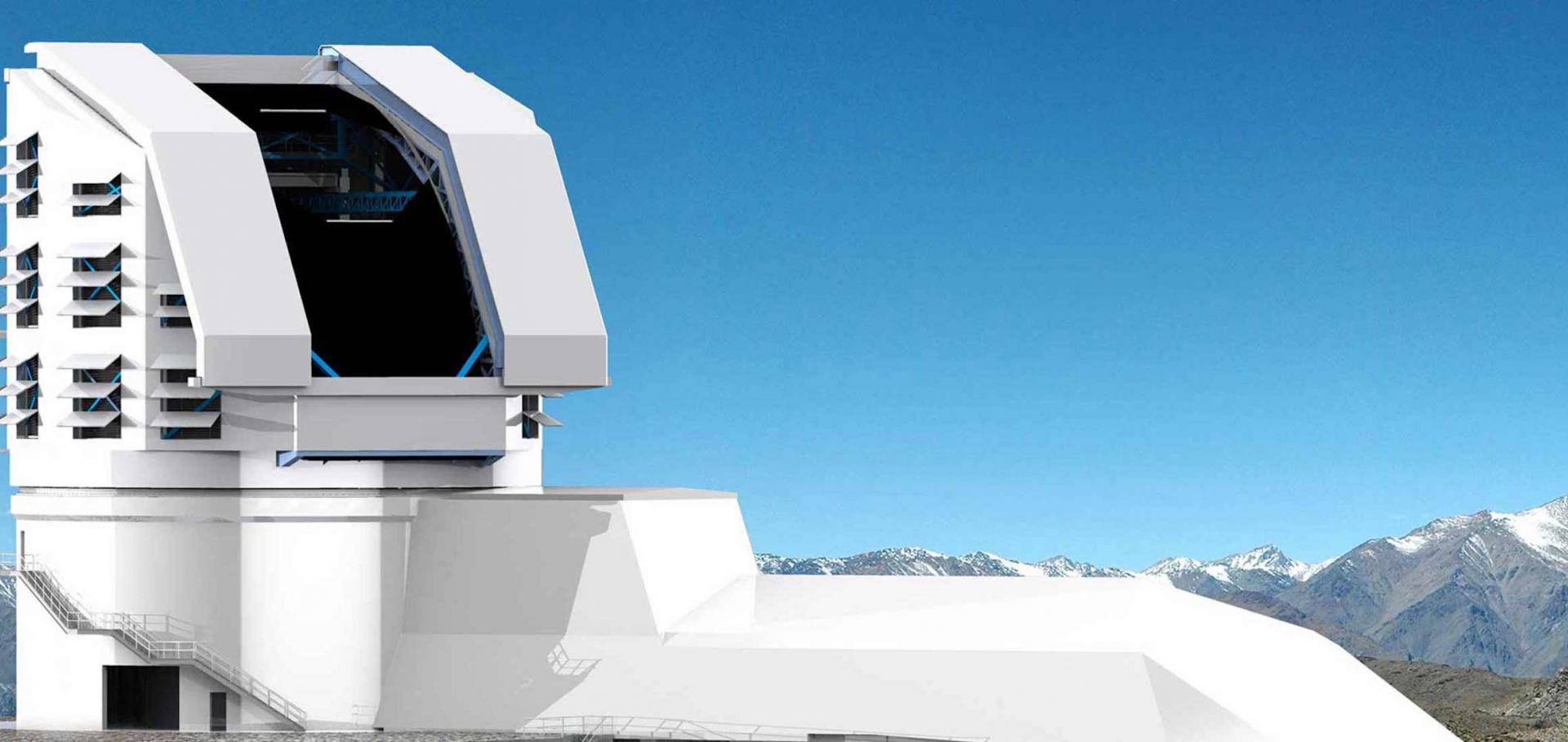
Integral field spectroscopy with the Gemini multiobject spectrograph. I. Design, construction, and testing

Publications of the Astronomical Society of the Pacific 114:798 (2002) 892-912

Authors:

J Allington-Smith, G Murray, R Content, G Dodsworth, R Davies, BW Miller, I Jorgensen, I Hook, D Crampton, R Murowinski

Abstract:

The Gemini Multiobject Spectrograph (GMOS) installed on the Gemini-North telescope has a facility for integral field spectroscopy over the wavelength range 0.4-1.0 μm. GMOS is converted to this mode by the remote insertion of an integral field unit (IFU) into the beam in place of the masks used for the multiobject mode. With the IFU deployed, integral field spectroscopy is available over a fully filled contiguous field of 5″ × 7″ with a sampling of 0″.2. A separate field of half the area, but otherwise identical, is also provided to improve background subtraction. The IFU contains 1500 lenslet-coupled fibers and is the first facility of any type for integral field spectroscopy employed on an 8-10 m telescope. We describe the design, construction, and testing of the GMOS IFU and present measurements of the throughput both in the laboratory and at the telescope. We compare these with a theoretical prediction made before construction started. All are in good agreement with each other, with the on-telescope throughput exceeding 60% (averaged over wavelength). A second paper will verify the scientific performance by comparison with existing one- and two-dimensional data sets.

MUSE, a second-generation integral-field spectrograph for the VLT

Proceedings of SPIE the International Society for Optical Engineering 4841:2 (2002) 1096-1107

Authors:

F Hénault, R Bacon, C Bonneville, D Boudon, R Davies, P Ferruit, G Gilmore, O Le Fevre, JP Lemonnier, S Lilly, S Morris, E Prieto, M Steinmetz, T De Zeeuw

Abstract:

We describe MUSE (Multi Unit Spectroscopic Explorer), a second-generation integral-field spectrograph for the VLT, operating in the visible and near IR wavelength range. It combines a 1' × 1' Field of View with the improved spatial resolution (0.2″) provided by adaptive optics and covers a large simultaneous spectral range (0.48-1 μm). With this unique combination of capabilities, MUSE has a wide domain of application, and a large discovery potential. It will provide ultra deep fields with a limiting magnitude for spectroscopy of R = 28. After a brief presentation of the scientific case and the derived instrument requirements, we will focus on the MUSE optical design, including the overall architecture, the major trade-off that were conducted in order to optimize the cost and performance, and a provisional implementation scheme of the instrument on the VLT Nasmyth platform. Then the most important optical subsystems (as the 3 × 8 Field-splitter, the Image Slicers and the Spectrometers) are described. One of MUSE special feature is the impressive number of Image Slicer and Spectrometer modules which must be manufactured, that is 24. The realization of such series has been studied in collaboration with an industrial company. Finally, a preliminary estimation of the expected performance and a technological development program in order to secure the realization of the critical optical subsystems will be presented.

Measurement of exclusive B decays to final states containing a charmed baryon

Physical Review D 66:9 (2002)

Authors:

SA Dytman, JA Mueller, S Nam, V Savinov, S Chen, JW Hinson, J Lee, DH Millger, V Paylunin, EI Shibata, IPJ Shipsey, D Cronin-Hennessy, AL Lyon, CS Park, W Park, EH Thorndike, TE Coah, YS Gao, F Liu, Y Maravin, R Stroynowski, M Artuso, S Blusk, C Boulahouache, K Bukin, E Dambasuren, K Khroustalev, R Mountain, R Nandakumar, T Skwarnicki, S Stone, JC Wang, AH Mahmood, SE Csorna, I Danko, G Bonvicini, D Cinabro, M Dubrovin, S McGee, A Bornheim, E Lipeles, SP Pappas, A Shapiro, WM Sun, AJ Weinstein, R Mahapatra, RA Briere, GP Chen, T Ferguson, G Tatishvili, H Vogel, NE Adam, JP Alexander, K Berkelman, V Boisvert, DG Cassel, PS Drell, JE Duboscq, KM Ecklund, R Ehrlich, L Gibbons, B Gittelman, SW Gray, DL Hartill, BK Heltsley, L Hsu, CD Jones, J Kandaswamy, DL Kreinick, A Magerkurth, H Mahlke-Krüger, TO Meyer, NB Mistry, E Nordberg, JR Patterson, D Peterson, J Pivarski, D Riley, AJ Sadoff, H Schwarthoff, MR Shepherd, JG Thayer, D Urner, G Viehhauser, A Warburton, M Weinberger, SB Athar, P Avery, L Breva-Newell, V Potlia, H Stoeck, J Yelton, G Brandenburg, DYJ Kim, R Wilson, K Benslama, BI Eisenstein, J Ernst, GD Gollin

Abstract:

Using data collected by the CLEO detector in the γ(4S) region, we report new measurements of the exclusive decays of B mesons into final states of the type Λc+p̄n(π), where n= 0,1,2,3. We find signals in modes with one, two and three pions and an upper limit for the two-body decay Λc+p̄. We also make the first measurements of exclusive decays of B mesons to ∑cp̄n(π), where n = 0,1,2. We find signals in modes with one and two pions and an upper limit for the two-body decay ∑cp̄. Measurements of these modes shed light on the mechanisms involved in B decays to baryons. © 2002 The American Physical Society.

Measurement of the B+total cross section and B+differential cross section dσ/dpTin pp̄ collisions at √s=1.8 TeV

Physical Review D 65:5 (2002)

Authors:

D Acosta, T Affolder, H Akimoto, MG Albrow, P Amaral, D Ambrose, D Amidei, K Anikeev, J Antos, G Apollinari, T Arisawa, A Artikov, T Asakawa, W Ashmanskas, F Azfar, P Azzi-Bacchetta, N Bacchetta, H Bachacou, S Bailey, P de Barbaro, A Barbaro-Galtieri, VE Barnes, BA Barnett, S Baroiant, M Barone, G Bauer, F Bedeschi, S Belforte, WH Bell, G Bellettini, J Bellinger, D Benjamin, J Bensinger, A Beretvas, JP Berge, J Berryhill, A Bhatti, M Binkley, D Bisello, M Bishai, RE Blair, C Blocker, K Bloom, B Blumenfeld, SR Blusk, A Bocci, A Bodek, G Bolla, Y Bonushkin, D Bortoletto, J Boudreau, A Brandl, S van den Brink, C Bromberg, M Brozovic, E Brubaker, N Bruner, E Buckley-Geer, J Budagov, HS Budd, K Burkett, G Busetto, A Byon-Wagner, KL Byrum, S Cabrera, P Calafiura, M Campbell, W Carithers, J Carlson, D Carlsmith, W Caskey, A Castro, D Cauz, A Cerri, AW Chan, PS Chang, PT Chang, J Chapman, C Chen, YC Chen, MT Cheng, M Chertok, G Chiarelli, I Chirikov-Zorin, G Chlachidze, F Chlebana, L Christofek, ML Chu, JY Chung, YS Chung, CI Ciobanu, AG Clark, AP Colijn, A Connolly, M Convery, J Conway, M Cordelli, J Cranshaw, R Culbertson, D Dagenhart

Abstract:

We present measurements of the B+meson total cross section and differential cross section dσ/dpT. The measurements use a 98±4 pb-1sample of pp̄ collisions at √s=1.8 TeV collected by the CDF detector. Charged B meson candidates are reconstructed through the decay B±→J|ψ±with J|ψ→µ+µ-. The total cross section, measured in the central rapidity region |y|<1.0 for pT(B)>6.0 GeV/c, is 3.6±0.6(stat ⊕ syst) µb. The measured differential cross section is substantially larger than typical QCD predictions calculated to next-to-leading order.

Measurement of the ratio of b quark production cross sections in pp collisions at √s=630 GeV and √s=1800 GeV

Physical Review D Particles Fields Gravitation and Cosmology 66:3 (2002)

Authors:

D Acosta, T Affolder, H Akimoto, MG Albrow, D Ambrose, D Amidei, K Anikeev, J Antos, G Apollinari, T Arisawa, A Artikov, T Asakawa, W Ashmanskas, F Azfar, P Azzi-Bacchetta, N Bacchetta, H Bachacou, W Badgett, S Bailey, P De Barbaro, A Barbaro-Galtieri, VE Barnes, BA Barnett, S Baroiant, M Barone, G Bauer, F Bedeschi, S Belforte, WH Bell, G Bellettini, J Bellinger, D Benjamin, J Bensinger, A Beretvas, JP Berge, J Berryhill, A Bhatti, M Binkley, D Bisello, M Bishai, RE Blair, C Blocker, K Bloom, B Blumenfeld, SR Blusk, A Bocci, A Bodek, G Bolla, Y Bonushkin, D Bortoletto, J Boudreau, A Brandl, S Van Den Brink, C Bromberg, M Brozovic, E Brubaker, N Bruner, E Buckley-Geer, J Budagov, HS Budd, K Burkett, G Busetto, A Byon-Wagner, KL Byrum, S Cabrera, P Calafiura, M Campbell, W Carithers, J Carlson, D Carlsmith, W Caskey, A Castro, D Cauz, A Cerri, AW Chan, PS Chang, PT Chang, J Chapman, C Chen, YC Chen, MT Cheng, M Chertok, G Chiarelli, I Chirikov-Zorin, G Chlachidze, F Chlebana, L Christofek, ML Chu, JY Chung, YS Chung, CI Ciobanu, AG Clark, AP Colijn, A Connolly, M Convery, J Conway, M Cordelli, J Cranshaw, R Culbertson, D Dagenhart

Abstract:

We report a measurement of the ratio of the bottom quark production cross section in antiproton-proton collisions at (Formula Presented)=630 GeV to 1800 GeV using bottom quarks with transverse momenta greater than 10.75 GeV identified through their semileptonic decays and long lifetimes. The measured ratio σ(630)/ σ(1800) 50.171±.024±.012 is in good agreement with next-to-leading order quantum chromodynamics.