

Erratum to: Search for single top-quark production via flavour-changing neutral currents at 8 TeV with the ATLAS detector
Authors:
G Aad, B Abbott, J Abdallah, O Abdinov, R Aben, M Abolins, OS AbouZeid, H Abramowicz, H Abreu, R Abreu, Y Abulaiti, BS Acharya, L Adamczyk, DL Adams, J Adelman, S Adomeit, T Adye, AA Affolder, T Agatonovic-Jovin, J Agricola, JA Aguilar-Saavedra, SP Ahlen, F Ahmadov, G Aielli, H Akerstedt, TPA Åkesson, AV Akimov, GL Alberghi, J Albert, S Albrand, MJ Alconada Verzini, M Aleksa, IN Aleksandrov, C Alexa, G Alexander, T Alexopoulos, M Alhroob, G Alimonti, L Alio, J Alison, SP Alkire, BMM Allbrooke, PP Allport, A Aloisio, A Alonso, F Alonso, C Alpigiani, A Altheimer, B Alvarez Gonzalez, D Álvarez Piqueras, MG Alviggi, BT Amadio, K Amako, Y Amaral Coutinho, C Amelung, D Amidei, SP Amor Dos Santos, A Amorim, S Amoroso, N Amram, G Amundsen, C Anastopoulos, LS Ancu, N Andari, T Andeen, CF Anders, G Anders, JK Anders, KJ Anderson, A Andreazza, V Andrei, S Angelidakis, I Angelozzi, P Anger, A Angerami, F Anghinolfi, AV Anisenkov, N Anjos, A Annovi, M Antonelli, A Antonov, J Antos, F Anulli, M Aoki, L Aperio Bella, G Arabidze, Y Arai, JP Araque, ATH Arce, FA Arduh, J-F Arguin, S Argyropoulos, M Arik, AJ Armbruster, O Arnaez, V Arnal, H Arnold, M Arratia, O Arslan, A Artamonov, G Artoni, S Asai, N Asbah, A Ashkenazi, B Åsman, L Asquith, K Assamagan, R Astalos, M Atkinson, NB Atlay, K Augsten, M Aurousseau, G Avolio, B Axen, MK Ayoub, G Azuelos, MA Baak, AE Baas, MJ Baca, C Bacci, H Bachacou, K Bachas, M Backes, M Backhaus, P Bagiacchi, P Bagnaia, Y Bai, T Bain, JT Baines, OK Baker, EM Baldin, P Balek, T Balestri, F Balli, E Banas, Sw Banerjee, AAE Bannoura, HS Bansil, L Barak, EL Barberio, D Barberis, M Barbero, T Barillari, M Barisonzi, T Barklow, N Barlow, SL Barnes, BM Barnett, RM Barnett, Z Barnovska, A Baroncelli, G Barone, AJ Barr, F Barreiro, J Barreiro Guimarães da Costa, R Bartoldus, AE Barton, P Bartos, A Basalaev, A Bassalat, A Basye, RL Bates, SJ Batista, JR Batley, M Battaglia, M Bauce, F Bauer, HS Bawa, JB Beacham, MD Beattie, T Beau, PH Beauchemin, R Beccherle, P Bechtle, HP Beck, K Becker, M Becker, M Beckingham, C Becot, AJ Beddall, A Beddall, VA Bednyakov, CP Bee, LJ Beemster, TA Beermann, M Begel, JK Behr, C Belanger-Champagne, WH Bell, G Bella, L Bellagamba, A Bellerive, M Bellomo, K Belotskiy, O Beltramello, O Benary, D Benchekroun, M Bender, K Bendtz, N Benekos, Y Benhammou, E Benhar Noccioli, JA Benitez Garcia, DP Benjamin, JR Bensinger, S Bentvelsen, L Beresford, M Beretta, D Berge, E Bergeaas Kuutmann, N Berger, F Berghaus, J Beringer, C Bernard, NR Bernard, C Bernius, FU Bernlochner, T Berry, P Berta, C Bertella, G Bertoli, F Bertolucci, C Bertsche, D Bertsche, MI Besana, GJ Besjes, O Bessidskaia Bylund, M Bessner, N Besson, C Betancourt, S Bethke, AJ Bevan, W Bhimji, RM Bianchi, L Bianchini, M Bianco, O Biebel, D Biedermann, SP Bieniek, M Biglietti, J Bilbao De Mendizabal, H Bilokon, M Bindi, S Binet, A Bingul, C Bini, S Biondi, CW Black, JE Black, KM Black, D Blackburn, RE Blair, J-B Blanchard, JE Blanco, T Blazek, I Bloch, C Blocker, W Blum, U Blumenschein, GJ Bobbink, VS Bobrovnikov, SS Bocchetta, A Bocci, C Bock, M Boehler, JA Bogaerts, D Bogavac, AG Bogdanchikov, C Bohm, V Boisvert, T Bold, V Boldea, AS Boldyrev, M Bomben, M Bona, M Boonekamp, A Borisov, G Borissov, S Borroni, J Bortfeldt, V Bortolotto, K Bos, D Boscherini, M Bosman, J Boudreau, J Bouffard, EV Bouhova-Thacker, D Boumediene, C Bourdarios, N Bousson, A Boveia, J Boyd, IR Boyko, I Bozic, J Bracinik, A Brandt, G Brandt, O Brandt, U Bratzler, B Brau, JE Brau, HM Braun, SF Brazzale, WD Breaden Madden, K Brendlinger, AJ Brennan, L Brenner, R Brenner, S Bressler, K Bristow, TM Bristow, D Britton, D Britzger, FM Brochu, I Brock, R Brock, J Bronner, G Brooijmans, T Brooks, WK Brooks, J Brosamer, E Brost, J Brown, PA Bruckman de Renstrom, D Bruncko, R Bruneliere, A Bruni, G Bruni, M Bruschi, N Bruscino, L Bryngemark, T Buanes, Q Buat, P Buchholz, AG Buckley, SI Buda, IA Budagov, F Buehrer, L Bugge, MK Bugge, O Bulekov, D Bullock, H Burckhart, S Burdin, CD Burgard, B Burghgrave, S Burke, I Burmeister, E Busato, D Büscher, V Büscher, P Bussey, JM Butler, AI Butt, CM Buttar, JM Butterworth, P Butti, W Buttinger, A Buzatu, AR Buzykaev, S Cabrera Urbán, D Caforio, VM Cairo, O Cakir, N Calace, P Calafiura, A Calandri, G Calderini, P Calfayan, LP Caloba, D Calvet, S Calvet, R Camacho Toro, S Camarda, P Camarri, D Cameron, R Caminal Armadans, S Campana, M Campanelli, A Campoverde, V Canale, A Canepa, M Cano Bret, J Cantero, R Cantrill, T Cao, MDM Capeans Garrido, I Caprini, M Caprini, M Capua, R Caputo, R Cardarelli, F Cardillo, T Carli, G Carlino, L Carminati, S Caron, E Carquin, GD Carrillo-Montoya, JR Carter, J Carvalho, D Casadei, MP Casado, M Casolino, E Castaneda-Miranda, A Castelli, V Castillo Gimenez, NF Castro, P Catastini, A Catinaccio, JR Catmore, A Cattai, J Caudron, V Cavaliere, D Cavalli, M Cavalli-Sforza, V Cavasinni, F Ceradini, BC Cerio, K Cerny, AS Cerqueira, A Cerri, L Cerrito, F Cerutti, M Cerv, A Cervelli, SA Cetin, A Chafaq, D Chakraborty, I Chalupkova, P Chang, JD Chapman, DG Charlton, CC Chau, CA Chavez Barajas, S Cheatham, A Chegwidden, S Chekanov, SV Chekulaev, GA Chelkov, MA Chelstowska, C Chen, H Chen, K Chen, L Chen, S Chen, X Chen, Y Chen, HC Cheng, Y Cheng, A Cheplakov, E Cheremushkina, R Cherkaoui El Moursli, V Chernyatin, E Cheu, L Chevalier, V Chiarella, G Chiarelli, G Chiodini, AS Chisholm, RT Chislett, A Chitan, MV Chizhov, K Choi, S Chouridou, BKB Chow, V Christodoulou, D Chromek-Burckhart, J Chudoba, AJ Chuinard, JJ Chwastowski, L Chytka, G Ciapetti, AK Ciftci, D Cinca, V Cindro, IA Cioara, A Ciocio, F Cirotto, ZH Citron, M Ciubancan, A Clark, BL Clark, PJ Clark, RN Clarke, W Cleland, C Clement, Y Coadou, M Cobal, A Coccaro, J Cochran, L Coffey, JG Cogan, L Colasurdo, B Cole, S Cole, AP Colijn, J Collot, T Colombo, G Compostella, P Conde Muiño, E Coniavitis, SH Connell, IA Connelly, V Consorti, S Constantinescu, C Conta, G Conti, F Conventi, M Cooke, BD Cooper, AM Cooper-Sarkar, T Cornelissen, M Corradi, F Corriveau, A Corso-Radu, A Cortes-Gonzalez, G Cortiana, G Costa, MJ Costa, D Costanzo, D Côté, G Cottin, G Cowan, BE Cox, K Cranmer, G Cree, S Crépé-Renaudin, F Crescioli, WA Cribbs, M Crispin Ortuzar, M Cristinziani, V Croft, G Crosetti, T Cuhadar Donszelmann, J Cummings, M Curatolo, C Cuthbert, H Czirr, P Czodrowski, S D’Auria, M D’Onofrio, MJ Da Cunha Sargedas De Sousa, C Da Via, W Dabrowski, A Dafinca, T Dai, O Dale, F Dallaire, C Dallapiccola, M Dam, JR Dandoy, NP Dang, AC Daniells, M Danninger, M Dano Hoffmann, V Dao, G Darbo, S Darmora, J Dassoulas, A Dattagupta, W Davey, C David, T Davidek, E Davies, M Davies, P Davison, Y Davygora, E Dawe, I Dawson, RK Daya-Ishmukhametova, K De, R de Asmundis, A De Benedetti, S De Castro, S De Cecco, N De Groot, P de Jong, H De la Torre, F De Lorenzi, D De Pedis, A De Salvo, U De Sanctis, A De Santo, JB De Vivie De Regie, WJ Dearnaley, R Debbe, C Debenedetti, DV Dedovich, I Deigaard, J Del Peso, T Del Prete, D Delgove, F Deliot, CM Delitzsch, M Deliyergiyev, A Dell’Acqua, L Dell’Asta, M Dell’Orso, M Della Pietra, D della Volpe, M Delmastro, PA Delsart, C Deluca, DA DeMarco, S Demers, M Demichev, A Demilly, SP Denisov, D Derendarz, JE Derkaoui, F Derue, P Dervan, K Desch, C Deterre, PO Deviveiros, A Dewhurst, S Dhaliwal, A Di Ciaccio, L Di Ciaccio, A Di Domenico, C Di Donato, A Di Girolamo, B Di Girolamo, A Di Mattia, B Di Micco, R Di Nardo, A Di Simone, R Di Sipio, D Di Valentino, C Diaconu, M Diamond, FA Dias, MA Diaz, EB Diehl, J Dietrich, S Diglio, A Dimitrievska, J Dingfelder, P Dita, S Dita, F Dittus, F Djama, T Djobava, JI Djuvsland, MAB do Vale, D Dobos, M Dobre, C Doglioni, T Dohmae, J Dolejsi, Z Dolezal, BA Dolgoshein, M Donadelli, S Donati, P Dondero, J Donini, J Dopke, A Doria, MT Dova, AT Doyle, E Drechsler, M Dris, E Dubreuil, E Duchovni, G Duckeck, OA Ducu, D Duda, A Dudarev, L Duflot, L Duguid, M Dührssen, M Dunford, H Duran Yildiz, M Düren, A Durglishvili, D Duschinger, M Dyndal, C Eckardt, KM Ecker, RC Edgar, W Edson, NC Edwards, W Ehrenfeld, T Eifert, G Eigen, K Einsweiler, T Ekelof, M El Kacimi, M Ellert, S Elles, F Ellinghaus, AA Elliot, N Ellis, J Elmsheuser, M Elsing, D Emeliyanov, Y Enari, OC Endner, M Endo, J Erdmann, A Ereditato, G Ernis, J Ernst, M Ernst, S Errede, E Ertel, M Escalier, H Esch, C Escobar, B Esposito, AI Etienvre, E Etzion, H Evans, A Ezhilov, L Fabbri, G Facini, RM Fakhrutdinov, S Falciano, RJ Falla, J Faltova, Y Fang, M Fanti, A Farbin, A Farilla, T Farooque, S Farrell, SM Farrington, P Farthouat, F Fassi, P Fassnacht, D Fassouliotis, M Faucci Giannelli, A Favareto, L Fayard, P Federic, OL Fedin, W Fedorko, S Feigl, L Feligioni, C Feng, EJ Feng, H Feng, AB Fenyuk, L Feremenga, P Fernandez Martinez, S Fernandez Perez, J Ferrando, A Ferrari, P Ferrari, R Ferrari, DE Ferreira de Lima, A Ferrer, D Ferrere, C Ferretti, A Ferretto Parodi, M Fiascaris, F Fiedler, A Filipčič, M Filipuzzi, F Filthaut, M Fincke-Keeler, KD Finelli, MCN Fiolhais, L Fiorini, A Firan, A Fischer, C Fischer, J Fischer, WC Fisher, EA Fitzgerald, N Flaschel, I Fleck, P Fleischmann, S Fleischmann, GT Fletcher, G Fletcher, RRM Fletcher, T Flick, A Floderus, LR Flores Castillo, MJ Flowerdew, A Formica, A Forti, D Fournier, H Fox, S Fracchia, P Francavilla, M Franchini, D Francis, L Franconi, M Franklin, M Frate, M Fraternali, D Freeborn, ST French, F Friedrich, D Froidevaux, JA Frost, C Fukunaga, E Fullana Torregrosa, BG Fulsom, T Fusayasu, J Fuster, C Gabaldon, O Gabizon, A Gabrielli, A Gabrielli, GP Gach, S Gadatsch, S Gadomski, G Gagliardi, P Gagnon, C Galea, B Galhardo, EJ Gallas, BJ Gallop, P Gallus, G Galster, KK Gan, J Gao, Y Gao, YS Gao, FM Garay Walls, F Garberson, C García, JE García Navarro, M Garcia-Sciveres, RW Gardner, N Garelli, V Garonne, C Gatti, A Gaudiello, G Gaudio, B Gaur, L Gauthier, P Gauzzi, IL Gavrilenko, C Gay, G Gaycken, EN Gazis, P Ge, Z Gecse, CNP Gee, Ch Geich-Gimbel, MP Geisler, C Gemme, MH Genest, S Gentile, M George, S George, D Gerbaudo, A Gershon, S Ghasemi, H Ghazlane, B Giacobbe, S Giagu, V Giangiobbe, P Giannetti, B Gibbard, SM Gibson, M Gilchriese, TPS Gillam, D Gillberg, G Gilles, DM Gingrich, N Giokaris, MP Giordani, FM Giorgi, FM Giorgi, PF Giraud, P Giromini, D Giugni, C Giuliani, M Giulini, BK Gjelsten, S Gkaitatzis, I Gkialas, EL Gkougkousis, LK Gladilin, C Glasman, J Glatzer, PCF Glaysher, A Glazov, M Goblirsch-Kolb, JR Goddard, J Godlewski, S Goldfarb, T Golling, D Golubkov, A Gomes, R Gonçalo, J Goncalves Pinto Firmino Da Costa, L Gonella, S González de la Hoz, G Gonzalez Parra, S Gonzalez-Sevilla, L Goossens, PA Gorbounov, HA Gordon, I Gorelov, B Gorini, E Gorini, A Gorišek, E Gornicki, AT Goshaw, C Gössling, MI Gostkin, D Goujdami, AG Goussiou, N Govender, E Gozani, HMX Grabas, L Graber, I Grabowska-Bold, POJ Gradin, P Grafström, K-J Grahn, J Gramling, E Gramstad, S Grancagnolo, V Gratchev, HM Gray, E Graziani, ZD Greenwood, C Grefe, K Gregersen, IM Gregor, P Grenier, J Griffiths, AA Grillo, K Grimm, S Grinstein, Ph Gris, J-F Grivaz, JP Grohs, A Grohsjean, E Gross, J Grosse-Knetter, GC Grossi, ZJ Grout, L Guan, J Guenther, F Guescini, D Guest, O Gueta, E Guido, T Guillemin, S Guindon, U Gul, C Gumpert, J Guo, Y Guo, S Gupta, G Gustavino, P Gutierrez, NG Gutierrez Ortiz, C Gutschow, C Guyot, C Gwenlan, CB Gwilliam, A Haas, C Haber, HK Hadavand, N Haddad, P Haefner, S Hageböck, Z Hajduk, H Hakobyan, M Haleem, J Haley, D Hall, G Halladjian, GD Hallewell, K Hamacher, P Hamal, K Hamano, A Hamilton, GN Hamity, PG Hamnett, L Han, K Hanagaki, K Hanawa, M Hance, P Hanke, R Hanna, JB Hansen, JD Hansen, MC Hansen, PH Hansen, K Hara, AS Hard, T Harenberg, F Hariri, S Harkusha, RD Harrington, PF Harrison, F Hartjes, M Hasegawa, Y Hasegawa, A Hasib, S Hassani, S Haug, R Hauser, L Hauswald, M Havranek, CM Hawkes, RJ Hawkings, AD Hawkins, T Hayashi, D Hayden, CP Hays, JM Hays, HS Hayward, SJ Haywood, SJ Head, T Heck, V Hedberg, L Heelan, S Heim, T Heim, B Heinemann, L Heinrich, J Hejbal, L Helary, S Hellman, D Hellmich, C Helsens, J Henderson, RCW Henderson, Y Heng, C Hengler, S Henkelmann, A Henrichs, AM Henriques Correia, S Henrot-Versille, GH Herbert, Y Hernández Jiménez, R Herrberg-Schubert, G Herten, R Hertenberger, L Hervas, GG Hesketh, NP Hessey, JW Hetherly, R Hickling, E Higón-Rodriguez, E Hill, JC Hill, KH Hiller, SJ Hillier, I Hinchliffe, E Hines, RR Hinman, M Hirose, D Hirschbuehl, J Hobbs, N Hod, MC Hodgkinson, P Hodgson, A Hoecker, MR Hoeferkamp, F Hoenig, M Hohlfeld, D Hohn, TR Holmes, M Homann, TM Hong, L Hooft van Huysduynen, WH Hopkins, Y Horii, AJ Horton, J-Y Hostachy, S Hou, A Hoummada, J Howard, J Howarth, M Hrabovsky, I Hristova, J Hrivnac, T Hryn’ova, A Hrynevich, C Hsu, PJ Hsu, S-C Hsu, D Hu, Q Hu, X Hu, Y Huang, Z Hubacek, F Hubaut, F Huegging, TB Huffman, EW Hughes, G Hughes, M Huhtinen, TA Hülsing, N Huseynov, J Huston, J Huth, G Iacobucci, G Iakovidis, I Ibragimov, L Iconomidou-Fayard, E Ideal, Z Idrissi, P Iengo, O Igonkina, T Iizawa, Y Ikegami, K Ikematsu, M Ikeno, Y Ilchenko, D Iliadis, N Ilic, T Ince, G Introzzi, P Ioannou, M Iodice, K Iordanidou, V Ippolito, A Irles Quiles, C Isaksson, M Ishino, M Ishitsuka, R Ishmukhametov, C Issever, S Istin, JM Iturbe Ponce, R Iuppa, J Ivarsson, W Iwanski, H Iwasaki, JM Izen, V Izzo, S Jabbar, B Jackson, M Jackson, P Jackson, MR Jaekel, V Jain, K Jakobs, S Jakobsen, T Jakoubek, J Jakubek, DO Jamin, DK Jana, E Jansen, R Jansky, J Janssen, M Janus, G Jarlskog, N Javadov, T Javůrek, L Jeanty, J Jejelava, G-Y Jeng, D Jennens, P Jenni, J Jentzsch, C Jeske, S Jézéquel, H Ji, J Jia, Y Jiang, S Jiggins, J Jimenez Pena, S Jin, A Jinaru, O Jinnouchi, MD Joergensen, P Johansson, KA Johns, K Jon-And, G Jones, RWL Jones, TJ Jones, J Jongmanns, PM Jorge, KD Joshi, J Jovicevic, X Ju, CA Jung, P Jussel, A Juste Rozas, M Kaci, A Kaczmarska, M Kado, H Kagan, M Kagan, SJ Kahn, E Kajomovitz, CW Kalderon, S Kama, A Kamenshchikov, N Kanaya, S Kaneti, VA Kantserov, J Kanzaki, B Kaplan, LS Kaplan, A Kapliy, D Kar, K Karakostas, A Karamaoun, N Karastathis, MJ Kareem, E Karentzos, M Karnevskiy, SN Karpov, ZM Karpova, K Karthik, V Kartvelishvili, AN Karyukhin, L Kashif, RD Kass, A Kastanas, Y Kataoka, C Kato, A Katre, J Katzy, K Kawagoe, T Kawamoto, G Kawamura, S Kazama, VF Kazanin, R Keeler, R Kehoe, JS Keller, JJ Kempster, H Keoshkerian, O Kepka, BP Kerševan, S Kersten, RA Keyes, F Khalil-zada, H Khandanyan, A Khanov, AG Kharlamov, TJ Khoo, V Khovanskiy, E Khramov, J Khubua, S Kido, HY Kim, SH Kim, YK Kim, N Kimura, OM Kind, BT King, M King, SB King, J Kirk, AE Kiryunin, T Kishimoto, D Kisielewska, F Kiss, K Kiuchi, O Kivernyk, E Kladiva, MH Klein, M Klein, U Klein, K Kleinknecht, P Klimek, A Klimentov, R Klingenberg, JA Klinger, T Klioutchnikova, E-E Kluge, P Kluit, S Kluth, J Knapik, E Kneringer, EBFG Knoops, A Knue, A Kobayashi, D Kobayashi, T Kobayashi, M Kobel, M Kocian, P Kodys, T Koffas, E Koffeman, LA Kogan, S Kohlmann, Z Kohout, T Kohriki, T Koi, H Kolanoski, I Koletsou, AA Komar, Y Komori, T Kondo, N Kondrashova, K Köneke, AC König, T Kono, R Konoplich, N Konstantinidis, R Kopeliansky, S Koperny, L Köpke, AK Kopp, K Korcyl, K Kordas, A Korn, AA Korol, I Korolkov, EV Korolkova, O Kortner, S Kortner, T Kosek, VV Kostyukhin, VM Kotov, A Kotwal, A Kourkoumeli-Charalampidi, C Kourkoumelis, V Kouskoura, A Koutsman, R Kowalewski, TZ Kowalski, W Kozanecki, AS Kozhin, VA Kramarenko, G Kramberger, D Krasnopevtsev, MW Krasny, A Krasznahorkay, JK Kraus, A Kravchenko, S Kreiss, M Kretz, J Kretzschmar, K Kreutzfeldt, P Krieger, K Krizka, K Kroeninger, H Kroha, J Kroll, J Kroseberg, J Krstic, U Kruchonak, H Krüger, N Krumnack, A Kruse, MC Kruse, M Kruskal, T Kubota, H Kucuk, S Kuday, S Kuehn, A Kugel, F Kuger, A Kuhl, T Kuhl, V Kukhtin, R Kukla, Y Kulchitsky, S Kuleshov, M Kuna, T Kunigo, A Kupco, H Kurashige, YA Kurochkin, V Kus, ES Kuwertz, M Kuze, J Kvita, T Kwan, D Kyriazopoulos, A La Rosa, JL La Rosa Navarro, L La Rotonda, C Lacasta, F Lacava, J Lacey, H Lacker, D Lacour, VR Lacuesta, E Ladygin, R Lafaye, B Laforge, T Lagouri, S Lai, L Lambourne, S Lammers, CL Lampen, W Lampl, E Lançon, U Landgraf, MPJ Landon, VS Lang, JC Lange, AJ Lankford, F Lanni, K Lantzsch, A Lanza, S Laplace, C Lapoire, JF Laporte, T Lari, F Lasagni Manghi, M Lassnig, P Laurelli, W Lavrijsen, AT Law, P Laycock, T Lazovich, O Le Dortz, E Le Guirriec, E Le Menedeu, M LeBlanc, T LeCompte, F Ledroit-Guillon, CA Lee, SC Lee, L Lee, G Lefebvre, M Lefebvre, F Legger, C Leggett, A Lehan, G Lehmann Miotto, X Lei, WA Leight, A Leisos, AG Leister, MAL Leite, R Leitner, D Lellouch, B Lemmer, KJC Leney, T Lenz, B Lenzi, R Leone, S Leone, C Leonidopoulos, S Leontsinis, C Leroy, CG Lester, M Levchenko, J Levêque, D Levin, LJ Levinson, M Levy, A Lewis, AM Leyko, M Leyton, B Li, H Li, HL Li, L Li, L Li, S Li, X Li, Y Li, Z Liang, H Liao, B Liberti, A Liblong, P Lichard, K Lie, J Liebal, W Liebig, C Limbach, A Limosani, SC Lin, TH Lin, F Linde, BE Lindquist, JT Linnemann, E Lipeles, A Lipniacka, M Lisovyi, TM Liss, D Lissauer, A Lister, AM Litke, B Liu, D Liu, H Liu, J Liu, JB Liu, K Liu, L Liu, M Liu, M Liu, Y Liu, M Livan, A Lleres, J Llorente Merino, SL Lloyd, F Lo Sterzo, E Lobodzinska, P Loch, WS Lockman, FK Loebinger, AE Loevschall-Jensen, A Loginov, T Lohse, K Lohwasser, M Lokajicek, BA Long, JD Long, RE Long, KA Looper, L Lopes, D Lopez Mateos, B Lopez Paredes, I Lopez Paz, J Lorenz, N Lorenzo Martinez, M Losada, PJ Lösel, X Lou, A Lounis, J Love, PA Love, N Lu, HJ Lubatti, C Luci, A Lucotte, F Luehring, W Lukas, L Luminari, O Lundberg, B Lund-Jensen, D Lynn, R Lysak, E Lytken, H Ma, LL Ma, G Maccarrone, A Macchiolo, CM Macdonald, B Maček, J Machado Miguens, D Macina, D Madaffari, R Madar, HJ Maddocks, WF Mader, A Madsen, J Maeda, S Maeland, T Maeno, A Maevskiy, E Magradze, K Mahboubi, J Mahlstedt, C Maiani, C Maidantchik, AA Maier, T Maier, A Maio, S Majewski, Y Makida, N Makovec, B Malaescu, Pa Malecki, VP Maleev, F Malek, U Mallik, D Malon, C Malone, S Maltezos, VM Malyshev, S Malyukov, J Mamuzic, G Mancini, B Mandelli, L Mandelli, I Mandić, R Mandrysch, J Maneira, A Manfredini, L Manhaes de Andrade Filho, J Manjarres Ramos, A Mann, A Manousakis-Katsikakis, B Mansoulie, R Mantifel, M Mantoani, L Mapelli, L March, G Marchiori, M Marcisovsky, CP Marino, M Marjanovic, DE Marley, F Marroquim, SP Marsden, Z Marshall, LF Marti, S Marti-Garcia, B Martin, TA Martin, VJ Martin, B Martin dit Latour, M Martinez, S Martin-Haugh, VS Martoiu, AC Martyniuk, M Marx, F Marzano, A Marzin, L Masetti, T Mashimo, R Mashinistov, J Masik, AL Maslennikov, I Massa, L Massa, N Massol, P Mastrandrea, A Mastroberardino, T Masubuchi, P Mättig, Jm Mattmann, J Maurer, SJ Maxfield, DA Maximov, R Mazini, SM Mazza, L Mazzaferro, G Mc Goldrick, SP Mc Kee, A McCarn, RL McCarthy, TG McCarthy, NA McCubbin, KW McFarlane, JA Mcfayden, G Mchedlidze, SJ McMahon, RA McPherson, M Medinnis, S Meehan, S Mehlhase, A Mehta, K Meier, C Meineck, B Meirose, BR Mellado Garcia, F Meloni, A Mengarelli, S Menke, E Meoni, KM Mercurio, S Mergelmeyer, P Mermod, L Merola, C Meroni, FS Merritt, A Messina, J Metcalfe, AS Mete, C Meyer, C Meyer, J-P Meyer, J Meyer, H Meyer Zu Theenhausen, RP Middleton, S Miglioranzi, L Mijović, G Mikenberg, M Mikestikova, M Mikuž, M Milesi, A Milic, DW Miller, C Mills, A Milov, DA Milstead, AA Minaenko, Y Minami, IA Minashvili, AI Mincer, B Mindur, M Mineev, Y Ming, LM Mir, T Mitani, J Mitrevski, VA Mitsou, A Miucci, PS Miyagawa, JU Mjörnmark, T Moa, K Mochizuki, S Mohapatra, W Mohr, S Molander, R Moles-Valls, R Monden, K Mönig, C Monini, J Monk, E Monnier, J Montejo Berlingen, F Monticelli, S Monzani, RW Moore, N Morange, D Moreno, M Moreno Llácer, P Morettini, D Mori, M Morii, M Morinaga, V Morisbak, S Moritz, AK Morley, G Mornacchi, JD Morris, SS Mortensen, A Morton, L Morvaj, M Mosidze, J Moss, K Motohashi, R Mount, E Mountricha, SV Mouraviev, EJW Moyse, S Muanza, RD Mudd, F Mueller, J Mueller, RSP Mueller, T Mueller, D Muenstermann, P Mullen, GA Mullier, JA Murillo Quijada, WJ Murray, H Musheghyan, E Musto, AG Myagkov, M Myska, BP Nachman, O Nackenhorst, J Nadal, K Nagai, R Nagai, Y Nagai, K Nagano, A Nagarkar, Y Nagasaka, K Nagata, M Nagel, E Nagy, AM Nairz, Y Nakahama, K Nakamura, T Nakamura, I Nakano, H Namasivayam, RF Naranjo Garcia, R Narayan, DI Narrias Villar, T Naumann, G Navarro, R Nayyar, HA Neal, P Yu Nechaeva, TJ Neep, PD Nef, A Negri, M Negrini, S Nektarijevic, C Nellist, A Nelson, S Nemecek, P Nemethy, AA Nepomuceno, M Nessi, MS Neubauer, M Neumann, RM Neves, P Nevski, PR Newman, DH Nguyen, RB Nickerson, R Nicolaidou, B Nicquevert, J Nielsen, N Nikiforou, A Nikiforov, V Nikolaenko, I Nikolic-Audit, K Nikolopoulos, JK Nilsen, P Nilsson, Y Ninomiya, A Nisati, R Nisius, T Nobe, M Nomachi, I Nomidis, T Nooney, S Norberg, M Nordberg, O Novgorodova, S Nowak, M Nozaki, L Nozka, K Ntekas, G Nunes Hanninger, T Nunnemann, E Nurse, F Nuti, BJ O’Brien, F O’grady, DC O’Neil, V O’Shea, FG Oakham, H Oberlack, T Obermann, J Ocariz, A Ochi, I Ochoa, JP Ochoa-Ricoux, S Oda, S Odaka, H Ogren, A Oh, SH Oh, CC Ohm, H Ohman, H Oide, W Okamura, H Okawa, Y Okumura, T Okuyama, A Olariu, SA Olivares Pino, D Oliveira Damazio, E Oliver Garcia, A Olszewski, J Olszowska, A Onofre, K Onogi, PUE Onyisi, CJ Oram, MJ Oreglia, Y Oren, D Orestano, N Orlando, C Oropeza Barrera, RS Orr, B Osculati, R Ospanov, G Otero y Garzon, H Otono, M Ouchrif, F Ould-Saada, A Ouraou, KP Oussoren, Q Ouyang, A Ovcharova, M Owen, RE Owen, VE Ozcan, N Ozturk, K Pachal, A Pacheco Pages, C Padilla Aranda, M Pagáčová, S Pagan Griso, E Paganis, F Paige, P Pais, K Pajchel, G Palacino, S Palestini, M Palka, D Pallin, A Palma, YB Pan, E Panagiotopoulou, CE Pandini, JG Panduro Vazquez, P Pani, S Panitkin, D Pantea, L Paolozzi, Th D Papadopoulou, K Papageorgiou, A Paramonov, D Paredes Hernandez, MA Parker, KA Parker, F Parodi, JA Parsons, U Parzefall, E Pasqualucci, S Passaggio, F Pastore, Fr Pastore, G Pásztor, S Pataraia, ND Patel, JR Pater, T Pauly, J Pearce, B Pearson, LE Pedersen, M Pedersen, S Pedraza Lopez, R Pedro, SV Peleganchuk, D Pelikan, O Penc, C Peng, H Peng, B Penning, J Penwell, DV Perepelitsa, E Perez Codina, MT Pérez García-Estañ, L Perini, H Pernegger, S Perrella, R Peschke, VD Peshekhonov, K Peters, RFY Peters, BA Petersen, TC Petersen, E Petit, A Petridis, C Petridou, P Petroff, E Petrolo, F Petrucci, NE Pettersson, R Pezoa, PW Phillips, G Piacquadio, E Pianori, A Picazio, E Piccaro, M Piccinini, MA Pickering, R Piegaia, DT Pignotti, JE Pilcher, AD Pilkington, J Pina, M Pinamonti, JL Pinfold, A Pingel, S Pires, H Pirumov, M Pitt, C Pizio, L Plazak, M-A Pleier, V Pleskot, E Plotnikova, P Plucinski, D Pluth, R Poettgen, L Poggioli, D Pohl, G Polesello, A Poley, A Policicchio, R Polifka, A Polini, CS Pollard, V Polychronakos, K Pommès, L Pontecorvo, BG Pope, GA Popeneciu, DS Popovic, A Poppleton, S Pospisil, K Potamianos, IN Potrap, CJ Potter, CT Potter, G Poulard, J Poveda, V Pozdnyakov, P Pralavorio, A Pranko, S Prasad, S Prell, D Price, LE Price, M Primavera, S Prince, M Proissl, K Prokofiev, F Prokoshin, E Protopapadaki, S Protopopescu, J Proudfoot, M Przybycien, E Ptacek, D Puddu, E Pueschel, D Puldon, M Purohit, P Puzo, J Qian, G Qin, Y Qin, A Quadt, DR Quarrie, WB Quayle, M Queitsch-Maitland, D Quilty, S Raddum, V Radeka, V Radescu, SK Radhakrishnan, P Radloff, P Rados, F Ragusa, G Rahal, S Rajagopalan, M Rammensee, C Rangel-Smith, F Rauscher, S Rave, T Ravenscroft, M Raymond, AL Read, NP Readioff, DM Rebuzzi, A Redelbach, G Redlinger, R Reece, K Reeves, L Rehnisch, J Reichert, H Reisin, M Relich, C Rembser, H Ren, A Renaud, M Rescigno, S Resconi, OL Rezanova, P Reznicek, R Rezvani, R Richter, S Richter, E Richter-Was, O Ricken, M Ridel, P Rieck, CJ Riegel, J Rieger, O Rifki, M Rijssenbeek, A Rimoldi, L Rinaldi, B Ristić, E Ritsch, I Riu, F Rizatdinova, E Rizvi, SH Robertson, A Robichaud-Veronneau, D Robinson, JEM Robinson, A Robson, C Roda, S Roe, O Røhne, S Rolli, A Romaniouk, M Romano, SM Romano Saez, E Romero Adam, N Rompotis, M Ronzani, L Roos, E Ros, S Rosati, K Rosbach, P Rose, PL Rosendahl, O Rosenthal, V Rossetti, E Rossi, LP Rossi, JHN Rosten, R Rosten, M Rotaru, I Roth, J Rothberg, D Rousseau, CR Royon, A Rozanov, Y Rozen, X Ruan, F Rubbo, I Rubinskiy, VI Rud, C Rudolph, MS Rudolph, F Rühr, A Ruiz-Martinez, Z Rurikova, NA Rusakovich, A Ruschke, HL Russell, JP Rutherfoord, N Ruthmann, YF Ryabov, M Rybar, G Rybkin, NC Ryder, AF Saavedra, G Sabato, S Sacerdoti, A Saddique, HF-W Sadrozinski, R Sadykov, F Safai Tehrani, M Sahinsoy, M Saimpert, T Saito, H Sakamoto, Y Sakurai, G Salamanna, A Salamon, JE Salazar Loyola, M Saleem, D Salek, PH Sales De Bruin, D Salihagic, A Salnikov, J Salt, D Salvatore, F Salvatore, A Salvucci, A Salzburger, D Sammel, D Sampsonidis, A Sanchez, J Sánchez, V Sanchez Martinez, H Sandaker, RL Sandbach, HG Sander, MP Sanders, M Sandhoff, C Sandoval, R Sandstroem, DPC Sankey, M Sannino, A Sansoni, C Santoni, R Santonico, H Santos, I Santoyo Castillo, K Sapp, A Sapronov, JG Saraiva, B Sarrazin, O Sasaki, Y Sasaki, K Sato, G Sauvage, E Sauvan, G Savage, P Savard, C Sawyer, L Sawyer, J Saxon, C Sbarra, A Sbrizzi, T Scanlon, DA Scannicchio, M Scarcella, V Scarfone, J Schaarschmidt, P Schacht, D Schaefer, R Schaefer, J Schaeffer, S Schaepe, S Schaetzel, U Schäfer, AC Schaffer, D Schaile, RD Schamberger, V Scharf, VA Schegelsky, D Scheirich, M Schernau, C Schiavi, C Schillo, M Schioppa, S Schlenker, K Schmieden, C Schmitt, S Schmitt, S Schmitt, B Schneider, YJ Schnellbach, U Schnoor, L Schoeffel, A Schoening, BD Schoenrock, E Schopf, ALS Schorlemmer, M Schott, D Schouten, J Schovancova, S Schramm, M Schreyer, C Schroeder, N Schuh, MJ Schultens, H-C Schultz-Coulon, H Schulz, M Schumacher, BA Schumm, Ph Schune, C Schwanenberger, A Schwartzman, TA Schwarz, Ph Schwegler, H Schweiger, Ph Schwemling, R Schwienhorst, J Schwindling, T Schwindt, FG Sciacca, E Scifo, G Sciolla, F Scuri, F Scutti, J Searcy, G Sedov, E Sedykh, P Seema, SC Seidel, A Seiden, F Seifert, JM Seixas, G Sekhniaidze, K Sekhon, SJ Sekula, DM Seliverstov, N Semprini-Cesari, C Serfon, L Serin, L Serkin, T Serre, M Sessa, R Seuster, H Severini, T Sfiligoj, F Sforza, A Sfyrla, E Shabalina, M Shamim, LY Shan, R Shang, JT Shank, M Shapiro, PB Shatalov, K Shaw, SM Shaw, A Shcherbakova, CY Shehu, P Sherwood, L Shi, S Shimizu, CO Shimmin, M Shimojima, M Shiyakova, A Shmeleva, D Shoaleh Saadi, MJ Shochet, S Shojaii, S Shrestha, E Shulga, MA Shupe, S Shushkevich, P Sicho, PE Sidebo, O Sidiropoulou, D Sidorov, A Sidoti, F Siegert, Dj Sijacki, J Silva, Y Silver, SB Silverstein, V Simak, O Simard, Lj Simic, S Simion, E Simioni, B Simmons, D Simon, P Sinervo, NB Sinev, M Sioli, G Siragusa, AN Sisakyan, S Yu Sivoklokov, J Sjölin, TB Sjursen, MB Skinner, HP Skottowe, P Skubic, M Slater, T Slavicek, M Slawinska, K Sliwa, V Smakhtin, BH Smart, L Smestad, S Yu Smirnov, Y Smirnov, LN Smirnova, O Smirnova, MNK Smith, RW Smith, M Smizanska, K Smolek, AA Snesarev, G Snidero, S Snyder, R Sobie, F Socher, A Soffer, DA Soh, G Sokhrannyi, CA Solans, M Solar, J Solc, E Yu Soldatov, U Soldevila, AA Solodkov, A Soloshenko, OV Solovyanov, V Solovyev, P Sommer, HY Song, N Soni, A Sood, A Sopczak, B Sopko, V Sopko, V Sorin, D Sosa, M Sosebee, CL Sotiropoulou, R Soualah, AM Soukharev, D South, BC Sowden, S Spagnolo, M Spalla, M Spangenberg, F Spanò, WR Spearman, D Sperlich, F Spettel, R Spighi, G Spigo, LA Spiller, M Spousta, T Spreitzer, RD St Denis, A Stabile, S Staerz, J Stahlman, R Stamen, S Stamm, E Stanecka, C Stanescu, M Stanescu-Bellu, MM Stanitzki, S Stapnes, EA Starchenko, J Stark, P Staroba, P Starovoitov, R Staszewski, P Steinberg, B Stelzer, HJ Stelzer, O Stelzer-Chilton, H Stenzel, GA Stewart, JA Stillings, MC Stockton, M Stoebe, G Stoicea, P Stolte, S Stonjek, AR Stradling, A Straessner, ME Stramaglia, J Strandberg, S Strandberg, A Strandlie, E Strauss, M Strauss, P Strizenec, R Ströhmer, DM Strom, R Stroynowski, A Strubig, SA Stucci, B Stugu, NA Styles, D Su, J Su, R Subramaniam, A Succurro, Y Sugaya, M Suk, VV Sulin, S Sultansoy, T Sumida, S Sun, X Sun, JE Sundermann, K Suruliz, G Susinno, MR Sutton, S Suzuki, M Svatos, M Swiatlowski, I Sykora, T Sykora, D Ta, C Taccini, K Tackmann, J Taenzer, A Taffard, R Tafirout, N Taiblum, H Takai, R Takashima, H Takeda, T Takeshita, Y Takubo, M Talby, AA Talyshev, JYC Tam, KG Tan, J Tanaka, R Tanaka, S Tanaka, BB Tannenwald, N Tannoury, S Tapprogge, S Tarem, F Tarrade, GF Tartarelli, P Tas, M Tasevsky, T Tashiro, E Tassi, A Tavares Delgado, Y Tayalati, FE Taylor, GN Taylor, W Taylor, FA Teischinger, M Teixeira Dias Castanheira, P Teixeira-Dias, KK Temming, D Temple, H Ten Kate, PK Teng, JJ Teoh, F Tepel, S Terada, K Terashi, J Terron, S Terzo, M Testa, RJ Teuscher, T Theveneaux-Pelzer, JP Thomas, J Thomas-Wilsker, EN Thompson, PD Thompson, RJ Thompson, AS Thompson, LA Thomsen, E Thomson, M Thomson, RP Thun, MJ Tibbetts, RE Ticse Torres, VO Tikhomirov, Yu A Tikhonov, S Timoshenko, E Tiouchichine, P Tipton, S Tisserant, K Todome, T Todorov, S Todorova-Nova, J Tojo, S Tokár, K Tokushuku, K Tollefson, E Tolley, L Tomlinson, M Tomoto, L Tompkins, K Toms, E Torrence, H Torres, E Torró Pastor, J Toth, F Touchard, DR Tovey, T Trefzger, L Tremblet, A Tricoli, IM Trigger, S Trincaz-Duvoid, MF Tripiana, W Trischuk, B Trocmé, C Troncon, M Trottier-McDonald, M Trovatelli, P True, L Truong, M Trzebinski, A Trzupek, C Tsarouchas, JC-L Tseng, PV Tsiareshka, D Tsionou, G Tsipolitis, N Tsirintanis, S Tsiskaridze, V Tsiskaridze, EG Tskhadadze, II Tsukerman, V Tsulaia, S Tsuno, D Tsybychev, A Tudorache, V Tudorache, AN Tuna, SA Tupputi, S Turchikhin, D Turecek, R Turra, AJ Turvey, PM Tuts, A Tykhonov, M Tylmad, M Tyndel, I Ueda, R Ueno, M Ughetto, M Ugland, F Ukegawa, G Unal, A Undrus, G Unel, FC Ungaro, Y Unno, C Unverdorben, J Urban, P Urquijo, P Urrejola, G Usai, A Usanova, L Vacavant, V Vacek, B Vachon, C Valderanis, N Valencic, S Valentinetti, A Valero, L Valery, S Valkar, E Valladolid Gallego, S Vallecorsa, JA Valls Ferrer, W Van Den Wollenberg, PC Van Der Deijl, R van der Geer, H van der Graaf, N van Eldik, P van Gemmeren, J Van Nieuwkoop, I van Vulpen, MC van Woerden, M Vanadia, W Vandelli, R Vanguri, A Vaniachine, F Vannucci, G Vardanyan, R Vari, EW Varnes, T Varol, D Varouchas, A Vartapetian, KE Varvell, F Vazeille, T Vazquez Schroeder, J Veatch, LM Veloce, F Veloso, T Velz, S Veneziano, A Ventura, D Ventura, M Venturi, N Venturi, A Venturini, V Vercesi, M Verducci, W Verkerke, JC Vermeulen, A Vest, MC Vetterli, O Viazlo, I Vichou, T Vickey, OE Vickey Boeriu, GHA Viehhauser, S Viel, R Vigne, M Villa, M Villaplana Perez, E Vilucchi, MG Vincter, VB Vinogradov, I Vivarelli, F Vives Vaque, S Vlachos, D Vladoiu, M Vlasak, M Vogel, P Vokac, G Volpi, M Volpi, H von der Schmitt, H von Radziewski, E von Toerne, V Vorobel, K Vorobev, M Vos, R Voss, JH Vossebeld, N Vranjes, M Vranjes Milosavljevic, V Vrba, M Vreeswijk, R Vuillermet, I Vukotic, Z Vykydal, P Wagner, W Wagner, H Wahlberg, S Wahrmund, J Wakabayashi, J Walder, R Walker, W Walkowiak, C Wang, F Wang, H Wang, H Wang, J Wang, J Wang, K Wang, R Wang, SM Wang, T Wang, T Wang, X Wang, C Wanotayaroj, A Warburton, CP Ward, DR Wardrope, A Washbrook, C Wasicki, PM Watkins, AT Watson, IJ Watson, MF Watson, G Watts, S Watts, BM Waugh, S Webb, MS Weber, SW Weber, JS Webster, AR Weidberg, B Weinert, J Weingarten, C Weiser, H Weits, PS Wells, T Wenaus, T Wengler, S Wenig, N Wermes, M Werner, P Werner, M Wessels, J Wetter, K Whalen, AM Wharton, A White, MJ White, R White, S White, D Whiteson, FJ Wickens, W Wiedenmann, M Wielers, P Wienemann, C Wiglesworth, LAM Wiik-Fuchs, A Wildauer, HG Wilkens, HH Williams, S Williams, C Willis, S Willocq, A Wilson, JA Wilson, I Wingerter-Seez, F Winklmeier, BT Winter, M Wittgen, J Wittkowski, SJ Wollstadt, MW Wolter, H Wolters, BK Wosiek, J Wotschack, MJ Woudstra, KW Wozniak, M Wu, M Wu, SL Wu, X Wu, Y Wu, TR Wyatt, BM Wynne, S Xella, D Xu, L Xu, B Yabsley, S Yacoob, R Yakabe, M Yamada, D Yamaguchi, Y Yamaguchi, A Yamamoto, S Yamamoto, T Yamanaka, K Yamauchi, Y Yamazaki, Z Yan, H Yang, H Yang, Y Yang, W-M Yao, Y Yasu, E Yatsenko, KH Yau Wong, J Ye, S Ye, I Yeletskikh, AL Yen, E Yildirim, K Yorita, R Yoshida, K Yoshihara, C Young, CJS Young, S Youssef, DR Yu, J Yu, JM Yu, J Yu, L Yuan, SPY Yuen, A Yurkewicz, I Yusuff, B Zabinski, R Zaidan, AM Zaitsev, J Zalieckas, A Zaman, S Zambito, L Zanello, D Zanzi, C Zeitnitz, M Zeman, A Zemla, Q Zeng, K Zengel, O Zenin, T Ženiš, D Zerwas, D Zhang, F Zhang, H Zhang, J Zhang, L Zhang, R Zhang, X Zhang, Z Zhang, X Zhao, Y Zhao, Z Zhao, A Zhemchugov, J Zhong, B Zhou, C Zhou, L Zhou, L Zhou, M Zhou, N Zhou, CG Zhu, H Zhu, J Zhu, Y Zhu, X Zhuang, K Zhukov, A Zibell, D Zieminska, NI Zimine, C Zimmermann, S Zimmermann, Z Zinonos, M Zinser, M Ziolkowski, L Živković, G Zobernig, A Zoccoli, M zur Nedden, G Zurzolo, L ZwalinskiThe Fornax Cluster VLT Spectroscopic Survey
Authors:
NR Napolitano, M Gatto, C Spiniello, M Cantiello, M Hilker, M Arnaboldi, C Tortora, A Chaturvedi, R D’Abrusco, R Li, M Paolillo, R Peletier, T Saifollahi, M Spavone, A Venhola, M Capaccioli, G LongoThe Fornax Cluster VLT Spectroscopic Survey
Authors:
Avinash Chaturvedi, Michael Hilker, Michele Cantiello, Nicola R Napolitano, Glenn van de Ven, Chiara Spiniello, Katja Fahrion, Maurizio Paolillo, Massimiliano Gatto, Thomas PuziaGalaxy populations in the Hydra I cluster from the VEGAS survey
Authors:
Antonio La Marca, Reynier Peletier, Enrichetta Iodice, Maurizio Paolillo, Nelvy Choque Challapa, Aku Venhola, Duncan A Forbes, Michele Cantiello, Michael Hilker, Marina Rejkuba, Magda Arnaboldi, Marilena Spavone, Giuseppe D’Ago, Maria Angela Raj, Rossella Ragusa, Marco Mirabile, Roberto Rampazzo, Chiara Spiniello, Steffen Mieske, Pietro SchipaniAbstract:
At ~50 Mpc, the Hydra I cluster of galaxies is among the closest cluster in the z=0 Universe, and an ideal environment to study dwarf galaxy properties in a cluster environment. We exploit deep imaging data of the Hydra I cluster to construct a new photometric catalog of dwarf galaxies in the cluster core, which is then used to derive properties of the Hydra I cluster dwarf galaxies population as well as to compare with other clusters. Moreover, we investigate the dependency of dwarf galaxy properties on their surrounding environment. The new Hydra I dwarf catalog contains 317 galaxies with luminosity between -18.5<$M_r$<-11.5 mag, a semi-major axis larger than ~200 pc (a=0.84 arcsec), of which 202 are new detections, previously unknown dwarf galaxies in the Hydra I central region. We estimate that our detection efficiency reaches 50% at the limiting magnitude $M_r$=-11.5 mag, and at the mean effective surface brightness $\overline{\mu}_{e,r}$=26.5 mag/$arcsec^2$. We present the standard scaling relations for dwarf galaxies and compare them with other nearby clusters. We find that there are no observational differences for dwarfs scaling relations in clusters of different sizes. We study the spatial distribution of galaxies, finding evidence for the presence of substructures within half the virial radius. We also find that mid- and high-luminosity dwarfs ($M_r$<-14.5 mag) become on average redder toward the cluster center, and that they have a mild increase in $R_e$ with increasing clustercentric distance, similar to what is observed for the Fornax cluster. No clear clustercentric trends are reported with surface brightness and S\'ersic index. Considering galaxies in the same magnitude-bins, we find that for high and mid-luminosity dwarfs ($M_r$<-13.5 mag) the g-r color is redder for the brighter surface brightness and higher S\'ersic n index objects.Comment: Accepted for publication in A&A. 25 pages, 21 figurePredicting the water content of interstellar objects from galactic star formation histories
Authors:
Christopher Lintott, Michele Bannister, Ted MackerethAbstract:
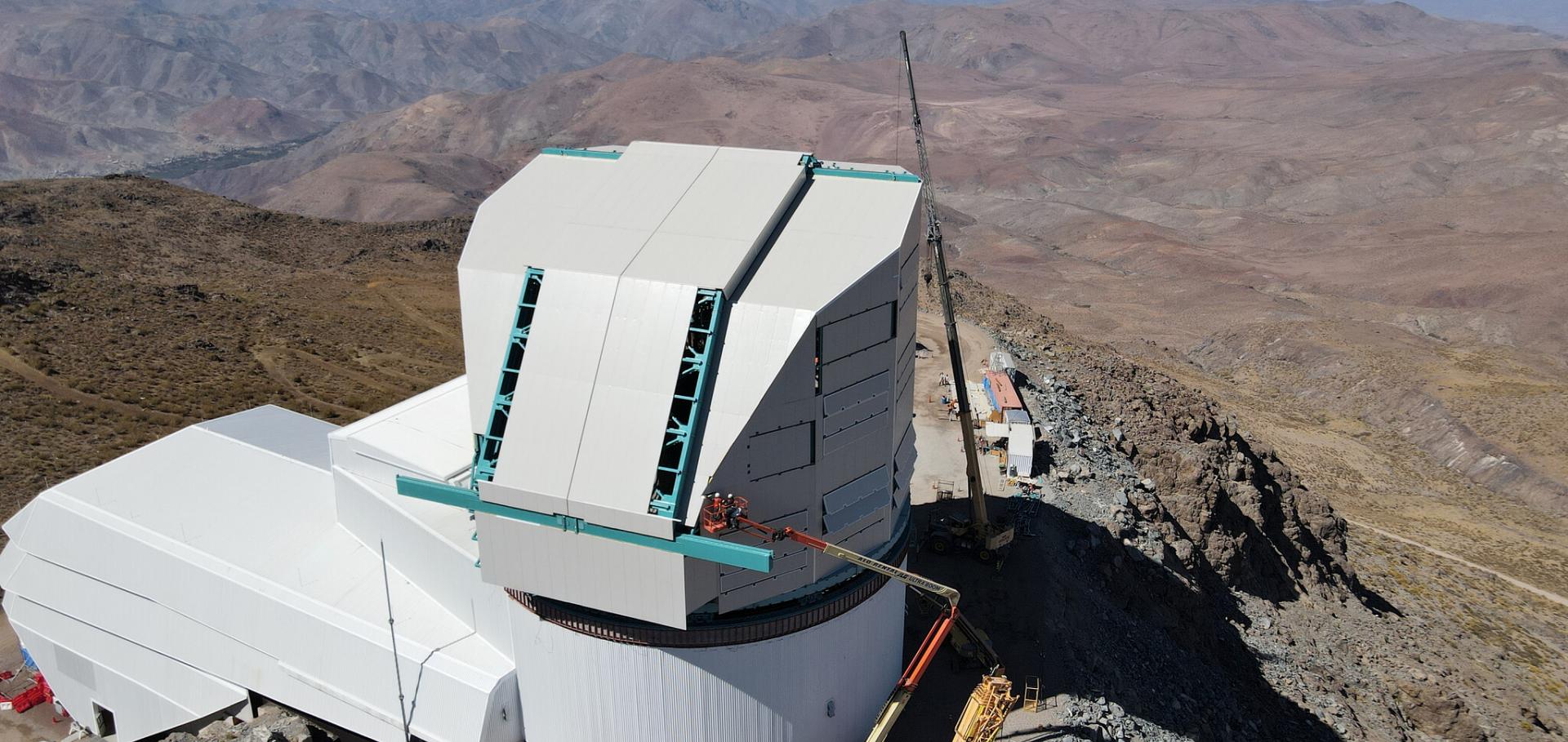
Planetesimals inevitably bear the signatures of their natal environment, preserving in their composition a record of the metallicity of their system's original gas and dust, albeit one altered by the formation processes. When planetesimals are dispersed from their system of origin, this record is carried with them. As each star is likely to contribute at least 1012 interstellar objects (ISOs), the Galaxy's drifting population of ISOs provides an overview of the properties of its stellar population through time. Using the EAGLE cosmological simulations and models of protoplanetary formation, our modeling predicts an ISO population with a bimodal distribution in their water mass fraction: objects formed in low-metallicity, typically older, systems have a higher water fraction than their counterparts formed in high-metallicity protoplanetary disks, and these water-rich objects comprise the majority of the population. Both detected ISOs seem to belong to the lower water fraction population; these results suggest they come from recently formed systems. We show that the population of ISOs in galaxies with different star formation histories will have different proportions of objects with high and low water fractions. This work suggests that it is possible that the upcoming Vera C. Rubin Observatory Legacy Survey of Space and Time will detect a large enough population of ISOs to place useful constraints on models of protoplanetary disks, as well as galactic structure and evolution.