

Synergy between the large synoptic survey telescope and the square kilometre array
Proceedings of Science 9-13-June-2014 (2014)
Abstract:
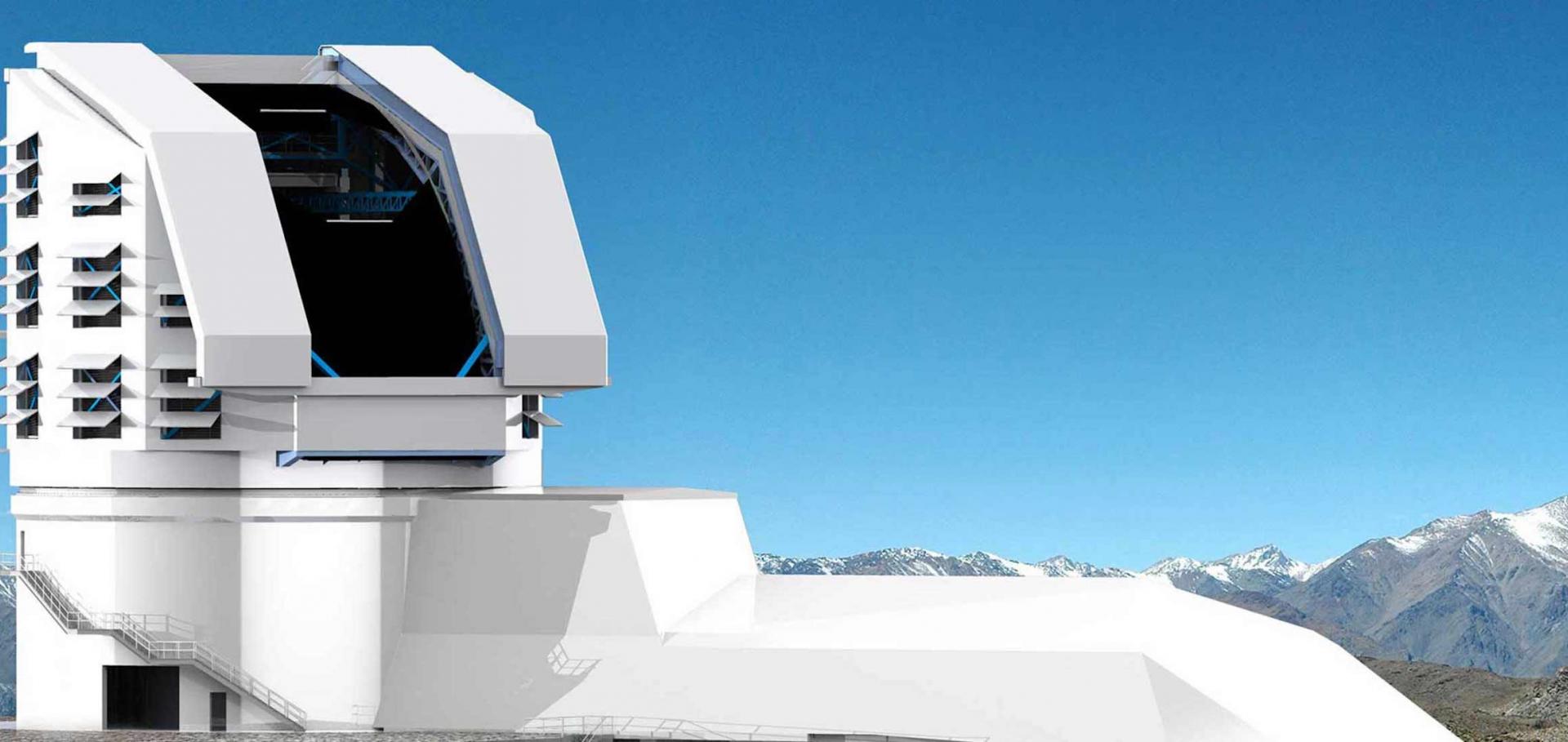
We provide an overview of the science benefits of combining information from the Square Kilometre Array (SKA) and the Large Synoptic Survey Telescope (LSST). We first summarise the capabilities and timeline of the LSST and overview its science goals. We then discuss the science questions in common between the two projects, and how they can be best addressed by combining the data from both telescopes. We describe how weak gravitational lensing and galaxy clustering studies with LSST and SKA can provide improved constraints on the causes of the cosmological acceleration. We summarise the benefits to galaxy evolution studies of combining deep optical multi-band imaging with radio observations. Finally, we discuss the excellent match between one of the most unique features of the LSST, its temporal cadence in the optical waveband, and the time resolution of the SKA.THE ULTRAVIOLET-BRIGHT, SLOWLY DECLINING TRANSIENT PS1-11af AS A PARTIAL TIDAL DISRUPTION EVENT
The Astrophysical Journal American Astronomical Society 780:1 (2014) 44
The Mrk 231 molecular outflow as seen in OH
Astronomy and Astrophysics 561 (2014)
Abstract:
We report on the Herschel/PACS observations of OH in Mrk 231, with detections in nine doublets observed within the PACS range, and present radiative-transfer models for the outflowing OH. Clear signatures of outflowing gas are found in up to six OH doublets with different excitation requirements. At least two outflowing components are identified, one with OH radiatively excited, and the other with low excitation, presumably spatially extended and roughly spherical. Particularly prominent, the blue wing of the absorption detected in the in-ladder 2Π3/2J= 9/2 - 7/2 OH doublet at 65 μm, with Elower = 290 K, indicates that the excited outflowing gas is generated in a compact and warm (circum)nuclear region. Because the excited, outflowing OH gas in Mrk 231 is associated with the warm, far-infrared continuum source, it is most likely more compact (diameter of ~200-300 pc) than that probed by CO and HCN. Nevertheless, its mass-outflow rate per unit of solid angle as inferred from OH is similar to that previously derived from CO, ≥ 70 × (2.5 × 10-6/XOH) M yr-1 sr-1, where XOH is the OH abundance relative to H nuclei. In spherical symmetry, this would correspond to ≥850 × (2.5 × 10-6/XOH) M yr-1, though significant collimation is inferred from the line profiles. The momentum flux of the excited component attains ~15 LAGN/c, with an OH column density of (1.5-3) × 1017 cm-2 and a mechanical luminosity of ~1011L. In addition, the detection of very excited, radiatively pumped OH peaking at central velocities indicates the presence of a nuclear reservoir of gas rich in OH, plausibly the 130 pc scale circumnuclear torus previously detected in OH megamaser emission, that may be feeding the outflow. An exceptional 18OH enhancement, with OH/18OH ≤ 30 at both central and blueshifted velocities, is most likely the result of interstellar-medium processing by recent starburst and supernova activity within the circumnuclear torus or thick disk. © ESO, 2013.The SKA view of the interplay between SF and AGN Activity, and its role in Galaxy evolution
Proceedings of Science 9-13-June-2014 (2014)
Abstract:
It has become apparent that active galactic nuclei (AGN) may have a significant impact on the growth and evolution of their host galaxies and vice versa but a detailed understanding of the interplay between these processes remains elusive. Deep radio surveys provide a powerful, obscuration-independent tool for measuring both star formation and AGN activity in highredshift galaxies. Multiwavelength studies of deep radio fields show a composite population of star-forming galaxies and AGN, with the former dominating at the lowest flux densities (S1:4GHz <100 mJy). The sensitivity and resolution of the SKA will allow us to identify, and separately trace, the total star formation in the bulges of individual high-redshift galaxies, the related nuclear activity and any star formation occurring on larger scales within a disc. We will therefore gain a detailed picture of the apparently simultaneous development of stellar populations and black holes in the redshift range where both star-formation and AGN activity peak (1z4). In this chapter we discuss the role of the SKA in studying the connection between AGN activity and galaxy evolution, and the most critical technical requirements for such of studies.The astrophysics of star formation across cosmic time at &10 GHz with the square kilometre array
Proceedings of Science 9-13-June-2014 (2014)