Home
Department Of Physics text logo
  • Research
    • Our research
    • Our research groups
    • Our research in action
    • Research funding support
    • Summer internships for undergraduates
  • Study
    • Undergraduates
    • Postgraduates
  • Engage
    • For alumni
    • For business
    • For schools
    • For the public
  • Support
Menu
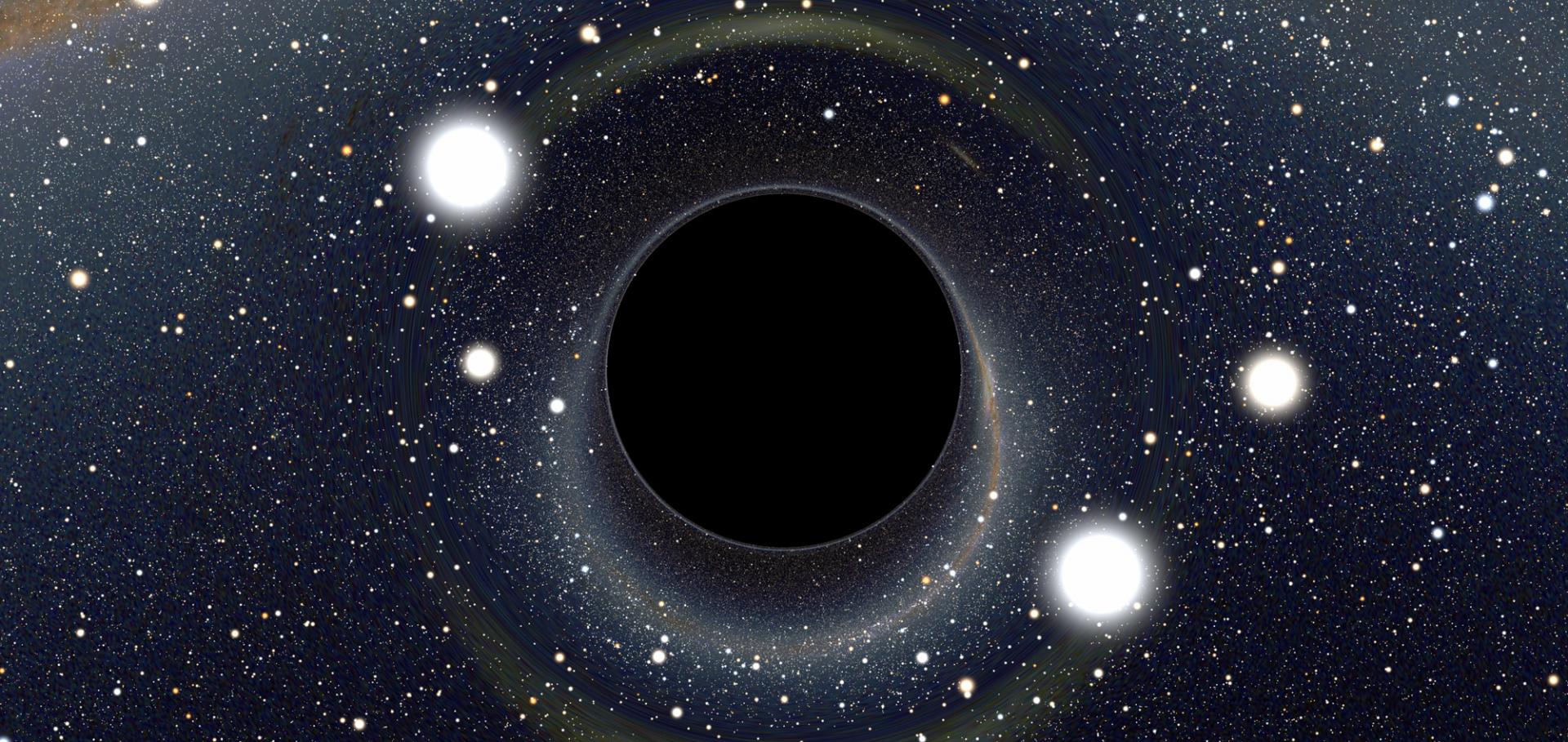
Black Hole

Lensing of space time around a black hole. At Oxford we study black holes observationally and theoretically on all size and time scales - it is some of our core work.

Credit: ALAIN RIAZUELO, IAP/UPMC/CNRS. CLICK HERE TO VIEW MORE IMAGES.

Prof. Niranjan Thatte

Professor of Astrophysics

Research theme

  • Astronomy and astrophysics
  • Instrumentation
  • Exoplanets and planetary physics

Sub department

  • Astrophysics

Research groups

  • Astronomical instrumentation
  • Exoplanets and Stellar Physics
  • Galaxy formation and evolution
  • Extremely Large Telescope
Niranjan.Thatte@physics.ox.ac.uk
Telephone: 01865 (2)73412
Denys Wilkinson Building, room 709
  • About
  • Teaching
  • Publications

Teaching Insights

Education

School is to make students 'Yearn to Learn'. College is to get students to 'Learn How to Learn'

Design of the HARMONI pyramid WFS module

AO4ELT 2019 - Proceedings 6th Adaptive Optics for Extremely Large Telescopes (2019)

Authors:

N Schwartz, JF Sauvage, E Renault, C Correia, B Neichel, T Fusco, K Dohlen, K El Hadi, C Petit, E Choquet, V Chambouleyron, J Paufique, F Clarke, N Thatte, I Bryson

Abstract:

© 2019 AO4ELT 2019 - Proceedings 6th Adaptive Optics for Extremely Large Telescopes. All rights reserved. Current designs for all three extremely large telescopes show the overwhelming adoption of the pyramid wavefront sensor (P-WFS) as the WFS of choice for adaptive optics (AO) systems sensing on natural guide stars (NGS) or extended objects. The key advantages of the P-WFS over the Shack-Hartmann are known and are mainly provided by the improved sensitivity (fainter NGS) and reduced sensitivity to spatial aliasing. However, robustness and tolerances of the P-WFS for the ELTs are not currently well understood. In this paper, we present simulation results for the single-conjugate AO mode of HARMONI, a visible and near-infrared integral field spectrograph for the European Extremely Large Telescope. We first explore the wavefront sensing issues related to the telescope itself; namely the island effect (i.e. differential piston) and M1 segments phasing errors. We present mitigation strategies to the island effect and their performance. We then focus on some performance optimisation aspects of the AO design to explore the impact of the RTC latency and the optical gain issues, which will in particular affect the high-contrast mode of HARMONI. Finally, we investigate the influence of the quality of glass pyramid prism itself, and of optical aberrations on the final AO performance. By relaxing the tolerances on the fabrication of the prism, we are able to reduce hardware costs and simplify integration. We show the importance of calibration (i.e. updating the control matrix) to capture any displacement of the telescope pupil and rotation of the support structure for M4. We also show the importance of the number of pixels used for wavefront sensing to relax tolerances of the pyramid prism. Finally, we present a detailed optical design of the pyramid prism, central element of the P-WFS.
Details from ArXiV

Near infrared throughput and stray light measurements of diffraction gratings for ELT-HARMONI

Proceedings of SPIE Society of Photo-optical Instrumentation Engineers 10706 (2018)

Authors:

M Rodrigues, John Capone, F Clarke, A Earle, T Foster, J Lynn, K Obrien, M Tecza, NA Thatte, I Tosh, A Hidalgo Valadez, IJ Lewis
More details from the publisher
Details from ORA
More details

Opto-mechanical designs for the HARMONI adaptive optics systems

Proceedings of SPIE SPIE 10703 (2018)

Authors:

K Dohlen, TJ Morris, J Piqueras Lopez, A Calcines-Rosario, A Costille, M Dubbeldam, K El Hadi, T Fusco, M Llored, B Neichel, S Pascal, J-F Sauvage, P Vola, Fraser Clarke, H Schnetler, I Bryson, Niranjan Thatte

Abstract:

HARMONI is a visible and near-infrared integral field spectrograph equipped with two complementary adaptive optics systems, fully integrated within the instrument. A Single Conjugate AO (SCAO) system offers high performance for a limited sky coverage and a Laser Tomographic AO (LTAO) system provides AO correction with a very high sky-coverage. While the deformable mirror performing real-time correction of the atmospheric disturbances is located within the telescope itself, the instrument contains a suite of state-of-the-art and innovative wavefront sensor systems. Laser guide star sensors (LGSS) are located at the entrance of the instrument and fed by a dichroic beam splitter, while the various natural guide star sensors for LTAO and SCAO are located close to the science focal plane. We present opto-mechanical architecture and design at PDR level for these wavefront sensor systems.
More details from the publisher
Details from ORA
More details
Details from ArXiV

System analysis and expected performance of a high-contrast module for HARMONI

SPIE, the international society for optics and photonics 10702 (2018) 107029n

Authors:

Alexis Carlotti, François Hénault, Kjetil Dohlen, Jean-François Sauvage, Patrick Rabou, Yves Magnard, Arthur Vigan, David Mouillet, Gael Chauvin, Pascal Vola, Mickael Bonnefoy, Thierry Fusco, Kacem El Hadi, Niranjan Thatte, Fraser Clarke, Matthias Tecza, Ian Bryson, Hermine Schnetler, Christophe Vérinaud
More details from the publisher
More details

ELT HARMONI: image slicer preliminary design

Proceedings of SPIE: Ground-based and Airborne Instrumentation for Astronomy VII Society of Photo-Optical Instrumentation Engineers 10702 (2018)

Authors:

F Laurent, D Boudon, J Kosmalski, M Loupias, G Raffault, A Remillieux, Niranjan Thatte, I Bryson, H Schnetler, F Clarke, Matthias Tecza

Abstract:

Harmoni is the ELT's first light visible and near-infrared integral field spectrograph. It will provide four different spatial scales, ranging from coarse spaxels of 60 × 30 mas best suited for seeing limited observations, to 4 mas spaxels that Nyquist sample the diffraction limited point spread function of the ELT at near-infrared wavelengths. Each spaxel scale may be combined with eleven spectral settings, that provide a range of spectral resolving powers from R 3500 to R 20000 and instantaneous wavelength coverage spanning the 0.47 - 2.45 μm wavelength range of the instrument. The consortium consists of several institutes in Europe under leadership of Oxford University. Harmoni is starting its Final Design Phase after a Preliminary Design Phase in November, 2017. The CRAL has the responsibility of the Integral Field Unit design linking the Preoptics to the 4 Spectrographs. It is composed of a field splitter associated with a relay system and an image slicer that create from a rectangular Field of View a very long (540mm) output slit for each spectrograph. In this paper, the preliminary design and performances of Harmoni Image Slicer will be presented including image quality, pupil distortion and slit geometry. It has been designed by CRAL for Harmoni PDR in November, 2017. Special emphases will be put on straylight analysis and slice diffraction. The optimisation of the manufacturing and slit geometry will also be reported.
More details from the publisher
Details from ORA
More details
More details
Details from ArXiV

Pagination

  • First page First
  • Previous page Prev
  • …
  • Page 11
  • Page 12
  • Page 13
  • Page 14
  • Current page 15
  • Page 16
  • Page 17
  • Page 18
  • Page 19
  • …
  • Next page Next
  • Last page Last

Footer Menu

  • Contact us
  • Giving to the Dept of Physics
  • Work with us
  • Media

User account menu

  • Log in

Follow us

FIND US

Clarendon Laboratory,

Parks Road,

Oxford,

OX1 3PU

CONTACT US

Tel: +44(0)1865272200

University of Oxfrod logo Department Of Physics text logo
IOP Juno Champion logo Athena Swan Silver Award logo

© University of Oxford - Department of Physics

Cookies | Privacy policy | Accessibility statement

Built by: Versantus

  • Home
  • Research
  • Study
  • Engage
  • Our people
  • News & Comment
  • Events
  • Our facilities & services
  • About us
  • Giving to Physics
  • Current students
  • Staff intranet