Home
Department Of Physics text logo
  • Research
    • Our research
    • Our research groups
    • Our research in action
    • Research funding support
    • Summer internships for undergraduates
  • Study
    • Undergraduates
    • Postgraduates
  • Engage
    • For alumni
    • For business
    • For schools
    • For the public
  • Support
Menu
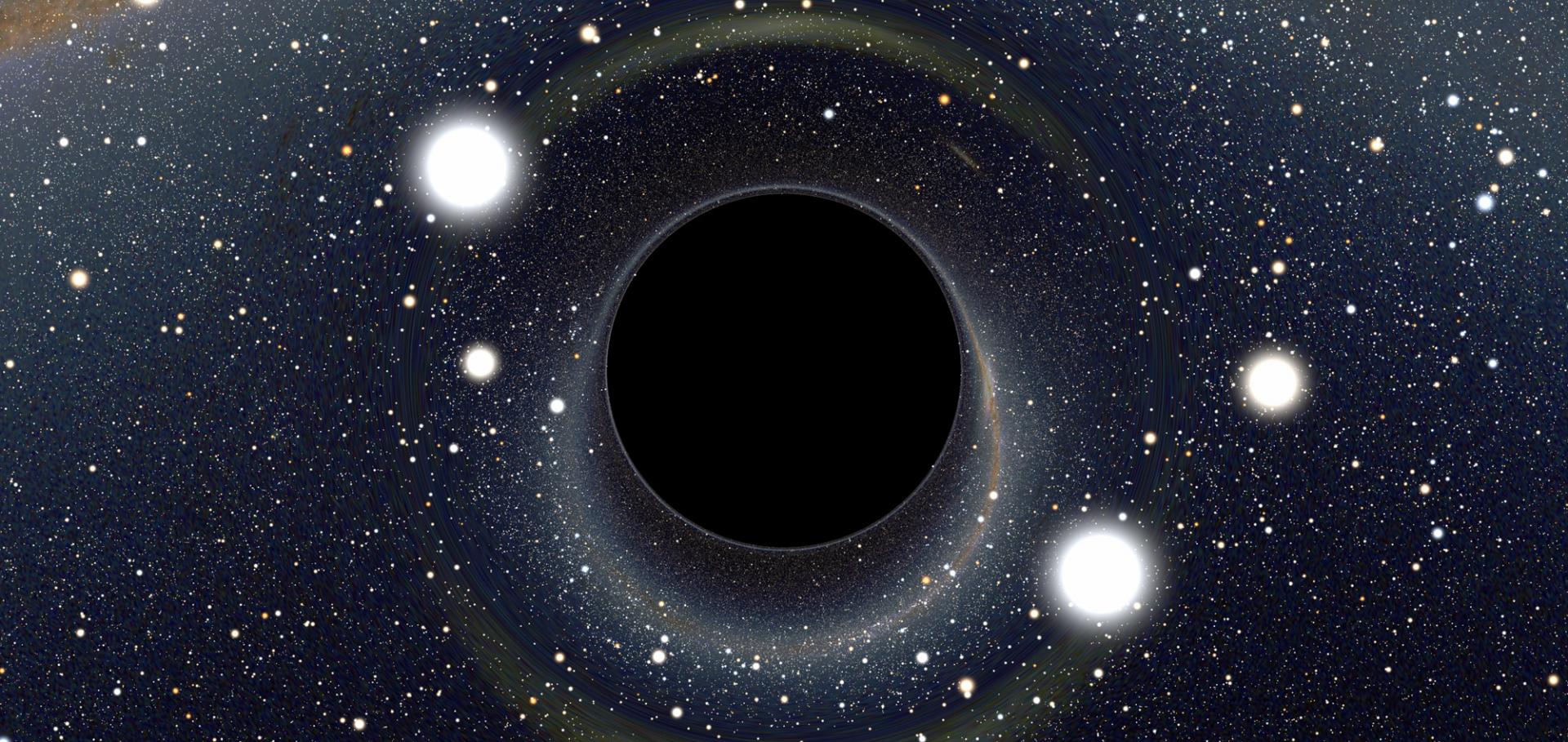
Black Hole

Lensing of space time around a black hole. At Oxford we study black holes observationally and theoretically on all size and time scales - it is some of our core work.

Credit: ALAIN RIAZUELO, IAP/UPMC/CNRS. CLICK HERE TO VIEW MORE IMAGES.

Prof. Niranjan Thatte

Professor of Astrophysics

Research theme

  • Astronomy and astrophysics
  • Instrumentation
  • Exoplanets and planetary physics

Sub department

  • Astrophysics

Research groups

  • Astronomical instrumentation
  • Exoplanets and Stellar Physics
  • Galaxy formation and evolution
  • Extremely Large Telescope
Niranjan.Thatte@physics.ox.ac.uk
Telephone: 01865 (2)73412
Denys Wilkinson Building, room 709
  • About
  • Teaching
  • Publications

Teaching Insights

Education

School is to make students 'Yearn to Learn'. College is to get students to 'Learn How to Learn'

KIDSpec: an MKID based medium resolution integral field spectrograph

Proceedings of SPIE--the International Society for Optical Engineering SPIE, the international society for optics and photonics 9147 (2014) 91470g-91470g-8

Authors:

Kieran O'Brien, Niranjan Thatte, Benjamin Mazin
More details from the publisher
More details

The spectrograph units for the HARMONI integral field spectrograph

Proceedings of SPIE--the International Society for Optical Engineering SPIE, the international society for optics and photonics 9147 (2014) 914797-914797-8

Authors:

Kieran O'Brien, Jamie R Allen, James D Lynn, Niranjan A Thatte, Ian Bryson, Fraser Clarke, Hermine Schnetler, Matthias Tecza
More details from the publisher
More details

Herschel Observations of Far-Infrared Cooling Lines in intermediate Redshift (Ultra)-luminous Infrared Galaxies

ArXiv 1401.23 (2014)

Authors:

D Rigopoulou, R Hopwood, GE Magdis, N Thatte, BM Swinyard, D Farrah, J-S Huang, A Alonso-Herrero, JJ Bock, D Clements, A Cooray, MJ Griffin, S Oliver, C Pearson, D Riechers, D Scott, A Smith, M Vaccari, I Valtchanov, L Wang

Abstract:

We report the first results from a spectroscopic survey of the [CII] 158um line from a sample of intermediate redshift (0.210^11.5 Lsun), using the SPIRE-Fourier Transform Spectrometer (FTS) on board the Herschel Space Observatory. This is the first survey of [CII] emission, an important tracer of star-formation, at a redshift range where the star-formation rate density of the Universe increases rapidly. We detect strong [CII] 158um line emission from over 80% of the sample. We find that the [CII] line is luminous, in the range (0.8-4)x10^(-3) of the far-infrared continuum luminosity of our sources, and appears to arise from photodissociation regions on the surface of molecular clouds. The L[CII]/LIR ratio in our intermediate redshift (U)LIRGs is on average ~10 times larger than that of local ULIRGs. Furthermore, we find that the L[CII]/LIR and L[CII]/LCO(1-0) ratios in our sample are similar to those of local normal galaxies and high-z star-forming galaxies. ULIRGs at z~0.5 show many similarities to the properties of local normal and high-z star forming galaxies. Our findings strongly suggest that rapid evolution in the properties of the star forming regions of luminous infrared galaxies is likely to have occurred in the last 5 billion years.
Details from ArXiV
More details from the publisher
More details

The Gemini NICI Planet-Finding Campaign: The Frequency of Planets around Young Moving Group Stars

ArXiv 1309.1462 (2013)

Authors:

Beth A Biller, Michael C Liu, Zahed Wahhaj, Eric L Nielsen, Thomas L Hayward, Jared R Males, Andrew Skemer, Laird M Close, Mark Chun, Christ Ftaclas, Fraser Clarke, Niranjan Thatte, Evgenya L Shkolnik, I Neill Reid, Markus Hartung, Alan Boss, Douglas Lin, Silvia HP Alencar, Elisabete de Gouveia Dal Pino, Jane Gregorio-Hetem, Douglas Toomey

Abstract:

We report results of a direct imaging survey for giant planets around 80 members of the Beta Pic, TW Hya, Tucana-Horologium, AB Dor, and Hercules-Lyra moving groups, observed as part of the Gemini NICI Planet-Finding Campaign. For this sample, we obtained median contrasts of \Delta H=13.9 mag at 1" in combined CH4 narrowband ADI+SDI mode and median contrasts of \Delta H=15.1 mag at 2" in H-band ADI mode. We found numerous (>70) candidate companions in our survey images. Some of these candidates were rejected as common-proper motion companions using archival data; we reobserved with NICI all other candidates that lay within 400 AU of the star and were not in dense stellar fields. The vast majority of candidate companions were confirmed as background objects from archival observations and/or dedicated NICI campaign followup. Four co-moving companions of brown dwarf or stellar mass were discovered in this moving group sample: PZ Tel B (36+-6 MJup, 16.4+-1.0 AU, Biller et al. 2010), CD -35 2722B (31+-8 MJup, 67+-4 AU, Wahhaj et al. 2011), HD 12894B (0.46+-0.08 MSun, 15.7+-1.0 AU), and BD+07 1919C (0.20+-0.03 MSun, 12.5+-1.4 AU). From a Bayesian analysis of the achieved H band ADI and ASDI contrasts, using power-law models of planet distributions and hot-start evolutionary models, we restrict the frequency of 1--20 MJup companions at semi-major axes from 10--150 AU to <18% at a 95.4% confidence level using DUSTY models and to <6% at a 95.4% using COND models.
Details from ArXiV
More details from the publisher
More details

Fast and Slow Rotators in the Densest Environments: a SWIFT IFS study of the Coma Cluster

ArXiv 1308.6581 (2013)

Authors:

RCW Houghton, Roger L Davies, F D'Eugenio, N Scott, N Thatte, F Clarke, M Tecza, GS Salter, LMR Fogarty, T Goodsall

Abstract:

We present integral-field spectroscopy of 27 galaxies in the Coma cluster observed with the Oxford SWIFT spectrograph, exploring the kinematic morphology-density relationship in a cluster environment richer and denser than any in the ATLAS3D survey. Our new data enables comparison of the kinematic morphology relation in three very different clusters (Virgo, Coma and Abell 1689) as well as to the field/group environment. The Coma sample was selected to match the parent luminosity and ellipticity distributions of the early-type population within a radius 15' (0.43 Mpc) of the cluster centre, and is limited to r' = 16 mag (equivalent to M_K = -21.5 mag), sampling one third of that population. From analysis of the lambda-ellipticity diagram, we find 15+-6% of early-type galaxies are slow rotators; this is identical to the fraction found in the field and the average fraction in the Virgo cluster, based on the ATLAS3D data. It is also identical to the average fraction found recently in Abell 1689 by D'Eugenio et al.. Thus it appears that the average slow rotator fraction of early type galaxies remains remarkably constant across many different environments, spanning five orders of magnitude in galaxy number density. However, within each cluster the slow rotators are generally found in regions of higher projected density, possibly as a result of mass segregation by dynamical friction. These results provide firm constraints on the mechanisms that produce early-type galaxies: they must maintain a fixed ratio between the number of fast rotators and slow rotators while also allowing the total early-type fraction to increase in clusters relative to the field. A complete survey of Coma, sampling hundreds rather than tens of galaxies, could probe a more representative volume of Coma and provide significantly stronger constraints, particularly on how the slow rotator fraction varies at larger radii.
Details from ArXiV
More details from the publisher
More details

Pagination

  • First page First
  • Previous page Prev
  • …
  • Page 19
  • Page 20
  • Page 21
  • Page 22
  • Current page 23
  • Page 24
  • Page 25
  • Page 26
  • Page 27
  • …
  • Next page Next
  • Last page Last

Footer Menu

  • Contact us
  • Giving to the Dept of Physics
  • Work with us
  • Media

User account menu

  • Log in

Follow us

FIND US

Clarendon Laboratory,

Parks Road,

Oxford,

OX1 3PU

CONTACT US

Tel: +44(0)1865272200

University of Oxfrod logo Department Of Physics text logo
IOP Juno Champion logo Athena Swan Silver Award logo

© University of Oxford - Department of Physics

Cookies | Privacy policy | Accessibility statement

Built by: Versantus

  • Home
  • Research
  • Study
  • Engage
  • Our people
  • News & Comment
  • Events
  • Our facilities & services
  • About us
  • Giving to Physics
  • Current students
  • Staff intranet