

Effects of boosting on extragalactic components: methods and statistical studies
Monthly Notices of the Royal Astronomical Society 513:2 (2022) 2252-2270
Abstract:
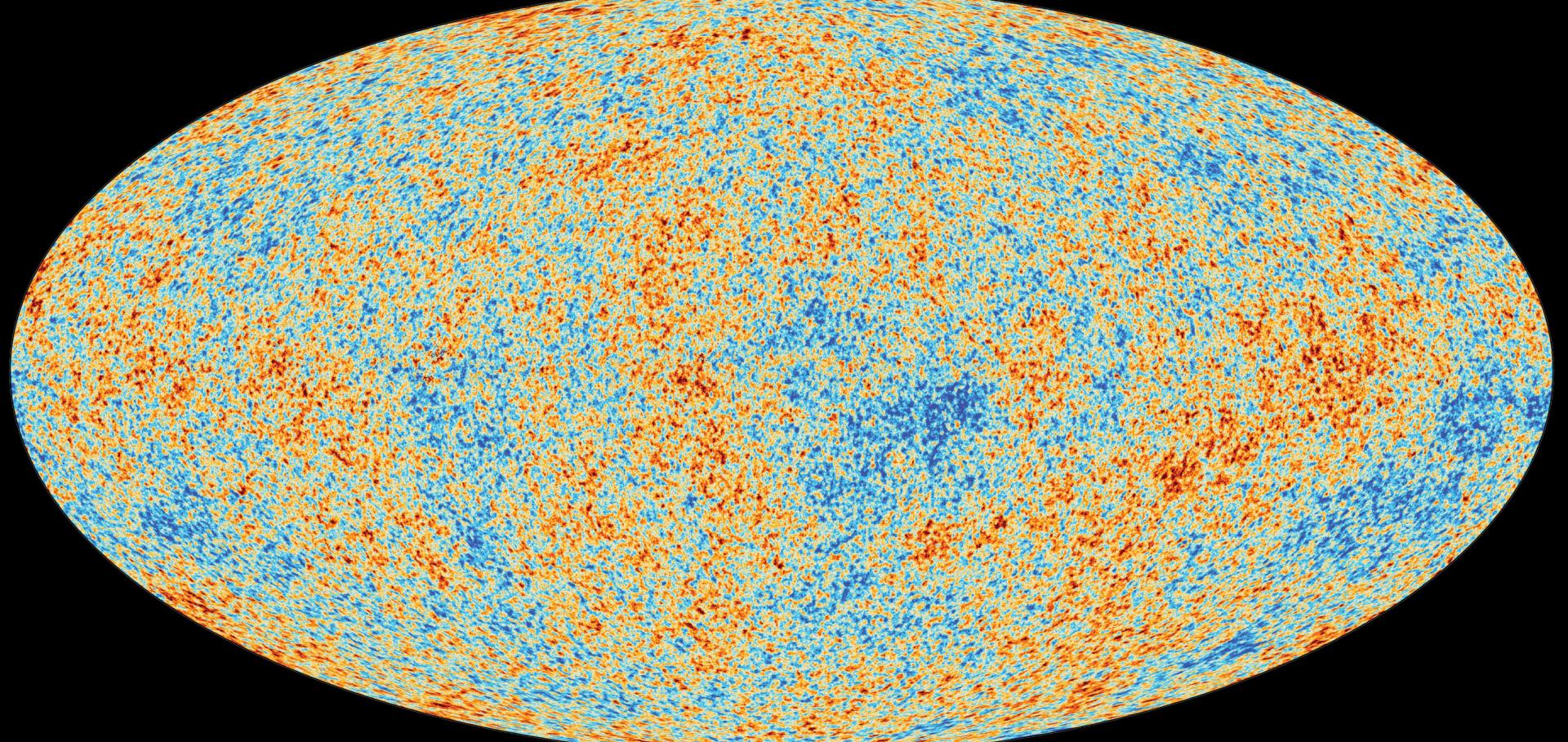
In this work, we examine the impact of our motion with respect to the Cosmic Microwave Background (CMB) rest frame on statistics of CMB maps by examining the one-, two-, three-, and four- point statistics of simulated maps of the CMB and Sunyaev-Zeldovich (SZ) effects. We validate boosting codes by comparing their outcomes for temperature and polarization power spectra up to ℓ ∼ 6000. We derive and validate a new analytical formula for the computation of the boosted power spectrum of a signal with a generic frequency dependence. As an example we show how this increases the boosting correction to the power spectrum of CMB intensity measurements by ∼30 per cent at 150 GHz. We examine the effect of boosting on thermal and kinetic SZ power spectra from semianalytical and hydrodynamical simulations; the boosting correction is generally small for both simulations, except when considering frequencies near the tSZ null. For the non-Gaussian statistics, in general we find that boosting has no impact with two exceptions. We find that, whilst the statistics of the CMB convergence field are unaffected, quadratic estimators that are used to measure this field can become biased at the O(1)per cent level by boosting effects. We present a simple modification to the standard estimators that removes this bias. Second, bispectrum estimators can receive a systematic bias from the Doppler induced quadrupole when there is anisotropy in the sky - in practice this anisotropy comes from masking and inhomogeneous noise. This effect is unobservable and already removed by existing analysis methods.Forecasting the potential of weak lensing magnification to enhance LSST large-scale structure analyses
Monthly Notices of the Royal Astronomical Society 513:1 (2022) 1210-1228
Abstract:
Recent works have shown that weak lensing magnification must be included in upcoming large-scale structure analyses, such as for the Vera C. Rubin Observatory Legacy Survey of Space and Time (LSST), to avoid biasing the cosmological results. In this work, we investigate whether including magnification has a positive impact on the precision of the cosmological constraints, as well as being necessary to avoid bias. We forecast this using an LSST mock catalogue and a halo model to calculate the galaxy power spectra. We find that including magnification has little effect on the precision of the cosmological parameter constraints for an LSST galaxy clustering analysis, where the halo model parameters are additionally constrained by the galaxy luminosity function. In particular, we find that for the LSST gold sample (i 25.3) including weak lensing magnification only improves the galaxy clustering constraint on.Where is the ringdown? Reconstructing quasinormal modes from dispersive waves
(2022)
MgII in the JWST era: a probe of Lyman continuum escape?
(2022)
MgII in the JWST era: a probe of Lyman continuum escape?
(2022)