

Weak gravitational lensing with the Square Kilometre Array
Proceedings of Science 9-13-June-2014 (2014)
Abstract:
We investigate the capabilities of various stages of the SKA to perform world-leading weak gravitational lensing surveys. We outline a way forward to develop the tools needed for pursuing weak lensing in the radio band. We identify the key analysis challenges and the key pathfinder experiments that will allow us to address them in the run up to the SKA. We identify and summarize the unique and potentially very powerful aspects of radio weak lensing surveys, facilitated by the SKA, that can solve major challenges in the field of weak lensing. These include the use of polarization and rotational velocity information to control intrinsic alignments, and the new area of weak lensing using intensity mapping experiments. We show how the SKA lensing surveys will both complement and enhance corresponding efforts in the optical wavebands through cross-correlation techniques and by way of extending the reach of weak lensing to high redshift.CONSTRAINT ON LIGHT DIPOLE DARK MATTER FROM HELIOSEISMOLOGY
ASTROPHYSICAL JOURNAL LETTERS 780:2 (2014) ARTN L15
Galaxy Zoo: Observing Secular Evolution Through Bars
STRUCTURE AND DYNAMICS OF DISK GALAXIES 480 (2014) 165-169
Constraints on primordial magnetic fields from CMB distortions in the axiverse
Physical Review D - Particles, Fields, Gravitation and Cosmology 88:12 (2013)
Abstract:
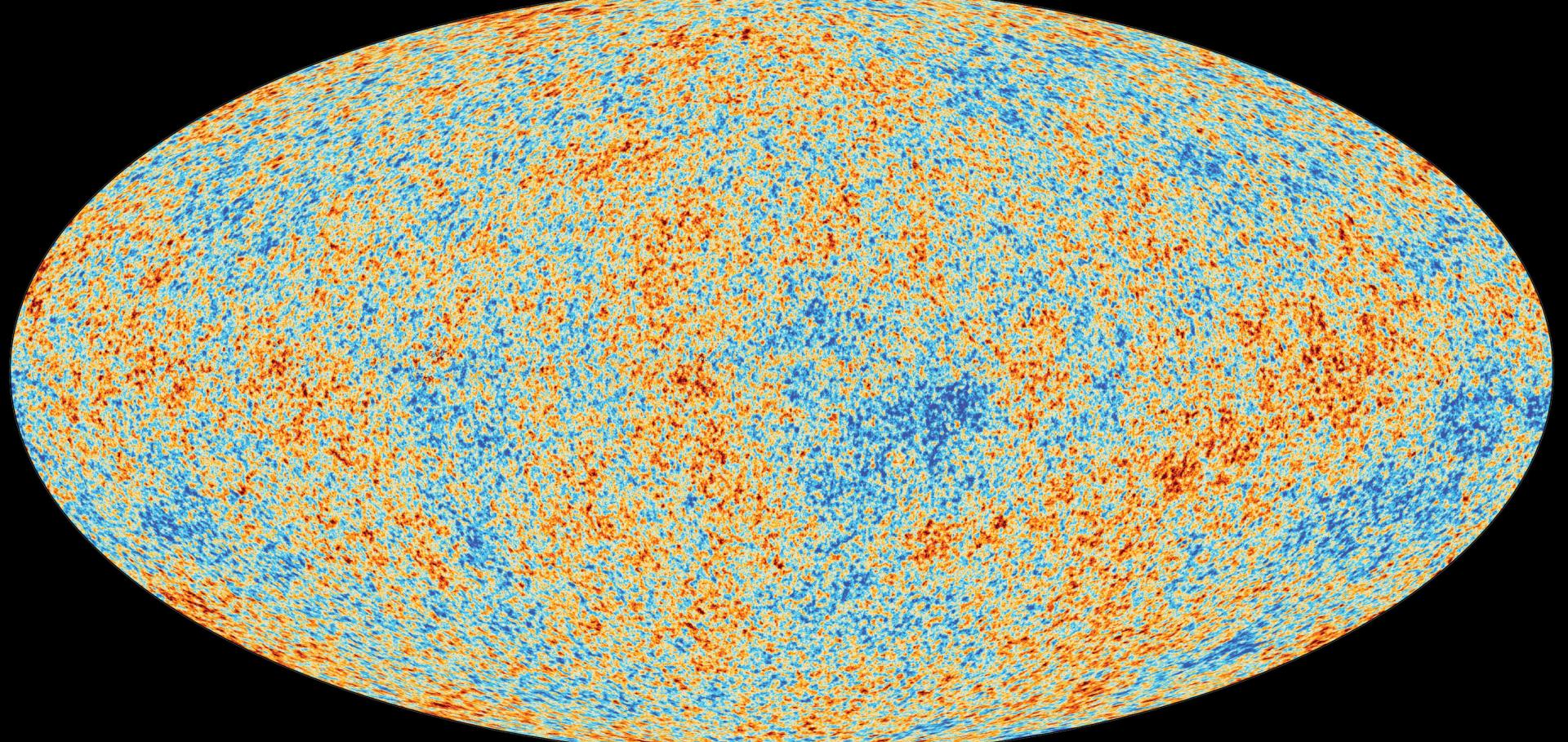
Measuring spectral distortions of the cosmic microwave background (CMB) is attracting considerable attention as a probe of high energy particle physics in the cosmological context, since primordial inflation explorer (PIXIE) and polarized radiation imaging and spectroscopy mission (PRISM) have recently been proposed. In this paper, CMB distortions due to resonant conversions between CMB photons and light axionlike particles (ALPs) are investigated, motivated by the string axiverse scenario which suggests the presence of a plenitude of light axion particles. The distortions due to resonant conversions have a frequency-independent shape, in contrast to μ and y distortions. Therefore, one can distinguish the distortions due to resonant conversions from μ and y distortions. Since these resonant conversions depend on the strength of primordial magnetic fields, constraints on CMB distortions can provide an upper limit on the product of the photon-ALP coupling constant g and the comoving strength of primordial magnetic fields B. Potentially feasible constraints from PIXIE/PRISM can set a limit gBâ‰210-16 GeV-1 nG for ALP mass mφâ‰210-14 eV. Although this result is not a direct constraint on g and B, it is significantly tighter than the product of the current upper limits on g and B. © 2013 American Physical Society.Probing the accelerating Universe with radio weak lensing in the JVLA Sky Survey
ArXiv 1312.5618 (2013)