

Erratum: Archipelagian cosmology: Dynamics and observables in a universe with discretized matter content [Phys. Rev. D 80, 103503 (2009)]
Physical Review D American Physical Society (APS) 84:10 (2011) 109902
Power Spectrum Estimation from Peculiar Velocity Catalogues
ArXiv 1111.3338 (2011)
Abstract:
The peculiar velocities of galaxies are an inherently valuable cosmological probe, providing an unbiased estimate of the distribution of matter on scales much larger than the depth of the survey. Much research interest has been motivated by the high dipole moment of our local peculiar velocity field, which suggests a large scale excess in the matter power spectrum, and can appear to be in some tension with the LCDM model. We use a composite catalogue of 4,537 peculiar velocity measurements with a characteristic depth of 33 h-1 Mpc to estimate the matter power spectrum. We compare the constraints with this method, directly studying the full peculiar velocity catalogue, to results from Macaulay et al. (2011), studying minimum variance moments of the velocity field, as calculated by Watkins, Feldman & Hudson (2009) and Feldman, Watkins & Hudson (2010). We find good agreement with the LCDM model on scales of k > 0.01 h Mpc-1. We find an excess of power on scales of k < 0.01 h Mpc-1, although with a 1 sigma uncertainty which includes the LCDM model. We find that the uncertainty in the excess at these scales is larger than an alternative result studying only moments of the velocity field, which is due to the minimum variance weights used to calculate the moments. At small scales, we are able to clearly discriminate between linear and nonlinear clustering in simulated peculiar velocity catalogues, and find some evidence (although less clear) for linear clustering in the real peculiar velocity data.First season quiet observations: Measurements of cosmic microwave background polarization power spectra at 43 GHz in the multipole range 25 ≤ ℓ ≤ 475
Astrophysical Journal 741:2 (2011)
Abstract:
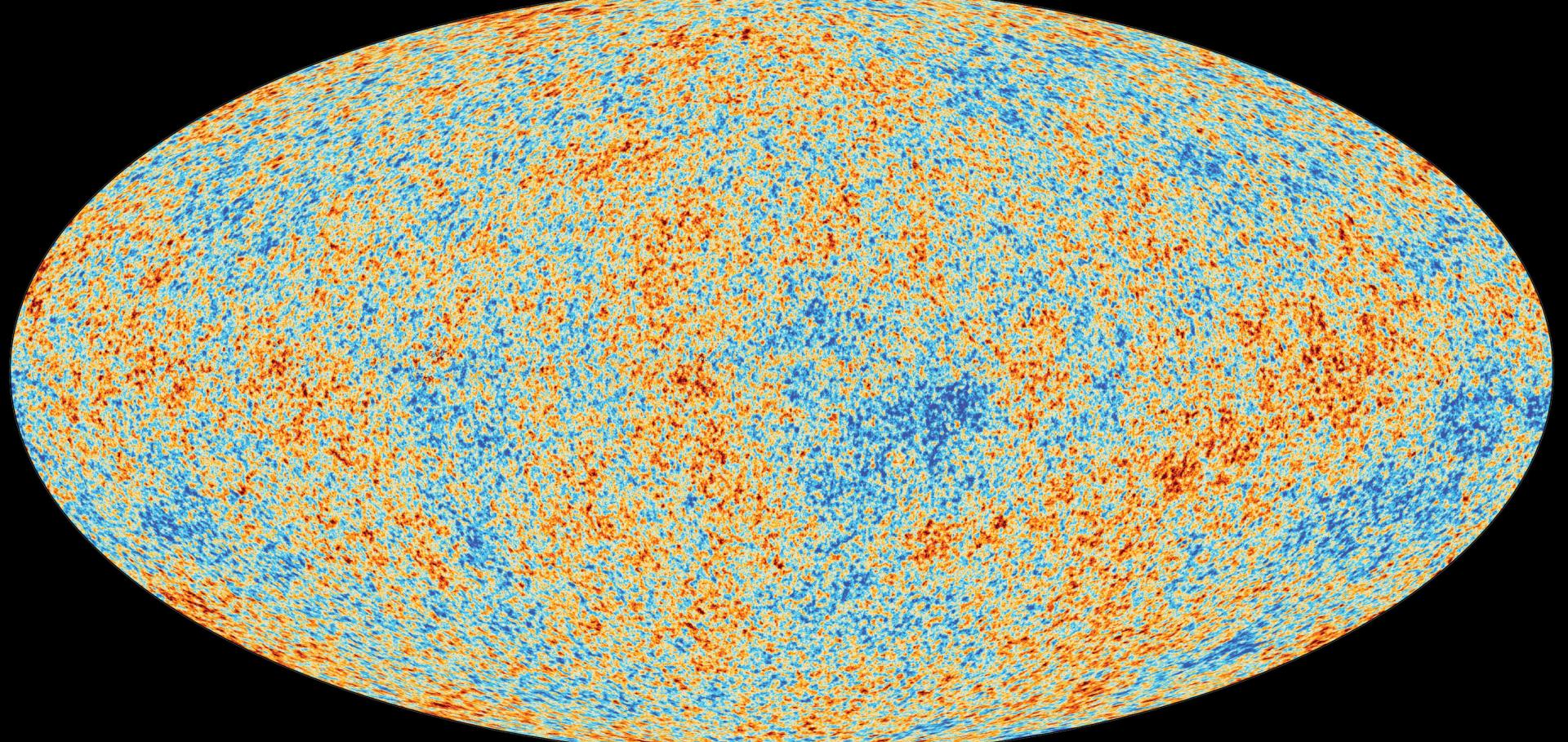
The Q/U Imaging ExperimenT (QUIET) employs coherent receivers at 43GHz and 94GHz, operating on the Chajnantor plateau in the Atacama Desert in Chile, to measure the anisotropy in the polarization of the cosmic microwave background (CMB). QUIET primarily targets the B modes from primordial gravitational waves. The combination of these frequencies gives sensitivity to foreground contributions from diffuse Galactic synchrotron radiation. Between 2008 October and 2010 December, over 10,000hr of data were collected, first with the 19 element 43 GHz array (3458hr) and then with the 90 element 94 GHz array. Each array observes the same four fields, selected for low foregrounds, together covering ≈1000 deg2. This paper reports initial results from the 43 GHz receiver, which has an array sensitivity to CMB fluctuations of 69μK√s. The data were extensively studied with a large suite of null tests before the power spectra, determined with two independent pipelines, were examined. Analysis choices, including data selection, were modified until the null tests passed. Cross-correlating maps with different telescope pointings is used to eliminate a bias. This paper reports the EE, BB, and EB power spectra in the multipole range ℓ = 25-475. With the exception of the lowest multipole bin for one of the fields, where a polarized foreground, consistent with Galactic synchrotron radiation, is detected with 3σ significance, the E-mode spectrum is consistent with the ΛCDM model, confirming the only previous detection of the first acoustic peak. The B-mode spectrum is consistent with zero, leading to a measurement of the tensor-to-scalar ratio of r = 0.35+1.06-0.87. The combination of a new time-stream "double-demodulation" technique, side-fed Dragonian optics, natural sky rotation, and frequent boresight rotation leads to the lowest level of systematic contamination in the B-mode power so far reported, below the level of r = 0.1. © 2011. The American Astronomical Society. All rights reserved.Galaxy Zoo: building the low-mass end of the red sequence with local post-starburst galaxies
ArXiv 1111.1785 (2011)