

Extreme value statistics of smooth random Gaussian fields
ArXiv 1102.5707 (2011)
Abstract:
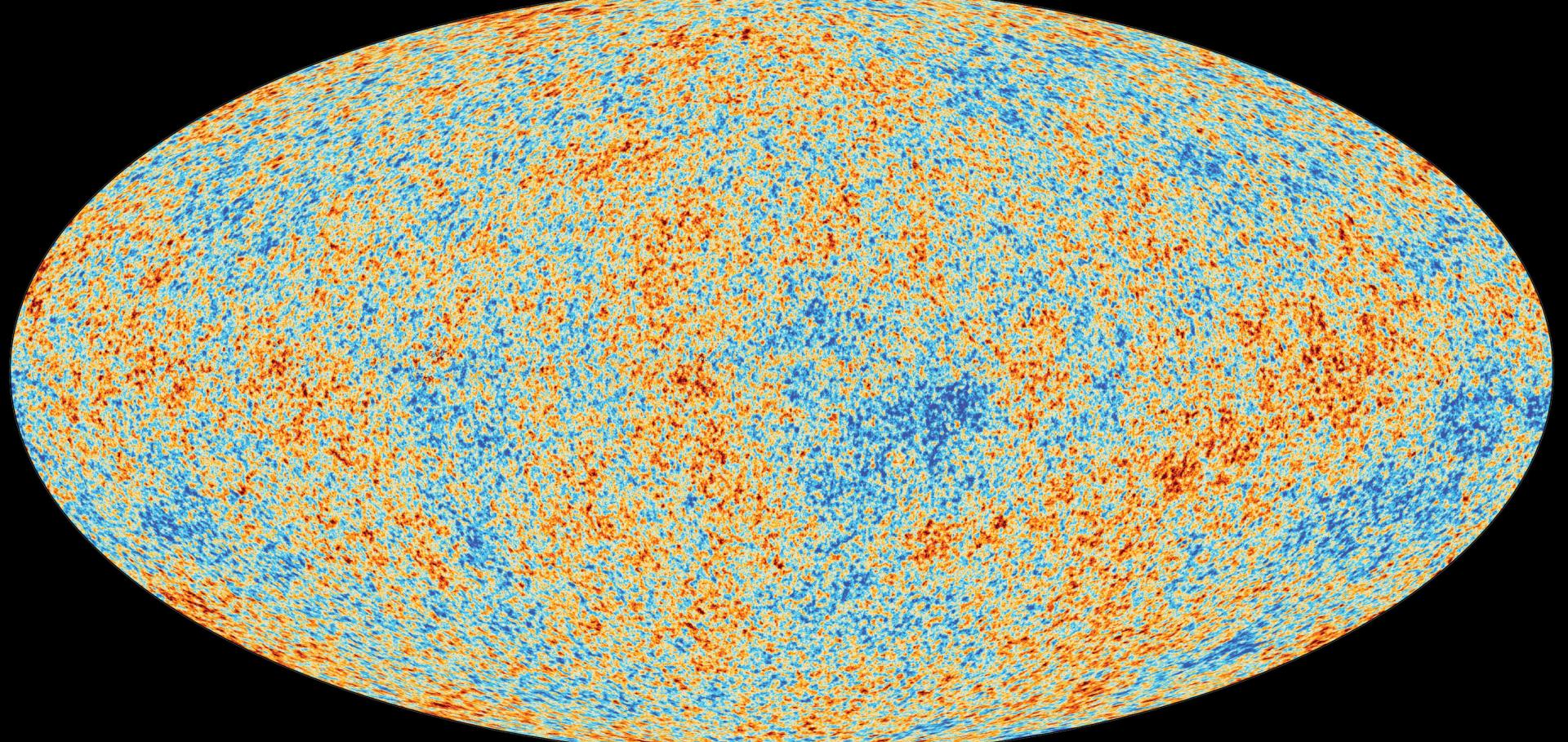
We consider the Gumbel or extreme value statistics describing the distribution function p_G(x_max) of the maximum values of a random field x within patches of fixed size. We present, for smooth Gaussian random fields in two and three dimensions, an analytical estimate of p_G which is expected to hold in a regime where local maxima of the field are moderately high and weakly clustered. When the patch size becomes sufficiently large, the negative of the logarithm of the cumulative extreme value distribution is simply equal to the average of the Euler Characteristic of the field in the excursion x > x_max inside the patches. The Gumbel statistics therefore represents an interesting alternative probe of the genus as a test of non Gaussianity, e.g. in cosmic microwave background temperature maps or in three-dimensional galaxy catalogs. It can be approximated, except in the remote positive tail, by a negative Weibull type form, converging slowly to the expected Gumbel type form for infinitely large patch size. Convergence is facilitated when large scale correlations are weaker. We compare the analytic predictions to numerical experiments for the case of a scale-free Gaussian field in two dimensions, achieving impressive agreement between approximate theory and measurements. We also discuss the generalization of our formalism to non-Gaussian fields.The impact of ISM turbulence, clustered star formation and feedback on galaxy mass assembly through cold flows and mergers
(2011)
A CONSTRAINT ON THE INTEGRATED MASS POWER SPECTRUM OUT TO z = 1100 FROM LENSING OF THE COSMIC MICROWAVE BACKGROUND
The Astrophysical Journal Letters American Astronomical Society 728:1 (2011) l1
A dominant role for the immunoproteasome in CD8+ T cell responses to murine cytomegalovirus.
PLoS One 6:2 (2011) e14646
Abstract:
Murine cytomegalovirus (MCMV) is an important animal model of human cytomegalovirus (HCMV), a β-Herpesvirus that infects the majority of the world's population and causes disease in neonates and immunocompromised adults. CD8(+) T cells are a major part of the immune response to MCMV and HCMV. Processing of peptides for presentation to CD8(+) T cells may be critically dependent on the immunoproteasome, expression of which is affected by MCMV. However, the overall importance of the immunoproteasome in the generation of immunodominant peptides from MCMV is not known. We therefore examined the role of the immunoproteasome in stimulation of CD8(+) T cell responses to MCMV - both conventional memory responses and those undergoing long-term expansion or "inflation". We infected LMP7(-/-) and C57BL/6 mice with MCMV or with newly-generated recombinant vaccinia viruses (rVVs) encoding the immunodominant MCMV protein M45 in either full-length or epitope-only minigene form. We analysed CD8(+) T cell responses using intracellular cytokine stain (ICS) and MHC Class I tetramer staining for a panel of MCMV-derived epitopes. We showed a critical role for immunoproteasome in MCMV affecting all epitopes studied. Interestingly we found that memory "inflating" epitopes demonstrate reduced immunoproteasome dependence compared to non-inflating epitopes. M45-specific responses induced by rVVs remain immunoproteasome-dependent. These results help to define a critical restriction point for CD8(+) T cell epitopes in natural cytomegalovirus (CMV) infection and potentially in vaccine strategies against this and other viruses.Tracing the sound horizon scale with photometric redshift surveys
Monthly Notices of the Royal Astronomical Society Oxford University Press 411:1 (2011) 277-288