

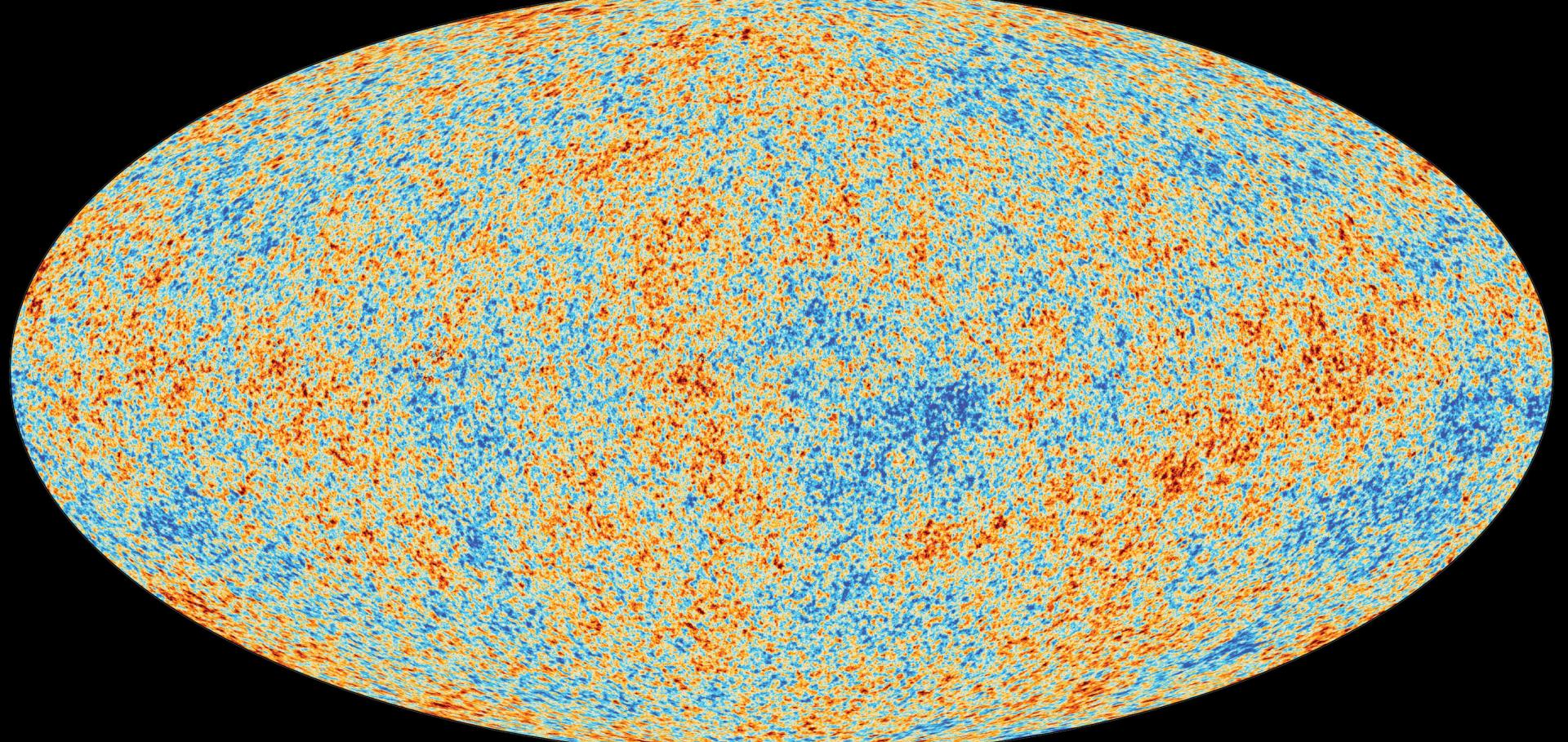
The Cℓover experiment
Proceedings of SPIE the International Society for Optical Engineering 7020 (2008)
Abstract:
CTracing high density gas in M 82 and NGC 4038
The Astropysical Journal Letters (2008)
Abstract:
We present the first detection of CS in the Antennae galaxies towards the NGC 4038 nucleus, as well as the first detections of two high-J (5-4 and 7-6) CS lines in the center of M 82. The CS(7-6) line in M 82 shows a profile that is surprisingly different to those of other low-J CS transitions we observed. This implies the presence of a separate, denser and warmer molecular gas component. The derived physical properties and the likely location of the CS(7-6) emission suggests an association with the supershell in the centre of M 82.Galaxy Zoo : Morphologies derived from visual inspection of galaxies from the Sloan Digital Sky Survey
Mon.Not.Roy.Astron.Soc. 389 (2008) 1179-1189
Abstract:
In order to understand the formation and subsequent evolution of galaxies one must first distinguish between the two main morphological classes of massive systems: spirals and early-type systems. This paper introduces a project, Galaxy Zoo, which provides visual morphological classifications for nearly one million galaxies, extracted from the Sloan Digital Sky Survey (SDSS). This achievement was made possible by inviting the general public to visually inspect and classify these galaxies via the internet. The project has obtained more than 40,000,000 individual classifications made by ~100,000 participants. We discuss the motivation and strategy for this project, and detail how the classifications were performed and processed. We find that Galaxy Zoo results are consistent with those for subsets of SDSS galaxies classified by professional astronomers, thus demonstrating that our data provides a robust morphological catalogue. Obtaining morphologies by direct visual inspection avoids introducing biases associated with proxies for morphology such as colour, concentration or structual parameters. In addition, this catalogue can be used to directly compare SDSS morphologies with older data sets. The colour--magnitude diagrams for each morphological class are shown, and we illustrate how these distributions differ from those inferred using colour alone as a proxy for morphology.Destruction of Molecular Gas Reservoirs in Early-Type Galaxies by Active Galactic Nucleus Feedback
ArXiv 0809.1096 (2008)
Abstract:
Residual star formation at late times in early-type galaxies and their progenitors must be suppressed in order to explain the population of red, passively evolving systems we see today. Likewise, residual or newly accreted reservoirs of molecular gas that are fuelling star formation must be destroyed. This suppression of star formation in early-type galaxies is now commonly attributed to AGN feedback wherein the reservoir of gas is heated and expelled during a phase of accretion onto the central supermassive black hole. However, direct observational evidence for a link between the destruction of this molecular gas and an AGN phase has been missing so far. We present new mm-wavelength observations from the IRAM 30m telescope of a sample of low redshift SDSS early-type galaxies currently undergoing this process of quenching of late-time star formation. Our observations show that the disappearance of the molecular gas coincides within less than 100 Myr with the onset of accretion onto the black hole and is too rapid to be due to star formation alone. Since our sample galaxies are not associated to powerful quasar activity or radio jets, we conclude that low-luminosity AGN episodes are sufficient to suppress residual star formation in early-type galaxies. This `suppression mode' of AGN feedback is very different from the `truncation mode' linked to powerful quasar activity during early phases of galaxy formation.Galaxy Zoo: Chiral correlation function of galaxy spins
ArXiv 0809.0717 (2008)