

GALLICS - I. A hybrid N-body/semi-analytic model of hierarchical galaxy formation
Monthly Notices of the Royal Astronomical Society 343:1 (2003) 75-106
Abstract:
This is the first paper of a series that describes the methods and basic results of the GALICS model (Galaxies In Cosmological Simulations). GALICS is a hybrid model for hierarchical galaxy formation studies, combining the outputs of large cosmological N-body simulations with simple, semi-analytic recipes to describe the fate of the baryons within dark matter haloes. The simulations produce a detailed merging tree for the dark matter haloes, including complete knowledge of the statistical properties arising from the gravitational forces. We intend to predict the overall statistical properties of galaxies, with special emphasis on the panchromatic spectral energy distribution emitted by galaxies in the ultraviolet/optical and infrared/submillimetre wavelength ranges. In this paper, we outline the physically motivated assumptions and key free parameters that go into the model, comparing and contrasting with other parallel efforts. We specifically illustrate the success of the model in comparison with several data sets, showing how it is able to predict the galaxy disc sizes, colours, luminosity functions from the ultraviolet to far infrared, the Tully-Fisher and Faber-Jackson relations, and the fundamental plane in the local Universe. We also identify certain areas where the model fails, or where the assumptions needed to succeed are at odds with observations, and pay special attention to understanding the effects of the finite resolution of the simulations on the predictions made. Other papers in this series will take advantage of different data sets available in the literature to extend the study of the limitations and predictive power of GALICS, with particular emphasis put on high-redshift galaxies.The trispectrum of the Cosmic Microwave Background on sub-degree angular scales: an analysis of the BOOMERanG data
Mon.Not.Roy.Astron.Soc. 343 (2003) 284-284
Abstract:
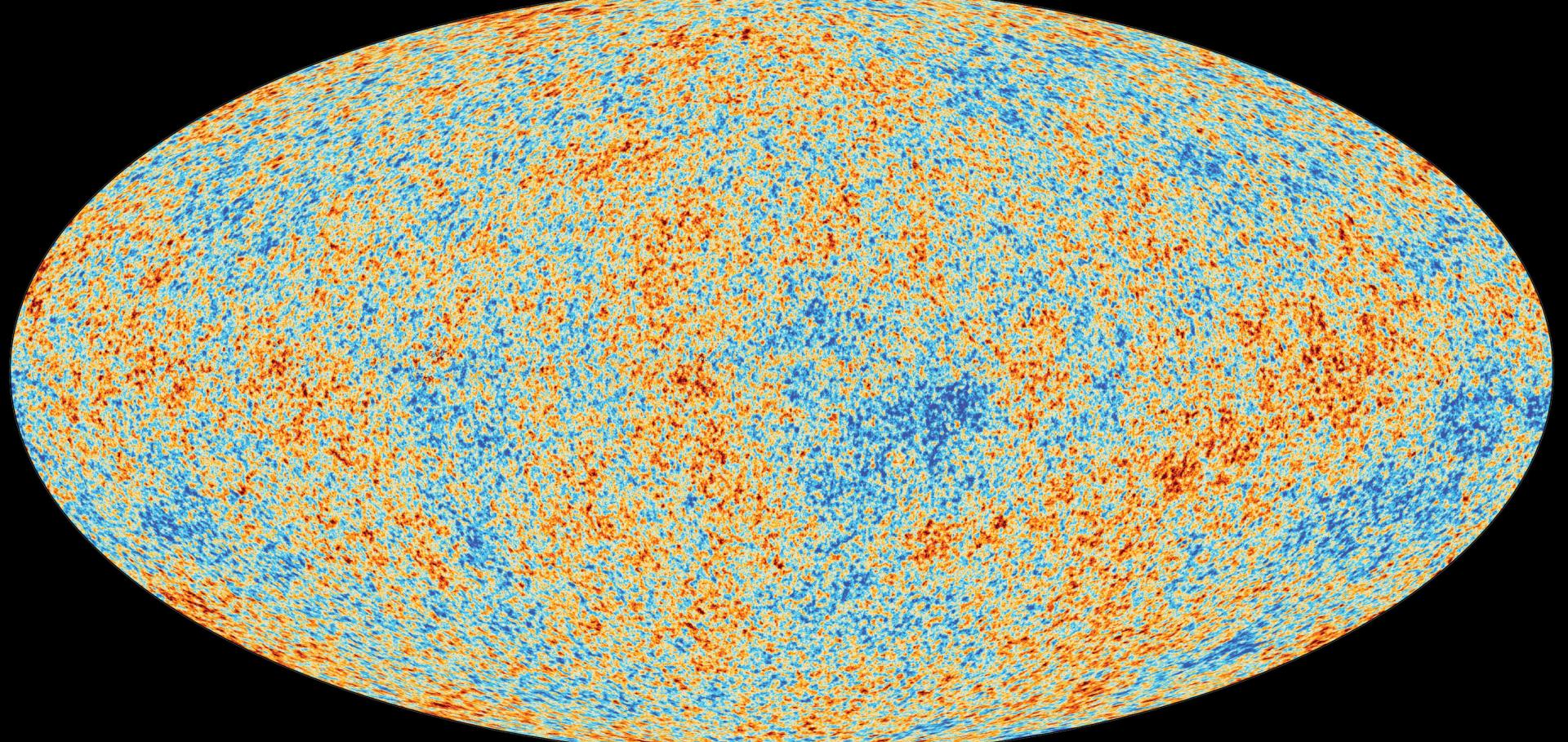
The trispectrum of the cosmic microwave background can be used to assess the level of non-Gaussianity on cosmological scales. It probes the fourth order moment, as a function of angular scale, of the probability distribution function of fluctuations and has been shown to be sensitive to primordial non-gaussianity, secondary anisotropies (such as the Ostriker-Vishniac effect) and systematic effects (such as astrophysical foregrounds). In this paper we develop a formalism for estimating the trispectrum from high resolution sky maps which incorporates the impact of finite sky coverage. This leads to a series of operations applied to the data set to minimize the effects of contamination due to the Gaussian component and correlations between estimates at different scales. To illustrate the effect of the estimation process, we apply our procedure to the BOOMERanG data set and show that it is consistent with Gaussianity. This work presents the first estimation of the CMB trispectrum on sub-degree scales.Collision-induced galaxy formation: semi-analytic model and multiwavelength predictions
Monthly Notices of the Royal Astronomical Society 343:1 (2003) 107-115