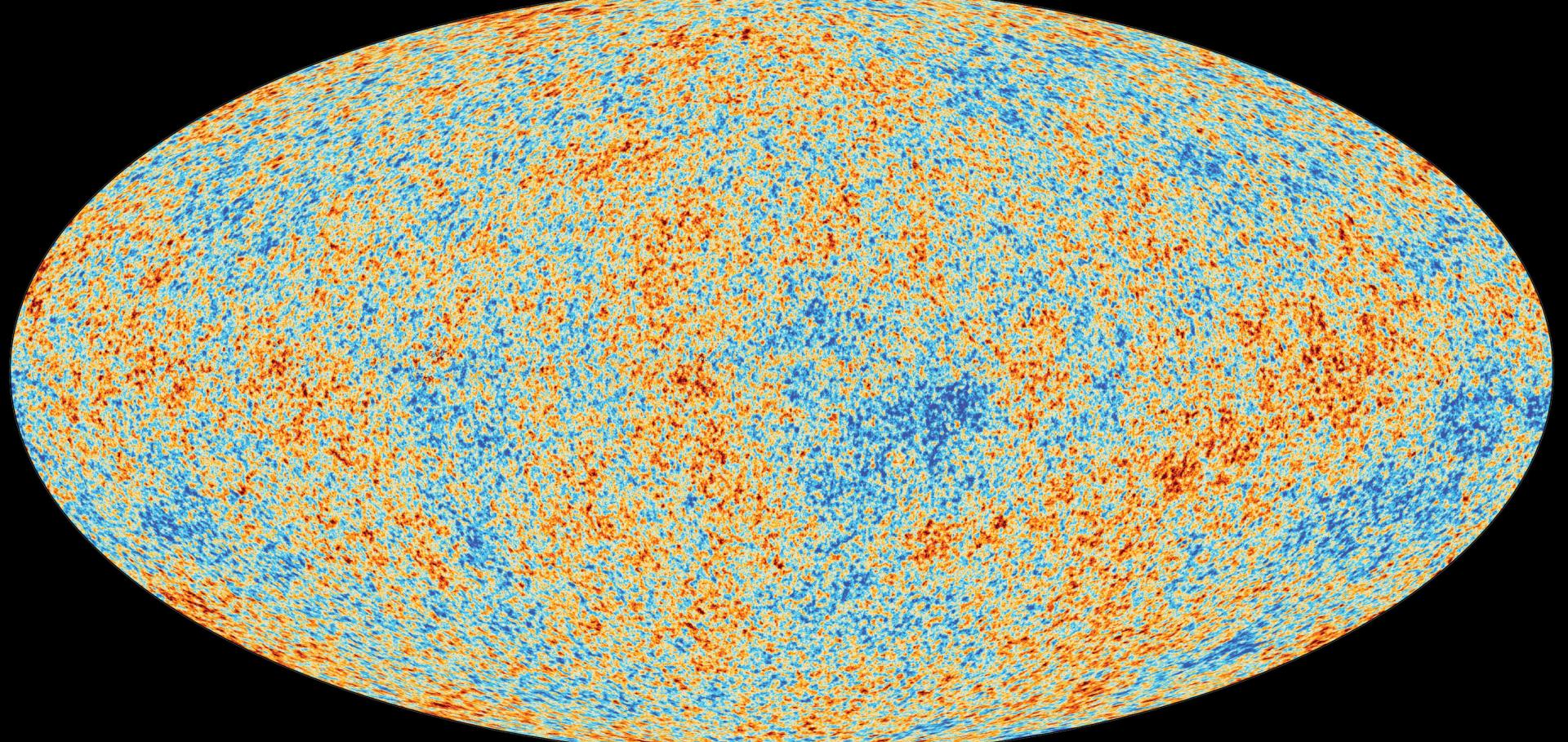
The Spectre of Underdetermination in Modern Cosmology

Philosophy of Physics LSE Press 3:1 (2025)

Authors:

Pedro G Ferreira, William J Wolf, James Read

Radio galaxy zoo data release 1: 100,185 radio source classifications from the FIRST and ATLAS surveys

Monthly Notices of the Royal Astronomical Society Oxford University Press (OUP) (2024) stae2790

Authors:

O Ivy Wong, AF Garon, MJ Alger, L Rudnick, SS Shabala, KW Willett, JK Banfield, H Andernach, RP Norris, J Swan, MJ Hardcastle, CJ Lintott, SV White, N Seymour, AD Kapińska, H Tang, BD Simmons, K Schawinski

Supermassive black hole growth in hierarchically merging nuclear star clusters

(2024)

Authors:

Konstantinos Kritos, Ricarda S Beckmann, Joseph Silk, Emanuele Berti, Sophia Yi, Marta Volonteri, Yohan Dubois, Julien Devriendt

Fast Radio Bursts and Interstellar Objects

The Astrophysical Journal American Astronomical Society 977:2 (2024) 232

Authors:

Dang Pham, Matthew J Hopkins, Chris Lintott, Michele T Bannister, Hanno Rein

Abstract:

Fast radio bursts (FRBs) are transient radio events with millisecond-scale durations and debated origins. Collisions between planetesimals and neutron stars (NSs) have been proposed as a mechanism to produce FRBs; the planetesimal strength, size, and density determine the time duration and energy of the resulting event. One source of planetesimals is the population of interstellar objects (ISOs), free-floating objects expected to be extremely abundant in galaxies across the Universe as products of planetary formation. We explore using the ISO population as a reservoir of planetesimals for FRB production, finding that the expected ISO–NS collision rate is comparable with the observed FRB event rate. Using a model linking the properties of planetesimals and the FRBs they produce, we further show that observed FRB durations are consistent with the sizes of known ISOs, and the FRB energy distribution is consistent with the observed size distributions of solar system planetesimal populations. Finally, we argue that the rate of ISO–NS collisions must increase with cosmic time, matching the observed evolution of the FRB rate. Thus, ISO–NS collisions are a feasible mechanism for producing FRBs.

Redshift tomography of the kinematic matter dipole

ArXiv 2412.13162 (2024)

Authors:

Sebastian von Hausegger, Charles Dalang