

Climate impacts of cultured meat and beef cattle
Frontiers in Sustainable Food Systems Frontiers Media 3 (2019) 5
Abstract:
Improved greenhouse gas (GHG) emission efficiency of production has been proposed as one of the biggest potential advantages of cultured meat over conventional livestock production systems. Comparisons with beef are typically highlighted, as it is a highly emissions intensive food product. In this study, we present a more rigorous comparison of the potential climate impacts of cultured meat and cattle production than has previously been made. Warming impacts are evaluated using a simple climate model that simulates the different behaviors of carbon dioxide (CO2), methane (CH4), and nitrous oxide (N2O), rather than relying on carbon dioxide equivalent (CO2e) metrics. We compare the temperature impact of beef cattle and cultured meat production at all times to 1,000 years in the future, using four synthetic meat GHG footprints currently available in the literature and three different beef production systems studied in an earlier climate modeling paper. Cattle systems are associated with the production of all three GHGs above, including significant emissions of CH4, while cultured meat emissions are almost entirely CO2 from energy generation. Under continuous high global consumption, cultured meat results in less warming than cattle initially, but this gap narrows in the long term and in some cases cattle production causes far less warming, as CH4 emissions do not accumulate, unlike CO2. We then model a decline in meat consumption to more sustainable levels following high consumption, and show that although cattle systems generally result in greater peak warming than cultured meat, the warming effect declines and stabilizes under the new emission rates of cattle systems, while the CO2 based warming from cultured meat persists and accumulates even under reduced consumption, again overtaking cattle production in some scenarios. We conclude that cultured meat is not prima facie climatically superior to cattle; its relative impact instead depends on the availability of decarbonized energy generation and the specific production systems that are realized.The effects of a well-resolved stratosphere on the simulated boreal winter circulation in a climate model
Journal of the Atmospheric Sciences American Meteorological Society (2019) JAS-D-18-0206.1
Observed and Simulated Teleconnections Between the Stratospheric Quasi-Biennial Oscillation and Northern Hemisphere Winter Atmospheric Circulation
Journal of Geophysical Research: Atmospheres 124:3 (2019) 1219-1232
Abstract:
©2019 Crown copyright. This article is published with the permission of the Controller of HMSO and the Queen's Printer for Scotland. The Quasi-Biennial Oscillation (QBO) is the dominant mode of interannual variability in the tropical stratosphere, with easterly and westerly zonal wind regimes alternating over a period of about 28 months. It appears to influence the Northern Hemisphere winter stratospheric polar vortex and atmospheric circulation near the Earth's surface. However, the short observational record makes unequivocal identification of these surface connections challenging. To overcome this, we use a multicentury control simulation of a climate model with a realistic, spontaneously generated QBO to examine teleconnections with extratropical winter surface pressure patterns. Using a 30-hPa index of the QBO, we demonstrate that the observed teleconnection with the Arctic Oscillation (AO) is likely to be real, and a teleconnection with the North Atlantic Oscillation (NAO) is probable, but not certain. Simulated QBO-AO teleconnections are robust, but appear weaker than in observations. Despite this, inconsistency with the observational record cannot be formally demonstrated. To assess the robustness of our results, we use an alternative measure of the QBO, which selects QBO phases with westerly or easterly winds extending over a wider range of altitudes than phases selected by the single-level index. We find increased strength and significance for both the AO and NAO responses, and better reproduction of the observed surface teleconnection patterns. Further, this QBO metric reveals that the simulated AO response is indeed likely to be weaker than observed. We conclude that the QBO can potentially provide another source of skill for Northern Hemisphere winter prediction, if its surface teleconnections can be accurately simulated.The eddy-driven jet and storm-track responses to boundary-layer drag: insights from an idealized dry GCM study
Journal of the Atmospheric Sciences American Meteorological Society 76:4 (2019) 1055-1076
Abstract:
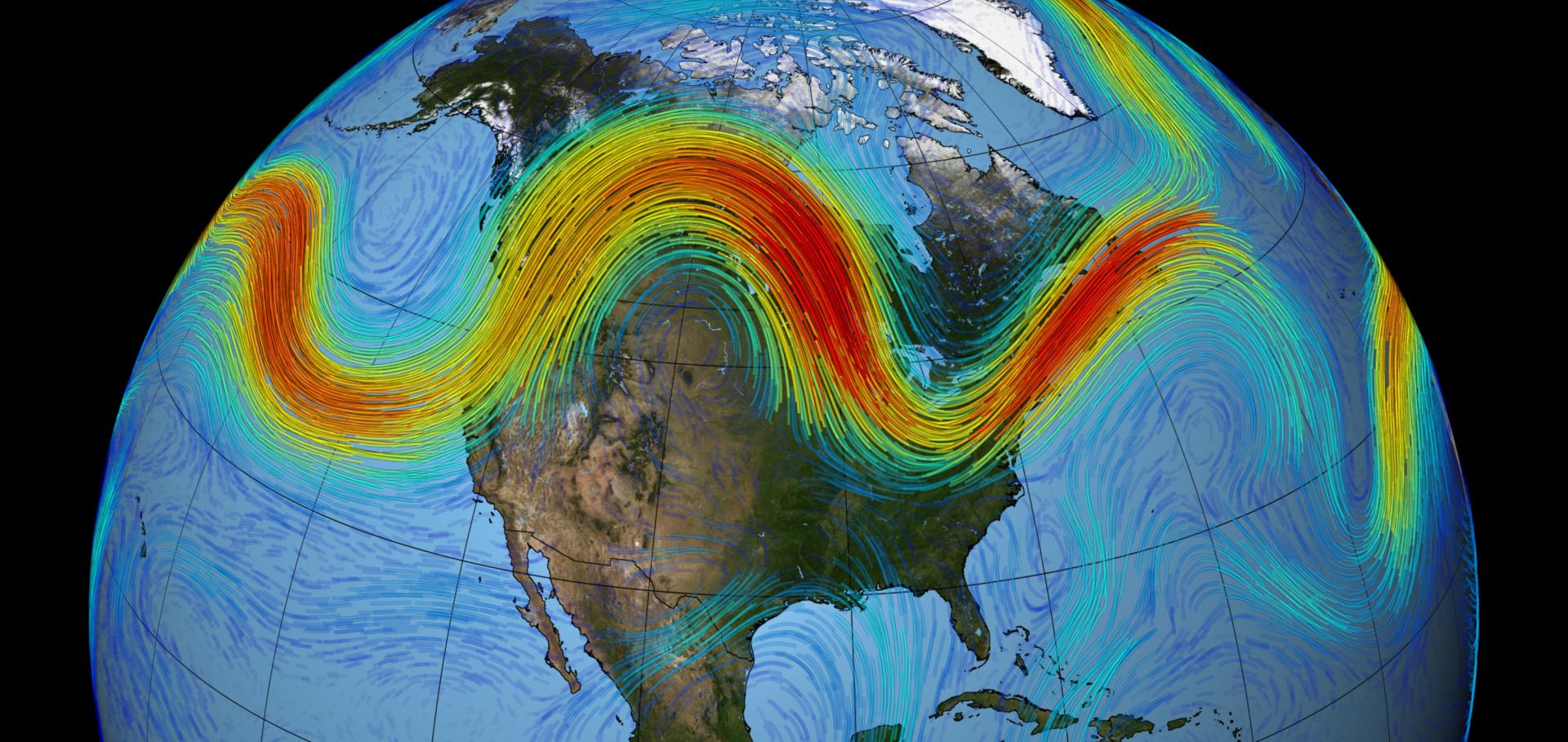
Simulations using a dry, idealized general circulation model (GCM) are conducted to systematically investigate the eddy-driven jet’s sensitivity to the location of boundary-layer drag. Perturbations of boundary-layer drag solely within the baroclinic zone reproduce the eddy-driven jet responses to global drag variations. The implications for current theories of eddy-driven jet shifts are discussed. Hemispherically-asymmetric drag simulations in equinoctial and solstitial thermal conditions show that perturbations of surface drag in one hemisphere have negligible effects on the strength and latitude of the eddy-driven jet in the opposite hemisphere. Jet speed exhibits larger sensitivities to surface drag in perpetual winter simulations, while sensitivities in jet latitude are larger in perpetual summer simulations. Near-surface drag simulations with an Earth-like continental profile show how surface drag may facilitate tropical-extratropical teleconnections by modifying waveguides through changes in jet latitude. Longitudinally confined drag simulations demonstrate a novel mechanism for localizing storm tracks. A theoretical analysis is used to show that asymmetries in the Bernoulli function within the baroclinic zone are important for the eddy-driven jet latitude responses because they directly modulate the sensitivity of the zonal-mean zonal wind to drag in the boundarylayer momentum balance. The simulations contained herein provide a rich array of case studies against which to test current theories of eddy-driven jet and storm-track shifts; and the results affirm the importance of correct, well-constrained locations and intensities of boundary-layer drag in order to reduce jet and storm-track biases in climate and forecast models.Wave-mean flow interactions in the atmospheric circulation of tidally locked planets
Astrophysical Journal IOP Publishing 869:1 (2018)