

A Highly Reflective Atmosphere on the Lava World TOI-561b Revealed by JWST/NIRSpec Phase Curves
Abstract:
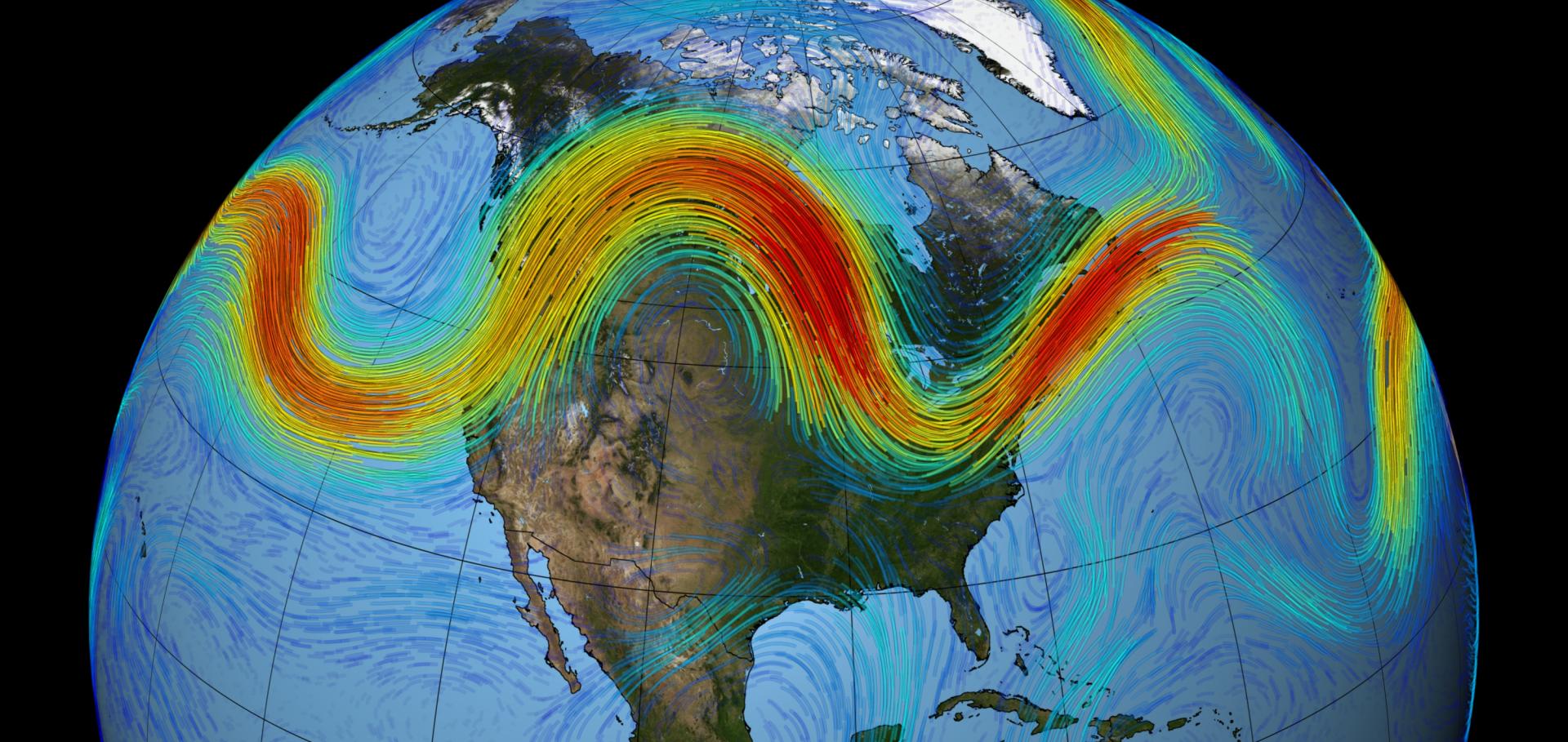
Extratropical teleconnections in a multi-model ensemble nudged towards the observed QBO
Abstract:
The Quasi-Biennial Oscillation (QBO), the dominant mode of interannual variability of monthly-mean zonal winds and temperatures in the equatorial stratosphere, has a significant influence on the circulation in other regions of the stratosphere and troposphere in boreal winter. To better understand these teleconnections, results from twelve models are analysed for three complementary experiments in which the QBO is either internally generated by the models (free-running), nudged towards the observed QBO, or nudged towards the observed climatology. For the multi-model ensemble mean we assess how well the free-running experiment captures the observed teleconnections, and whether the simulated teleconnections improve when the models are nudged to have a more realistic QBO. The observed relationship between the QBO phase and the strength of the boreal winter Polar Night Jet (PNJ) is weakly captured by the free-running experiment. The PNJ response is larger when the models are nudged towards the observed QBO, primarily because nudging reduces the bias in the QBO amplitude, resulting in a larger proportion of the models exhibiting a stronger QBO-PNJ relationship. Both free-running and nudged-QBO experiments capture a small and marginally significant increase in Sudden Stratospheric Warming (SSW) frequency during the QBO-easterly phase relative to the QBO-westerly phase. Neither experiment captures the observed QBO influence on the timings of SSWs during winter nor the QBO teleconnection to the North Atlantic Oscillation. Nudging the QBO does, however, improve its influence on the latitudinal profile of the North Pacific sub-tropical jet and strength of tropical precipitation. We find that a more realistic representation of the QBO is beneficial for certain teleconnections, but their effective simulation likely depends on how well the underlying model processes respond to the QBO.The need for a new comprehensive view of the middle atmosphere – the potential of infrared limb imaging tomography
Abstract:
The Earth’s middle atmosphere spans the deep region from the upper troposphere/lower stratosphere at around 10 km altitude to the mesosphere/lower thermosphere at around 100 km altitude. It is being increasingly recognized for its role in driving extreme surface weather and regional climate change. Climate models predict large ongoing and future changes in the middle atmosphere composition and circulation. However, the observations needed to detect, attribute and understand these changes and their impacts, to test predictions, and thereby to improve our models, are lacking. Here we show the capacity of infrared limb-imaging tomography to provide the needed observations. This evaluation is based on studies performed within a recent satellite mission concept – the Changing-Atmosphere Infrared Tomography Explorer, CAIRT. Observing thermal infrared emissions simultaneously from the middle troposphere at about 4 km up to the lower thermosphere at about 115 km altitude this technique provides observations of temperature and an extensive range of trace gases with unprecedented spatial resolution of about 50 by 50 km horizontally and about 1 km vertically. We show how these observations would (a) help to quantify the changing atmospheric circulation, (b) allow characterization and quantification of the gravity waves that are critical in driving this circulation, (c) reveal how variability in solar radiation and energetic particles propagate downward to affect regional climate at the surface, (d) detect how volcanic eruptions and wildfires impact the middle atmosphere and climate, and (e) resolve how stratosphere-troposphere exchange affects ozone and water vapor in the crucial and climate-relevant tropopause region.