

MaNGA DynPop – III. Stellar dynamics vs. stellar population relations in 6000 early-type and spiral galaxies: fundamental plane, mass-to-light ratios, total density slopes, and dark matter fractions
Monthly Notices of the Royal Astronomical Society Oxford University Press 527:1 (2023) 706-730
Abstract:
We present dynamical scaling relations, combined with the stellar population properties, for a subsample of about 6000 nearby galaxies with the most reliable dynamical models extracted from the full Mapping Nearby Galaxies at Apache Point Observatory (MaNGA) sample of 10 000 galaxies. We show that the inclination-corrected mass plane for both early-type galaxies (ETGs) and late-type galaxies (LTGs), which links dynamical mass, projected half-light radius Re, and the second stellar velocity moment σe within Re, satisfies the virial theorem and is even tighter than the uncorrected one. We find a clear parabolic relation between lg(M/L)e, the total mass-to-light ratio (M/L) within a sphere of radius Re, and lg σe, with the M/L increasing with σe and for older stellar populations. However, the relation for ETGs is linear and the one for the youngest galaxies is constant. We confirm and improve the relation between mass-weighted total density slopes γT and σe: γT become steeper with increasing σe until lg(σe/km s−1) ≈ 2.2 and then remain constant around γT ≈ 2.2. The γT –σe variation is larger for LTGs than ETGs. At fixed σe the total density profiles steepen with galaxy age and for ETGs. We find generally low dark matter fractions, median fDM(Simulating supermassive black hole mass measurements for a sample of ultramassive galaxies using ELT/HARMONI high-spatial-resolution integral-field stellar kinematics
Monthly Notices of the Royal Astronomical Society Oxford University Press 526:3 (2023) 3548-3569
Abstract:
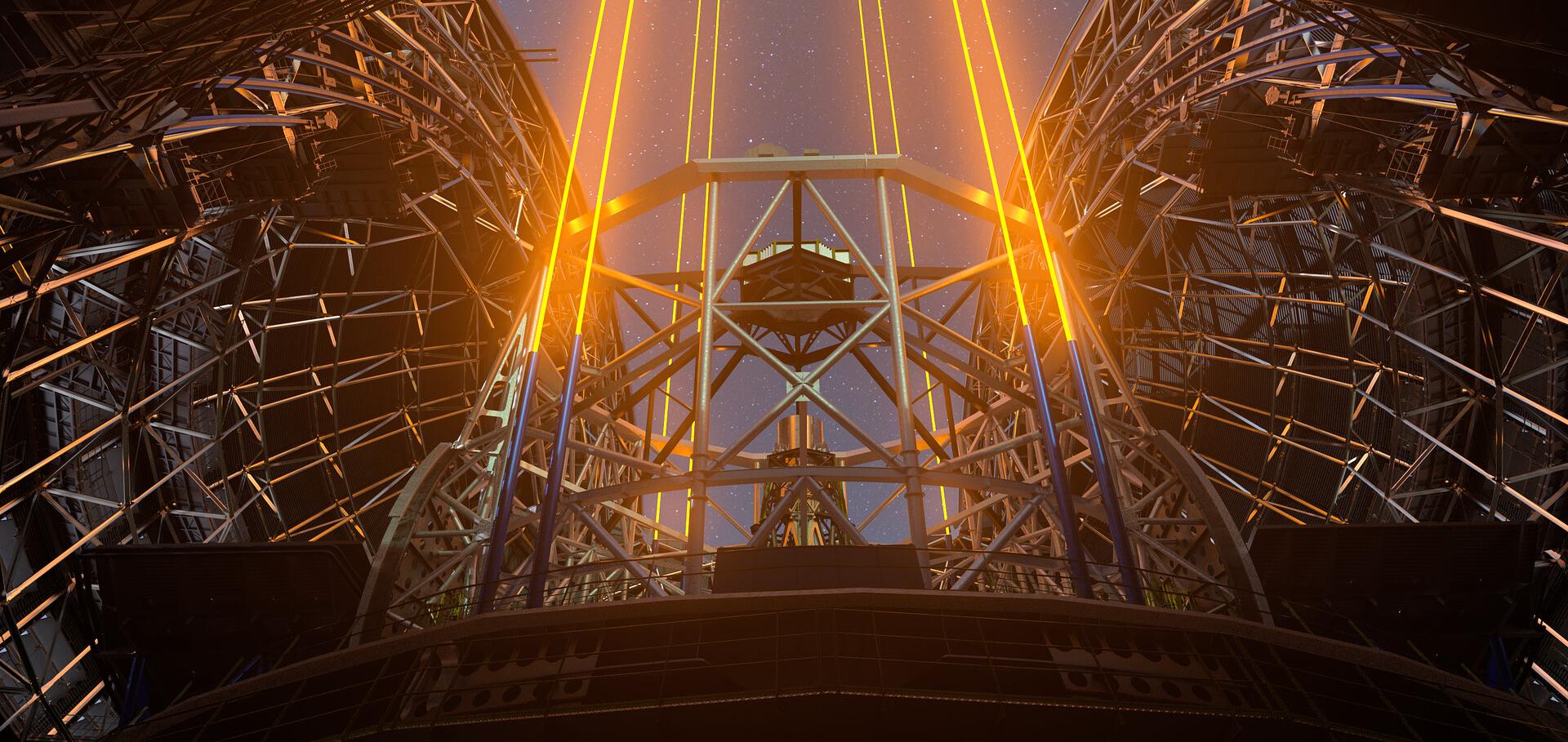
As the earliest relics of star formation episodes of the Universe, the most massive galaxies are the key to our understanding of the stellar population, cosmic structure, and supermassive black hole (SMBH) evolution. However, the details of their formation histories remain uncertain. We address these problems by planning a large survey sample of 101 ultramassive galaxies (z ≤ 0.3, |δ + 24°| < 45°, |b| > 8°), including 76 per cent ellipticals, 17 per cent lenticulars, and 7 per cent spirals brighter than MK ≤ −27 mag (stellar mass 2 × 10¹² ≲ M⋆ ≲ 5 × 10¹² M⊙) with ELT/HARMONI. Our sample comprises diverse galaxy environments ranging from isolated to dense-cluster galaxies. The primary goals of the project are to (1) explore the stellar dynamics inside galaxy nuclei and weigh SMBHs, (2) constrain the black hole scaling relations at the highest mass, and (3) probe the late-time assembly of these most massive galaxies through the stellar population and kinematical gradients. We describe the survey, discuss the distinct demographics and environmental properties of the sample, and simulate their HARMONI Iz-, Iz + J-, and H + K-band observations by combining the inferred stellar-mass models from Pan-STARRS observations, an assumed synthetic spectrum of stars, and SMBHs with masses estimated based on different black hole scaling relations. Our simulations produce excellent state-of-the-art integral field spectrography and stellar kinematics (ΔVrms ≲ 1.5 per cent) in a relatively short exposure time. We use these stellar kinematics in combination with the Jeans anisotropic model to reconstruct the SMBH mass and its error using a Markov chain Monte Carlo simulation. Thus, these simulations and modellings can be benchmarks to evaluate the instrument models and pipelines dedicated to HARMONI to exploit the unprecedented capabilities of ELT.The WISDOM of power spectra: how the galactic gravitational potential impacts a galaxy’s central gas reservoir in simulations and observations
Monthly Notices of the Royal Astronomical Society Oxford University Press 526:4 (2023) 5590-5611
Abstract:
Observations indicate that the central gas discs are smoother in early-type galaxies than their late-type counterparts, while recent simulations predict that the dynamical suppression of star formation in spheroid-dominated galaxies is preceded by the suppression of fragmentation of their interstellar media. The mass surface density power spectrum is a powerful tool to constrain the degree of structure within a gas reservoir. Specifically here, we focus on the power spectrum slope and aim to constrain whether the shear induced by a dominant spheroidal potential can induce sufficient turbulence to suppress fragmentation, resulting in the smooth central gas discs observed. We compute surface density power spectra for the nuclear gas reservoirs of fourteen simulated isolated galaxies and twelve galaxies observed as part of the mm-Wave Interferometric Survey of Dark Object Masses (WISDOM) project. Both simulated and observed galaxies range from disc-dominated galaxies to spheroids, with central stellar mass surface densities, a measure of bulge dominance, varying by more than an order of magnitude. For the simulations, the power spectra steepen with increasing central stellar mass surface density, thereby clearly linking the suppression of fragmentation to the shear-driven turbulence induced by the spheroid. The WISDOM observations show a different (but potentially consistent) picture: while there is no correlation between the power spectrum slopes and the central stellar mass surface densities, the slopes scatter around a value of 2.6. This is similar to the behaviour of the slopes of the simulated galaxies with high central stellar mass surface densities, and could indicate that high shear eventually drives incompressible turbulence.The WISDOM of power spectra: how the galactic gravitational potential impacts a galaxy's central gas reservoir in simulations and observations
(2023)
Continuous daytime and nighttime forecast of atmospheric optical turbulence from numerical weather prediction models.
Optics Express Optica Publishing Group 31:21 (2023) 33850-33872