

Experimental demonstration of novel beam characterization using a polarizable X-band transverse deflection structure
Scientific Reports Nature Research 11:1 (2021) 3560
Abstract:
Reinforcement Learning algorithms have risen in popularity in recent years in the accelerator physics community, showing potential in beam control and in the optimization and automation of tasks in accelerator operation. The Helmholtz AI project "Machine Learning toward Autonomous Accelerators" is a collaboration between DESY and KIT that works on investigating and developing RL applications for the automatic start-up of electron linear accelerators. The work is carried out in parallel at two similar research accelerators: ARES at DESY and FLUTE at KIT, giving the unique opportunity of transfer learning between facilities. One of the first steps of this project is the establishment of a common interface between the simulations and the machine, in order to test and apply various optimization approaches interchangeably between the two accelerators. In this paper we present the first results on the common interface and its application to beam focusing in ARES, and the idea of laser shaping with spatial light modulators at FLUTEEnergy-Spread Preservation and High Efficiency in a Plasma-Wakefield Accelerator
Physical Review Letters American Physical Society (APS) 126:1 (2021) 014801
Brexit and scientific research?
European Journal of English Studies Taylor & Francis 25:1 (2021) 11-18
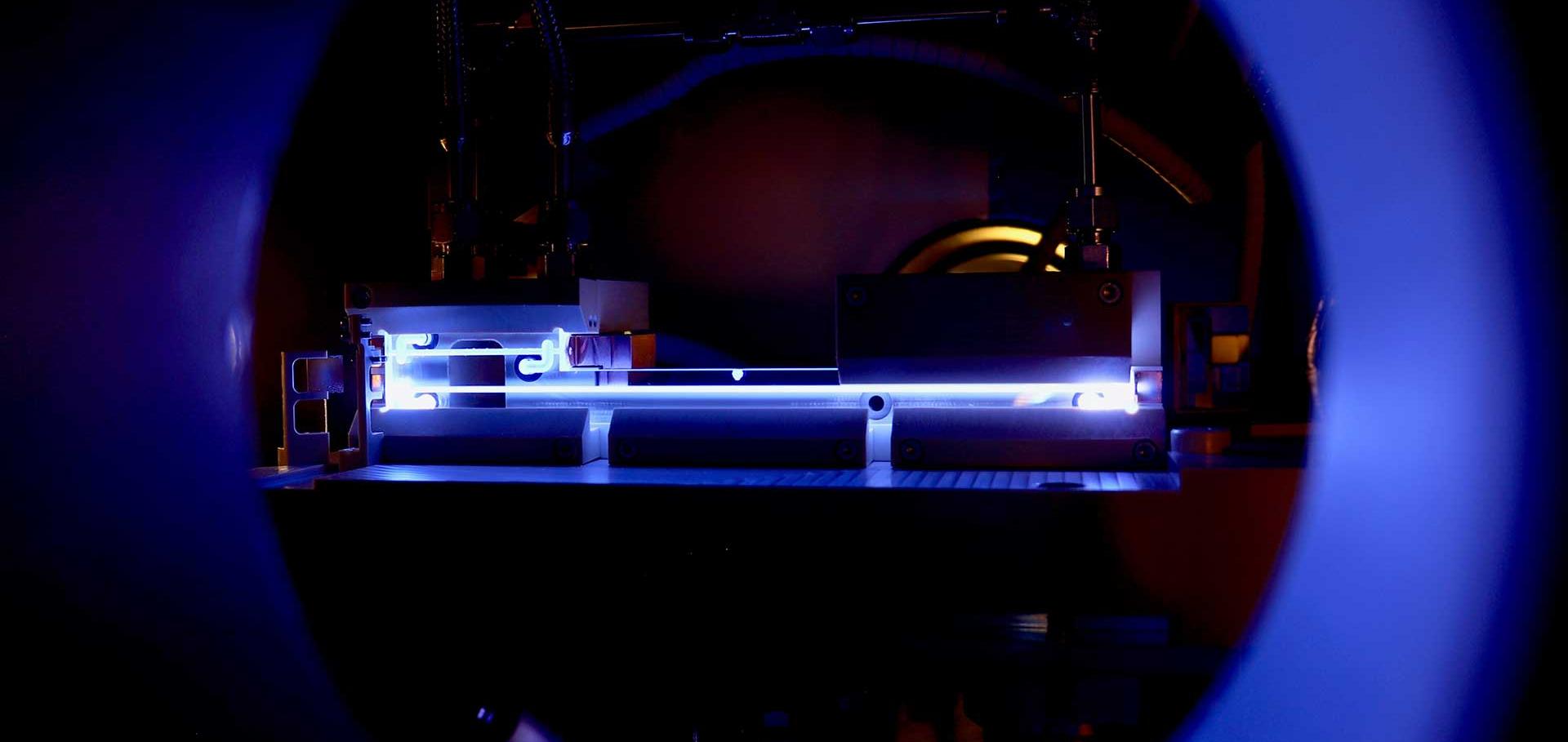
Combining laser interferometry and plasma spectroscopy for spatially resolved high-sensitivity plasma density measurements in discharge capillaries
Review of Scientific Instruments AIP Publishing 92:1 (2021) 013505
Progress of the FLASHForward X-2 high-beam-quality, high-efficiency plasma-accelerator experiment
Proceedings of Science 398 (2021)