

Exoplanet atmospheres with EChO: spectral retrievals using EChOSim
Chapter in EChO - Exoplanet Characterisation Observatory, Springer Nature (2017) 109-125
The Long wave (11–16 μm) spectrograph for the EChO M3 Mission Candidate study
Chapter in EChO - Exoplanet Characterisation Observatory, Springer Nature (2017) 437-447
Seasonal exposure of carbon dioxide ice on the nucleus of comet 67P/Churyumov-Gerasimenko.
Science (New York, N.Y.) 354:6319 (2016) 1563-1566
Abstract:
Carbon dioxide (CO2) is one of the most abundant species in cometary nuclei, but because of its high volatility, CO2 ice is generally only found beneath the surface. We report the infrared spectroscopic identification of a CO2 ice-rich surface area located in the Anhur region of comet 67P/Churyumov-Gerasimenko. Spectral modeling shows that about 0.1% of the 80- by 60-meter area is CO2 ice. This exposed ice was observed a short time after the comet exited local winter; following the increased illumination, the CO2 ice completely disappeared over about 3 weeks. We estimate the mass of the sublimated CO2 ice and the depth of the eroded surface layer. We interpret the presence of CO2 ice as the result of the extreme seasonal changes induced by the rotation and orbit of the comet.Latitudinal variability in Jupiter's tropospheric disequilibrium species: GeH4, AsH3 and PH3
Icarus Elsevier 289 (2016) 254-269
Abstract:
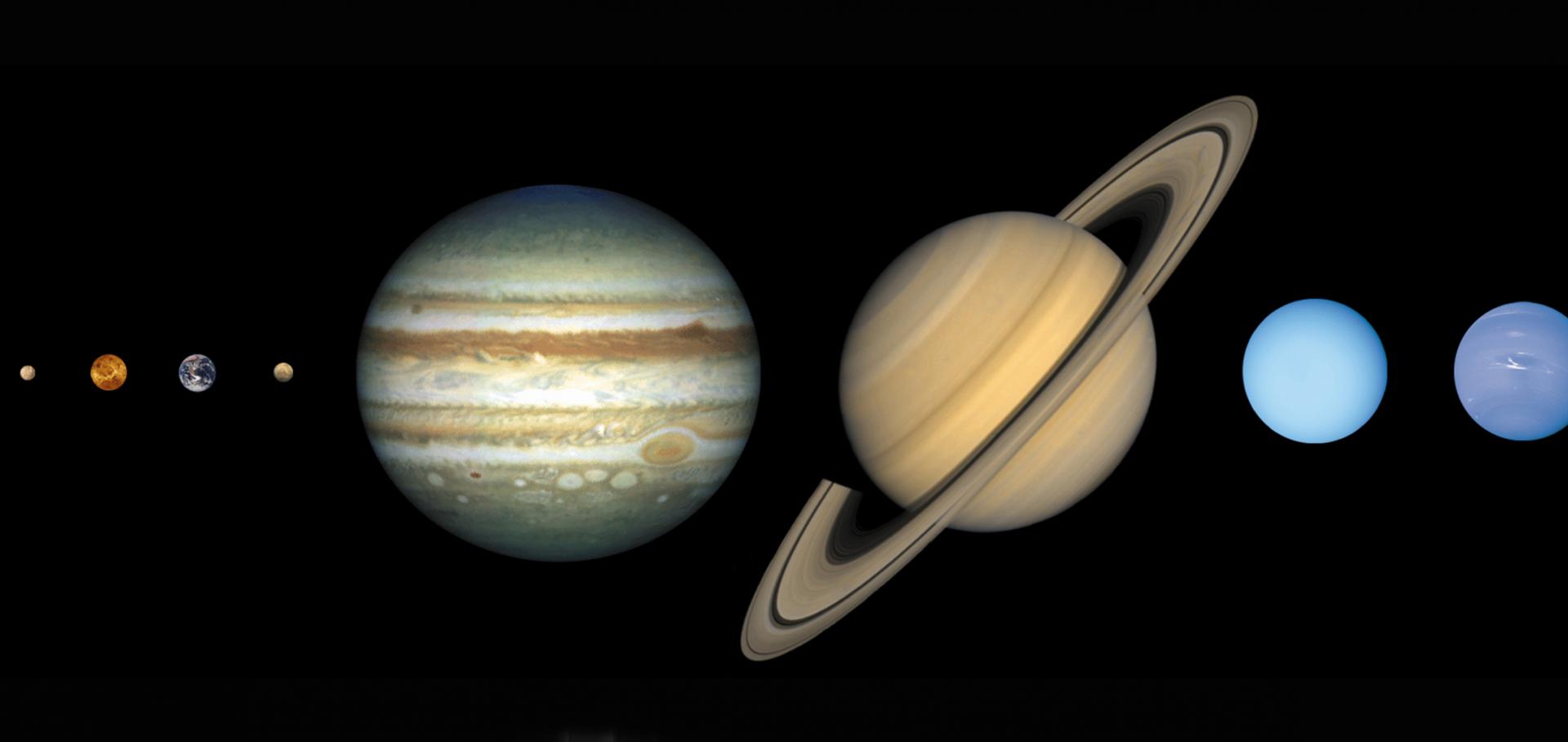
Jupiter's tropospheric composition is studied using high resolution spatially-resolved 5-mm observation from the CRIRES instrument at the Very Large Telescope. The high resolving power (R=96,000) allows us to spectrally resolve the line shapes of individual molecular species in Jupiter's troposphere and, by aligning the slit north-south along Jupiter's central meridian, we are able to search for any latitudinal variability. Despite the high spectral resolution, we find that there are significant degeneracies between the cloud structure and aerosol scattering properties that complicate the retrievals of tropospheric gaseous abundances and limit conclusions on any belt-zone variability. However, we do find evidence for variability between the equatorial regions of the planet and the polar regions. Arsine (AsH3) and phosphine (PH3) both show an enhancement at high latitudes, while the abundance of germane (GeH4) remains approximately constant. These observations contrast with the theoretical predictions from Wang et al. (2016) and we discuss the possible explanations for this difierence.Mid-infrared mapping of Jupiter's temperatures, aerosol opacity and chemical distributions with IRTF/TEXES
ICARUS 278 (2016) 128-161