

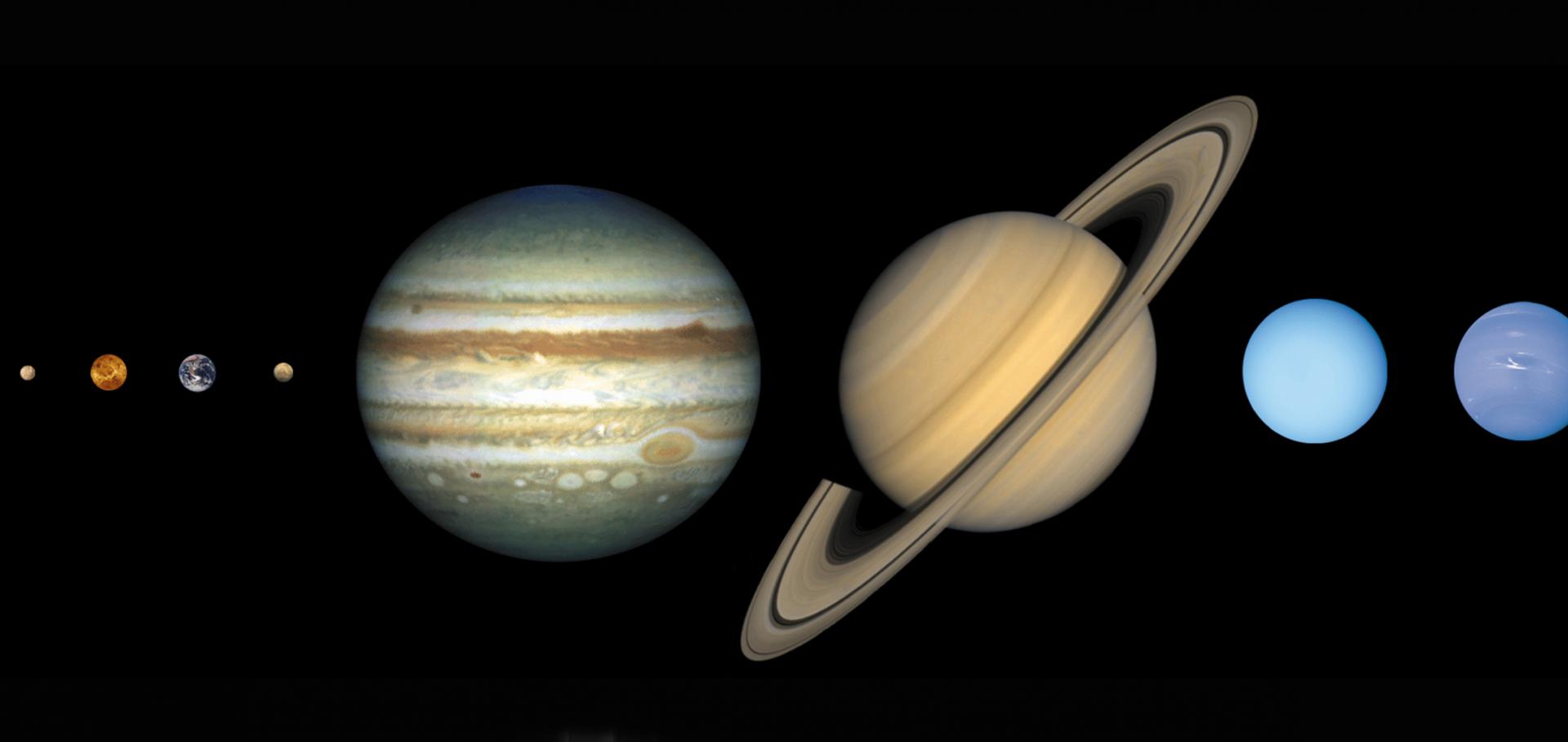
The Latitudinal Variation of H2S Humidity on Uranus
Copernicus Publications (2026)
Abstract:
The spectral signature of hydrogen sulphide (H2S) above the cloud tops in Uranus’ atmosphere was detected in 2018 [1]. The H2S humidity can be used as a tracer of Uranus’ overturning circulation [2] - peaks and troughs in the latitudinal humidity distribution may correspond to regions of local upwelling and downwelling near the H2S condensation level. We analysed observations from Gemini-NIFS and VLT-SINFONI, taken between 2009 and 2014, to study the H2S humidity distribution of Uranus. In our previous analysis of H2S on Neptune [3], we found a significant degeneracy between the methane (CH4) and H2S distributions, so we prescribe a latitudinally varying deep methane abundance previously derived from HST-STIS spectra [4]. We deconvolve the observations and extract spectra using the Minnaert limb-darkening approximation, which has been applied in several analyses of Ice Giant observations [3,4,5]. We fit a parameterised aerosol model and the H2S humidity to our extracted spectra with nested sampling using our open-source radiative transfer code, archNEMESIS [6]. Our atmospheric model has a large number of parameters, and to make nested sampling computationally feasible we utilise a trained neural network for early exploration of the parameter space during our retrievals. Since our observations span several years, we search for temporal changes. We find changes in the aerosol structure and aerosol spectral properties corresponding to the development of Uranus' north polar hood, in agreement with previous work [4,8]. If we assume that the CH4 distribution is stable over time, then our results show no significant changes in the H2S distribution. Our results show a general equator-to-pole decrease in the H2S humidity, similar to what has been found in microwave analyses that are sensitive to the deep H2S distribution [7]. Superimposed on this are local increases, which are fairly evenly spaced in latitude. We found a somewhat similar pattern in our analysis of H2S on Neptune [3], and an analysis of Neptune with VLT/MUSE also found peaks in reflectivity with a similar spacing [5]. These results are suggestive of a complex circulation pattern near the deep H2S aerosol layer. [1] Irwin, P. G. J., et al. (2018). Detection of hydrogen sulfide above the clouds in Uranus's atmosphere. Nature Astronomy, 2(5), 420-427. [2] Fletcher, L.N., et al. (2020). Ice Giant Circulation Patterns: Implications for Atmospheric Probes. Space Sci Rev 216, 21[3] Penn, J., et al. (2026). Reconciling Near-Infrared and Microwave Analyses of Neptune’s Hydrogen Sulphide Distribution. Monthly Notices of the Royal Astronomical Society, 548, 2, [4] James, A., et al. (2023). The Temporal Brightening of Uranus' Northern Polar Hood From HST/WFC3 and HST/STIS Observations. Journal of Geophysical Research: Planets, 128(10), e2023JE007904.[5] Irwin, P. G. J., et al. (2023). Latitudinal Variations in Methane Abundance, Aerosol Opacity and Aerosol Scattering Efficiency in Neptune's atmosphere determined from VLT/MUSE. Journal of Geophysical Research: Planets, 128(11), e2023JE007980.[6] Alday, J., et al. (2025). archNEMESIS: An Open-Source Python Package for Analysis of Planetary Atmospheric Spectra. Journal of Open Research Software, doi:10.5334/jors.554.[7] Molter, E. M., et al. (2021). Tropospheric Composition and Circulation of Uranus with ALMA and the VLA. The Planetary Science Journal, 2(1), 3.[8] Sromovsky, L. A., et al. (2024). The puzzling north polar region of Uranus: Continued zero-shear winds and increasing brightness from 2015 through 2022 according to 7 years of Keck AO imaging. Icarus, 420, 116186.Thermophysical Modelling of Europa’s Surface: Influence of Topography on E-THEMIS Sensitivity to Localised Endogenic Heating
Copernicus Publications (2026)
Abstract:
Accurately characterizing the endogenic thermal signatures of icy moons requires a detailed understanding of surface heating driven by insolation, surface properties and local terrain. Due to the lack of high-resolution thermal observations, Europa’s surface temperatures have historically been sufficiently modelled using smooth surface or one-dimensional approximations [1]. However, Europa’s complex terrains alter local illumination conditions and surface temperatures. Here, we use TEMPEST, an open-source, python based thermophysical model [2, 3] to investigate the significance of radiative self-heating and light scattering on interpretation of Europa’s thermal IR emission, with a particular focus on detectability of near-surface liquid-water reservoirs by high spatial resolution (≤100 m/pixel) observations soon to be taken by Europa Clipper’s E-THEMIS instrument [4].Passive heating by solar illumination was modelled under Europa-like conditions using TEMPEST, which solves a surface energy balance that includes solar flux, thermal emission, vertical heat conduction, and (optionally) scattering, radiative self-heating and macroscopic surface roughness. The 1D periodic conduction solver at its core is based on thermprojrs [5]. Comparing a smooth sphere (fig. 1a, c) to the topographic digital elevation model (DEM) (fig. 1b, d) reveals that while mean temperatures remain comparable, topography introduces substantial heterogeneity. For example, the DEM has a wider distribution of surface temperatures due to local slope and shadowing effects. Thermal radiance scales with Temperature4 (Stefan-Boltzmann law), so the small minority of hotter regions can dominate the thermal IR signal (fig. 2). We show that rough terrain emits significantly higher total radiance than a smooth sphere despite the similar mean kinetic temperature.Simulated topographic temperature maps show that light scattering and radiative exchange with local terrain cause increased surface temperature heterogeneity, with local temperature increases in deep fractures as high as 35 K (fig. 3). Temperature heterogeneity can systematically bias mean temperature measurements, and localised mutual radiative heating can lead to apparently anomalous warm regions, potentially mimicking endogenic heating, or obscuring indications of conductive heating from near-surface water reservoirs. To place these effects in the context of E-THEMIS detectability, we will use first-order conductive heat-flux calculations to estimate the surface expressions of idealised subsurface liquid-water reservoirs at different depths and spatial scales. These calculations will provide test cases for distinguishing plausible endogenic thermal anomalies from topographically induced radiance variations. This work shows that if topography is ignored, the excess radiance caused by it could be misinterpreted as a region of lower thermal inertia (in daytime), or even an endogenic heat source (hotspot). Accurately modelling terrain reduces the risk of false positives when searching for plume sources or active regions.Figure 1: Surface temperature maps for a section of an icy moon modelled as a smooth sphere (a) and using a digital elevation model (DEM) of Enceladus (b) using Europa thermal parameters. Histograms (c) and (d) show the distribution of surface temperatures within the above terrain samples. Figure 2: The integrated surface radiance from each terrain sample. The T4 dependence of radiance leads to significantly higher emission from the DEM terrain.Figure 3: Simulated Europa surface temperatures without (a) and with (b) multiple scattering and radiative self-heating. Panel (c) shows the resulting temperature difference, with local increases up to 35 K in shadowed terrain. Enceladus DEM [6] provides an icy-terrain analogue for topographic heating effects. Future work will repeat this analysis using Europa-specific topography where available. References:[1] Rathbun, J. A., Rodriguez, N. J., & Spencer, J. R. (2010). Galileo PPR observations of Europa: Hotspot detection limits and surface thermal properties. Icarus, 210(2), 763-769.[2] Lyster, D., Howett, C., & Penn, J. (2025). TEMPEST: A Modular Thermophysical Model for Airless Bodies with Support for Surface Roughness and Non-Periodic Heating. EPSC-DPS 2025, 1479.[3] Chivers, C.J., Hayne, P.O. and Schmidt, B.E. (2025). Prospects For Detecting Shallow Liquid Water Bodies At Europa Using E-Themis. LPSC 2025, 1226.[4] Christensen, P.R., Spencer, J.R., Mehall, G.L., Patel, M., Anwar, S., Brick, M., Bowles, H., Farkas, Z., Fisher, T., Gjellum, D. and Holmes, A. (2024). The Europa thermal emission imaging system (E-THEMIS) investigation for the Europa clipper mission. Space Science Reviews, 220(4), 38.[5] Spencer, J.R., Lebofsky, L.A., and Sykes, M.V. (1989). Systematic biases in radiometric diameter determinations. Icarus, 78(2), 337-354. [6] Park, R.S., Mastrodemos, N., Jacobson, R.A., Berne, A., Vaughan, A.T., Hemingway, D.J., Leonard, E.J., Castillo-Rogez, J.C., Cockell, C.S., Keane, J.T. and Konopliv, A.S. (2024). The global shape, gravity field, and libration of Enceladus. Journal of Geophysical Research: Planets, 129(1), e2023JE008054.Thermophysical Properties of Europa’s Surface Constrained by Galileo Photopolarimeter-Radiometer Temperature Measurements
Copernicus Publications (2026)
Abstract:
Thermal measurements provide key constraints on the physical properties of icy satellite surfaces, including grain size, porosity, and regolith structure. On the icy moon of Jupiter Europa, previous analyses [e.g., 1,2] of the Galileo Photopolarimeter–Radiometer (PPR) dataset revealed heterogeneities in thermal inertia, but the limited spatial resolution and coverage prevented a detailed characterization of the thermophysical properties of the surface. Yet, the determination of these thermophysical properties is crucial to predict the surface temperatures of Europa that can be used to search for endogenic activity as hot spots, one of the main scientific targets of the upcoming NASA’s Europa Clipper mission [3].We derived high-resolution maps of Europa’s surface albedo and thermal inertia, and inferred the microphysical properties of its icy regolith, through a reanalysis of the Galileo PPR dataset. We specifically investigated the spatial variability of these properties to discuss the processes controlling the thermophysical evolution of Europa’s surface. To do so, we used the KRC thermal model [4] to analyze the PPR brightness temperatures and retrieve the albedo and thermal inertia that best fit the observations. These values were then interpreted using theoretical conductivity models of porous ice [5] to constrain grain size and porosity and to investigate possible sintering processes affecting the surface.We will present at the conference our main results: we derived a mean Bond albedo of 0.64 ± 0.06 (standard deviation of 1σ) and a mean thermal inertia of 56 ± 17 J m−2 K−1 s−1/2 (1σ). The thermal inertia shows significant spatial variations, including a band of low thermal inertia at the equator (39 ± 7 J m−2 K−1 s−1/2, 1σ) and higher values (56 ± 11 J m−2 K−1 s−1/2, 1σ) at mid-latitudes on the leading hemisphere (0°–180° W). The equatorial region of the trailing hemisphere (180° W–360° W) also exhibits higher thermal inertia (63 ± 17 J m−2 K−1 s−1/2, 1σ) than the leading hemisphere, likely related to compositional differences. Interpreting the thermal inertia with conductivity models indicates a porous icy regolith with grain sizes ranging from a few micrometers to a few centimeters and an average porosity of 0.61 ± 0.1 (1σ).Interestingly, the thermal inertia distribution shows little correlation with geological units, the Pwyll ejecta being a notable exception, with markedly higher values than the surrounding terrain. In contrast, the good agreement between the thermal inertia distribution and modeled sputtering rates suggests that sputtering-driven sintering may play a fundamental role in controlling the thermophysical properties of Europa’s surface. The absence of a high thermal inertia equatorial band analogous to the PacMan anomaly observed on Saturn’s icy moons [e.g., 6] indicates that electron-driven sintering is inefficient on Europa, while temperature-gradient metamorphism may instead enhance grain growth at depth, potentially explaining the absence of large grains at the surface. In addition, modeled surface temperatures range from ~67 to 148 K at mid to low latitudes, with peak daytime temperatures counteracting radiolytic amorphization, while limiting the stability of volatile species. During the Europa Clipper mission (2031–2034), temperatures are expected to be slightly lower, ranging between 67.6–141.2 K. Our predictions provide a framework for interpreting future observations by the Europa Thermal Emission Imaging System (E-THEMIS) onboard Europa Clipper and the Submillimetre Wave Instrument (SWI) on JUICE. These future thermal measurements will provide key constraints to test these hypotheses and refine our understanding of the evolution of Europa’s icy regolith as well as search for active hot spots.AcknowledgementsLL’s research was supported by an appointment to the NASA Postdoctoral Program administered by Oak Ridge Associated Universities at the Jet Propulsion Laboratory, California Institute of Technology, under a contract with the National Aeronautics and Space Administration (80NM0018D0004). Part of this work was performed at the Jet Propulsion Laboratory, California Institute of Technology, under a contract with the National Aeronautics and Space Administration (80NM0018D0004). Some of the computational analyses were run on Northern Arizona University’s Monsoon computing cluster, funded by Arizona’s Technology and Research Initiative Fund. © 2026. All rights reserved.References[1] Rathbun et al., 2010, Icarus, 210, 763–769[2] Rathbun & Spencer, 2020, Icarus, 338, 11350[3] Pappalardo, R. T., Buratti, B. J., Korth, H., et al. 2024, SSR, 220[4] Kieffer, H. H. 2013, JGR: Planets, 118, 451–470[5] Ferrari & Lucas, 2016, A&A, 588, A133[6] Howett et al., 2011, Icarus, 216, 221–22Time-variability and north pole enhancement of Titan’s atmospheric water abundance
(2026)
Abstract:
Understanding the Great Red Spot of Jupiter
(2026)