Home
Department Of Physics text logo
  • Research
    • Our research
    • Our research groups
    • Our research in action
    • Research funding support
    • Summer internships for undergraduates
  • Study
    • Undergraduates
    • Postgraduates
  • Engage
    • For young people
    • For teachers
    • For the public
    • For alumni
    • For business
  • Support
Menu
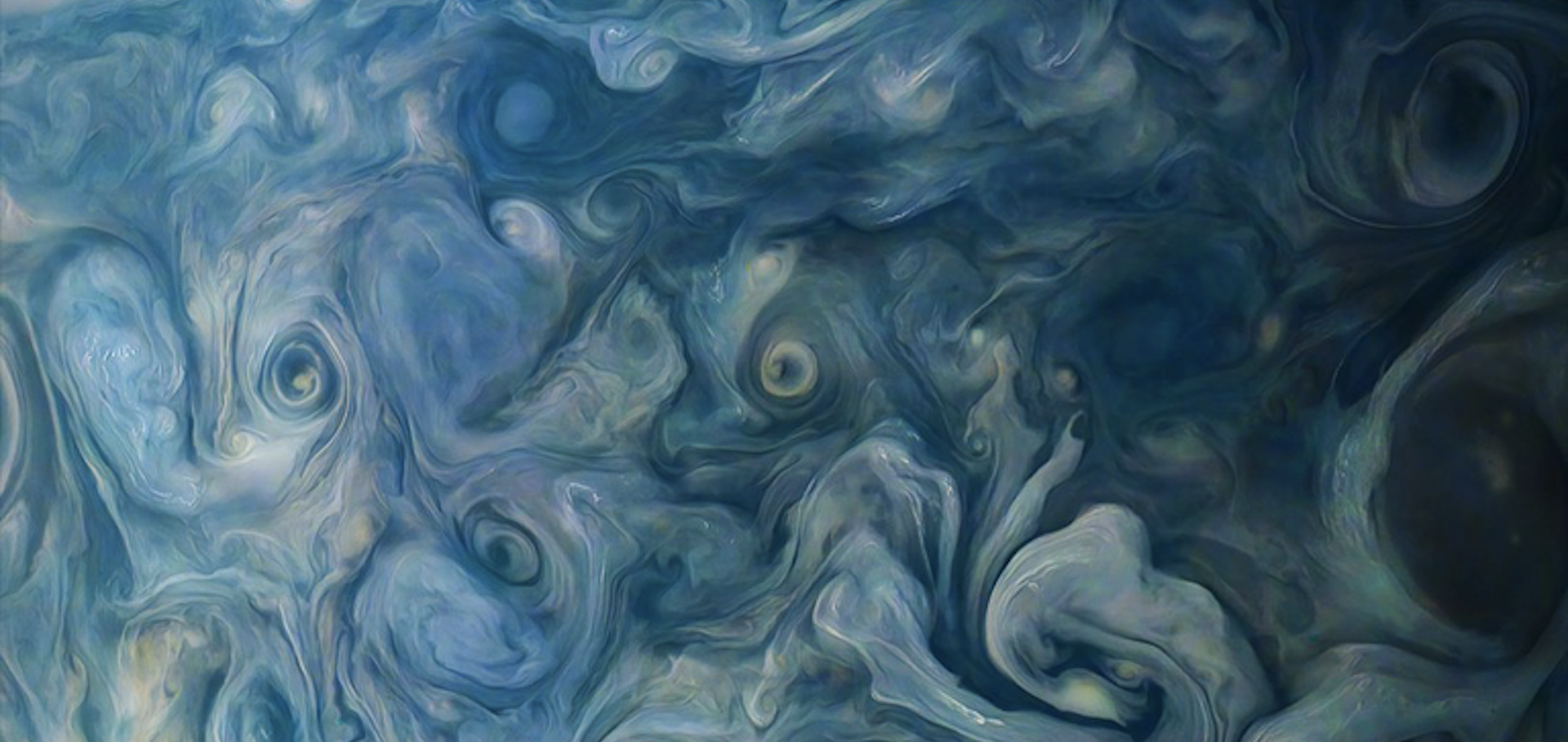
Jupiter's atmosphere

The incredible and intricate details of Jupiter's atmosphere, showing storms and clouds, that we one day hope to image on other worlds beyond our Solar System. Image: Seán Doran Flickr https://www.flickr.com/photos/seandoran

Credit: NASA / SwRI / MSSS / Gerald Eichstädt / Seán Doran

Prof Jayne Birkby

Professor of Astrophysics

Research theme

  • Astronomy and astrophysics
  • Instrumentation
  • Exoplanets and planetary physics

Sub department

  • Astrophysics

Research groups

  • Astronomical instrumentation
  • Exoplanet atmospheres
  • Exoplanets and Stellar Physics
  • Planet formation and dynamics
  • Planetary surfaces
  • Extremely Large Telescope
jayne.birkby@physics.ox.ac.uk
Denys Wilkinson Building, room 761
Personal research page
  • About
  • Books
  • Publications

The CRIMSON survey I: super-stellar SiO in the directly imaged companion TWA 5 B from high-resolution M-band spectroscopy

Monthly Notices of the Royal Astronomical Society Oxford University Press (OUP) (2026) stag1050

Authors:

Luke T Parker, Jayne L Birkby, Siddharth Gandhi, Vivien Parmentier, Vatsal Panwar, Matteo Brogi, Sophia R Vaughan

Abstract:

Abstract Silicon is a key refractory element in giant planet atmospheres, which governs the formation of magnesium-silicate clouds, and reflects the quantity of silicates accreted during formation. While observations of directly imaged giant exoplanets have focused on the measurement of volatile species (e.g. CO, H2O), high-resolution spectroscopy with CRIRES+ M-band provides access to gas phase silicon chemistry in sub-stellar atmospheres, through the ro-vibrational band head of SiO at 4 μm. Here, we present the first results of the CRIMSON survey of silicon chemistry in directly imaged companions with CRIRES+ M-band. We report the strong detection of gaseous SiO (S/N = 7.5) in the directly imaged companion TWA 5 B, with an atmospheric abundance of log(SiO) = $-3.56^{+0.42}_{-0.32}$ VMR, providing access to the refractory content of the atmosphere. The high retrieved SiO abundance implies the absence of significant magnesium-silicate cloud condensation, and thus the atmospheric silicon abundance is contained almost entirely within the observed gas phase SiO. Using the detection of refractory silicon, together with strong detections of the volatile species CO (S/N = 9.1) and H2O (S/N = 18.8), we measure a stellar C/O and a marginally sub-stellar O/Si and C/Si, but a super-stellar Si/H ([Si/H]⋆ = $1.41^{+0.42}_{-0.32}$). Collectively, these volatile-to-refractory ratios are consistent with formation through core-accretion beyond the CO snowline, or gravitational instability followed by substantial solid enrichment. Finally, we discuss how gas phase SiO provides a unique diagnostic of the cloud properties in hot gas-giants, and can be used to probe the dominant cloud species forming across the directly imaged planet and isolated brown dwarf populations.
More details from the publisher
More details

Upper limits on exosatellites around $β$ Pictoris b

(2026)

Authors:

MA Kenworthy, R Landman, A Vanderburg, JE Rodriguez, JL Birkby, I Macias, D González Picos, SA Jenkins, E Kleisioti, T Stolker, I Koutalios
More details from the publisher

The CRIMSON survey I: super-stellar SiO in the directly imaged companion TWA 5 B from high-resolution M-band spectroscopy

(2026)

Authors:

Luke T Parker, Jayne L Birkby, Siddharth Gandhi, Vivien Parmentier, Vatsal Panwar, Matteo Brogi, Sophia R Vaughan
More details from the publisher

The Key to Unlocking Exoplanet Biosignatures: a UK-led IR Spectrograph for the Habitable Worlds Observatory Coronagraph

(2026)

Authors:

Beth Biller, Dan Dicken, Olivier Absil, Raziye Artan, Jo Barstow, Jayne Birkby, Christophe Dumas, Sasha Hinkley, Tad Komacek, Katherine Morris, Lorenzo Pino, Sarah Rugheimer, Colin Snodgrass, Stephen Todd, Vinooja Thurairethinam, Amaury Triaud

Mantle Convection and Nightside Volcanism on Lava World K2-141 b

Monthly Notices of the Royal Astronomical Society Oxford University Press (OUP) (2026) stag390

Authors:

Tobias G Meier, Claire Marie Guimond, Raymond T Pierrehumbert, Jayne Birkby, Richard D Chatterjee, Chloe E Fisher, Gregor J Golabek, Mark Hammond, Thaddeus D Komacek, Tim Lichtenberg, Alex McGinty, Erik Meier Valdés, Harrison Nicholls, Luke T Parker, Rob J Spaargaren, Paul J Tackley

Abstract:

Abstract Ultra-short period lava worlds offer a unique window into the coupled evolution of planetary interior and atmospheres under extreme irradiation. In this study, we investigate the mantle dynamics, nightside volcanism, and volatile outgassing on lava world K2-141 b (1.54 R⊕, 5.31 M⊕) using two-dimensional convection models with tracer-based volatile tracking. Our simulations explore a range of interior configurations, including models with and without plastic yielding, basal versus mixed heating, core cooling, and melt intrusion. In models without plastic yielding (i.e. with a strong lithosphere), we find that mantle upwellings form at the substellar and antistellar points, while downwellings form near the day-night terminators at the boundary between the magma ocean and cold, solid nightside. These downwellings facilitate the recycling of crustal material, representing a form of asymmetric, single-lid tectonics. The resulting magma ocean thickness varies from 200 to 300 km depending on the model parameters, corresponding to about 2-3 % of the planet’s radius. Continuous nightside volcanism produces a basaltic crust and gradually depletes the mantle of volatiles. We find that over a billion years, volcanic eruptions can outgas tens of bars of CO2 and H2O. We show that even relatively large volcanic eruptions on the nightside produce thermal emission signals of no more than 1 ppm, remaining below the current detectability threshold in thermal phase curves. However, for most models, outgassing rates are increased near the day-night terminators and future studies should assess whether such localised outgassing could lead to atmospheric signatures in transmission spectroscopy.
More details from the publisher
More details

Pagination

  • First page First
  • Previous page Prev
  • Page 1
  • Page 2
  • Current page 3
  • Page 4
  • Page 5
  • Page 6
  • Page 7
  • Page 8
  • Page 9
  • …
  • Next page Next
  • Last page Last

Footer Menu

  • Contact us
  • Giving to the Dept of Physics
  • Work with us
  • Media

User account menu

  • Log in

Follow us

FIND US

Clarendon Laboratory,

Parks Road,

Oxford,

OX1 3PU

CONTACT US

Tel: +44(0)1865272200

University of Oxfrod logo Department Of Physics text logo
IOP Juno Champion logo Athena Swan Silver Award logo

© University of Oxford - Department of Physics

Cookies | Privacy policy | Accessibility statement

Built by: Versantus

  • Home
  • Research
  • Study
  • Engage
  • Our people
  • News & Comment
  • Events
  • Our facilities & services
  • About us
  • Giving to Physics
  • Current students
  • Staff intranet