Home
Department Of Physics text logo
  • Research
    • Our research
    • Our research groups
    • Our research in action
    • Research funding support
    • Summer internships for undergraduates
  • Study
    • Undergraduates
    • Postgraduates
  • Engage
    • For alumni
    • For business
    • For schools
    • For the public
  • Support
Menu
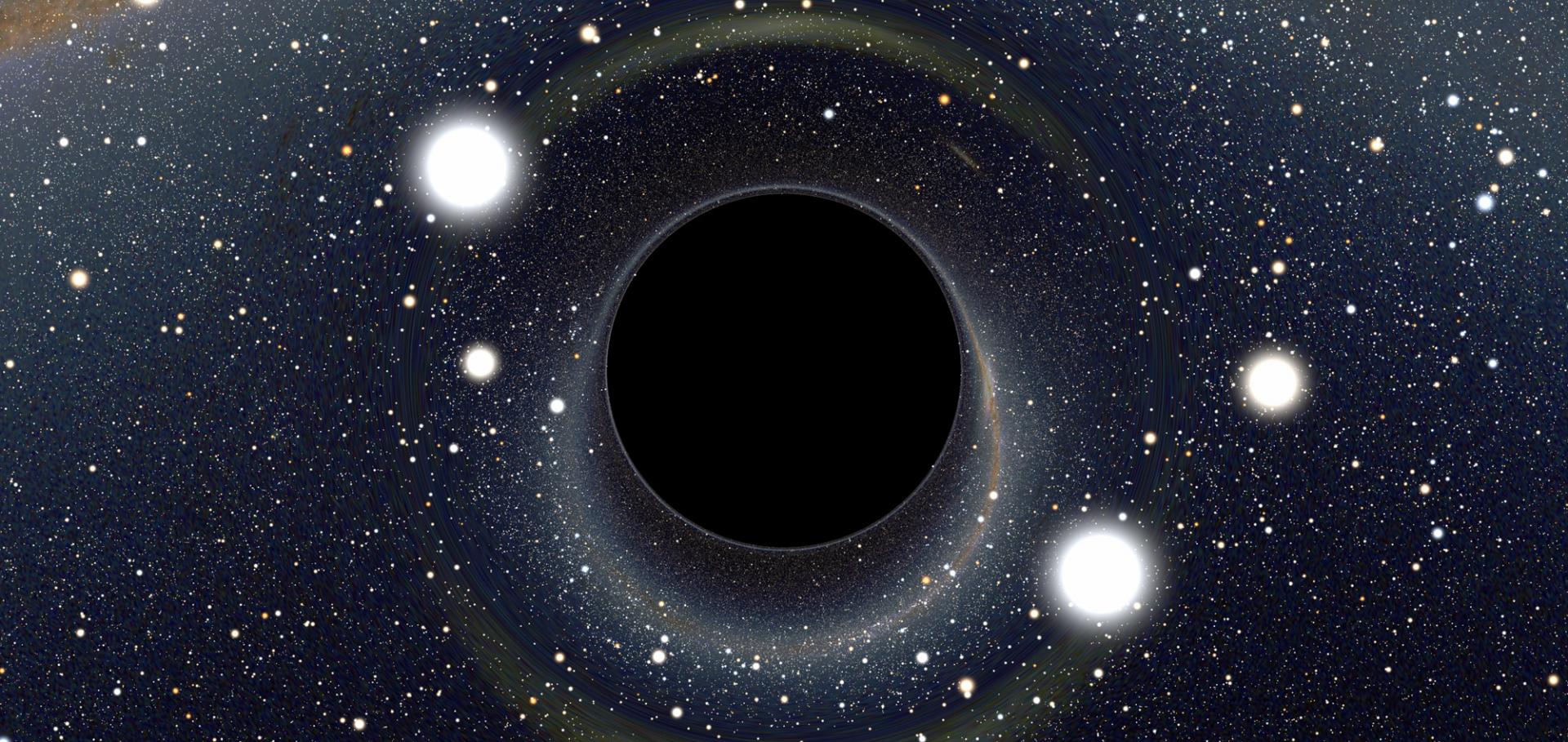
Black Hole

Lensing of space time around a black hole. At Oxford we study black holes observationally and theoretically on all size and time scales - it is some of our core work.

Credit: ALAIN RIAZUELO, IAP/UPMC/CNRS. CLICK HERE TO VIEW MORE IMAGES.

Dr Jake Taylor (he/him)

Glasstone Fellow

Research theme

  • Astronomy and astrophysics
  • Exoplanets and planetary physics

Sub department

  • Astrophysics

Research groups

  • Exoplanet atmospheres
  • Exoplanets and Stellar Physics
jake.taylor@physics.ox.ac.uk
Denys Wilkinson Building, room 463
Personal website
  • About
  • Prizes, awards and recognition
  • Publications

Identification of carbon dioxide in an exoplanet atmosphere

Nature Nature Research 614:7949 (2022) 649-652

Authors:

JWST Transiting Exoplanet Community Early Release Science Team, Eva-Maria Ahrer, Lili Alderson, Natalie M Batalha, Natasha E Batalha, Jacob L Bean, Thomas G Beatty, Taylor J Bell, Björn Benneke, Zachory K Berta-Thompson, Aarynn L Carter, Ian JM Crossfield, Néstor Espinoza, Adina D Feinstein, Jonathan J Fortney, Neale P Gibson, Jayesh M Goyal, Eliza M-R Kempton, James Kirk, Laura Kreidberg, Mercedes López-Morales, Michael R Line, Joshua D Lothringer, Sarah E Moran, Sagnick Mukherjee, Kazumasa Ohno, Vivien Parmentier

Abstract:

Carbon dioxide (CO2) is a key chemical species that is found in a wide range of planetary atmospheres. In the context of exoplanets, CO2 is an indicator of the metal enrichment (that is, elements heavier than helium, also called ‘metallicity’)1,2,3, and thus the formation processes of the primary atmospheres of hot gas giants4,5,6. It is also one of the most promising species to detect in the secondary atmospheres of terrestrial exoplanets7,8,9. Previous photometric measurements of transiting planets with the Spitzer Space Telescope have given hints of the presence of CO2, but have not yielded definitive detections owing to the lack of unambiguous spectroscopic identification10,11,12. Here we present the detection of CO2 in the atmosphere of the gas giant exoplanet WASP-39b from transmission spectroscopy observations obtained with JWST as part of the Early Release Science programme13,14. The data used in this study span 3.0–5.5 micrometres in wavelength and show a prominent CO2 absorption feature at 4.3 micrometres (26-sigma significance). The overall spectrum is well matched by one-dimensional, ten-times solar metallicity models that assume radiative–convective–thermochemical equilibrium and have moderate cloud opacity. These models predict that the atmosphere should have water, carbon monoxide and hydrogen sulfide in addition to CO2, but little methane. Furthermore, we also tentatively detect a small absorption feature near 4.0 micrometres that is not reproduced by these models
More details from the publisher
Details from ORA
More details
More details

Impact of variable photospheric radius on exoplanet atmospheric retrievals

Monthly Notices of the Royal Astronomical Society: Letters Oxford University Press (OUP) 513:1 (2022) l20-l24
More details from the publisher

A survey of exoplanet phase curves with Ariel

Experimental Astronomy Springer Nature 53:2 (2022) 417-446

Authors:

Benjamin Charnay, João M Mendonça, Laura Kreidberg, Nicolas B Cowan, Jake Taylor, Taylor J Bell, Olivier Demangeon, Billy Edwards, Carole A Haswell, Giuseppe Morello, Lorenzo V Mugnai, Enzo Pascale, Giovanna Tinetti, Pascal Tremblin, Robert T Zellem
More details from the publisher
More details

Impact of Variable Photospheric Radius on Exoplanet Atmospheric Retrievals

ArXiv 2203.01839 (2022)
Details from ArXiV

Diurnal variations in the stratosphere of the ultrahot giant exoplanet WASP-121b

Nature Astronomy Nature Research 6:4 (2022) 471-479

Authors:

Thomas Mikal-Evans, David K Sing, Joanna K Barstow, Tiffany Kataria, Jayesh Goyal, Nikole Lewis, Jake Taylor, Nathan J Mayne, Tansu Daylan, Hannah R Wakeford, Mark S Marley, Jessica J Spake

Abstract:

The temperature profile of a planetary atmosphere is a key diagnostic of radiative and dynamical processes governing the absorption, redistribution and emission of energy. Observations have revealed dayside stratospheres that either cool1,2 or warm3,4 with altitude for a small number of gas giant exoplanets, whereas other dayside stratospheres are consistent with constant temperatures5,6,7. Here we report spectroscopic phase curve measurements for the gas giant WASP-121b (ref.8) that constrain stratospheric temperatures throughout the diurnal cycle. Variations measured for a water vapour spectral feature reveal a temperature profile that transitions from warming with altitude on the dayside hemisphere to cooling with altitude on the nightside hemisphere. The data are well explained by models assuming chemical equilibrium, with water molecules thermally dissociating at low pressures on the dayside and recombining on the nightside9,10. Nightside temperatures are low enough for perovskite (CaTiO3) to condense, which could deplete titanium from the gas phase11,12 and explain recent non-detections at the day–night terminator13,14,15,16. Nightside temperatures are also consistent with the condensation of refractory species such as magnesium, iron and vanadium. Detections15,16,17,18 of these metals at the day–night terminator suggest, however, that if they do form nightside clouds, cold trapping does not efficiently remove them from the upper atmosphere. Horizontal winds and vertical mixing could keep these refractory condensates aloft in the upper atmosphere of the nightside hemisphere until they are recirculated to the hotter dayside hemisphere and vaporized
More details from the publisher
Details from ORA
More details
More details

Pagination

  • First page First
  • Previous page Prev
  • …
  • Page 6
  • Page 7
  • Page 8
  • Page 9
  • Page 10
  • Current page 11
  • Page 12
  • Page 13
  • Page 14
  • Next page Next
  • Last page Last

Footer Menu

  • Contact us
  • Giving to the Dept of Physics
  • Work with us
  • Media

User account menu

  • Log in

Follow us

FIND US

Clarendon Laboratory,

Parks Road,

Oxford,

OX1 3PU

CONTACT US

Tel: +44(0)1865272200

University of Oxfrod logo Department Of Physics text logo
IOP Juno Champion logo Athena Swan Silver Award logo

© University of Oxford - Department of Physics

Cookies | Privacy policy | Accessibility statement

Built by: Versantus

  • Home
  • Research
  • Study
  • Engage
  • Our people
  • News & Comment
  • Events
  • Our facilities & services
  • About us
  • Giving to Physics
  • Current students
  • Staff intranet