
Home
Department Of Physics text logo
  • Research
    • Our research
    • Our research groups
    • Our research in action
    • Research funding support
    • Summer internships for undergraduates
  • Study
    • Undergraduates
    • Postgraduates
  • Engage
    • For young people
    • For teachers
    • For the public
    • For alumni
    • For business
  • Support
Menu
where I'd like to be ...

Prof Subir Sarkar

Professor Emeritus

Research theme

  • Particle astrophysics & cosmology
  • Fundamental particles and interactions

Sub department

  • Rudolf Peierls Centre for Theoretical Physics

Research groups

  • Particle theory
Subir.Sarkar@physics.ox.ac.uk
Telephone: 01865 (2)73962
Rudolf Peierls Centre for Theoretical Physics, room 60.12
Old homepage
Brief CV
  • About
  • Research
  • Teaching
  • Service
  • Outreach
  • Awards/News
  • IceCube@Oxford
  • Publications

IceCube

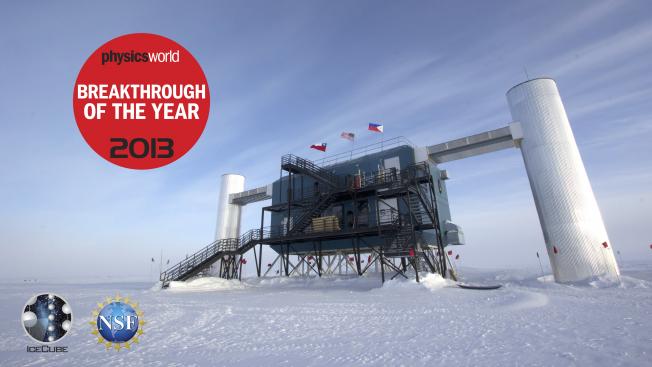
Physics World 2013 Breakthrough of the Year
IceCube at Oxford

I am a member since 2004 of the IceCube collaboration which discovered cosmic high energy neutrinos and identified some of their astrophysical sources.

IceCube @ Oxford

Neutrino diagnostics of ultrahigh energy cosmic ray protons

Physical Review D - Particles, Fields, Gravitation and Cosmology 79:8 (2009)

Authors:

M Ahlers, LA Anchordoqui, S Sarkar

Abstract:

The energy at which cosmic rays from extra-galactic sources begin to dominate over those from galactic sources is an important open question in astroparticle physics. A natural candidate is the energy at the "ankle" in the approximately power-law energy spectrum which is indicative of a crossover from a falling galactic component to a flatter extra-galactic component. The transition can occur without such flattening but this requires some degree of conspiracy of the spectral shapes and normalizations of the two components. Nevertheless, it has been argued that extra-galactic sources of cosmic ray protons that undergo interactions on the CMB can reproduce the energy spectrum below the ankle if the crossover energy is as low as the "second knee" in the spectrum. This low crossover model is constrained by direct measurements by the Pierre Auger Observatory, which indicate a heavier composition at these energies. We demonstrate that upper limits on the cosmic diffuse neutrino flux provide a complementary constraint on the proton fraction in ultra-high energy extra-galactic cosmic rays and forthcoming data from IceCube will provide a definitive test of this model. © 2009 The American Physical Society.
More details from the publisher
More details
Details from ArXiV

The IceCube data acquisition system: Signal capture, digitization, and timestamping

Nuclear Instruments and Methods in Physics Research Section A Accelerators Spectrometers Detectors and Associated Equipment 601:3 (2009) 294-316

Authors:

R Abbasi, M Ackermann, J Adams, M Ahlers, J Ahrens, K Andeen, J Auffenberg, X Bai, M Baker, SW Barwick, R Bay, JL Bazo Alba, K Beattie, T Becka, JK Becker, KH Becker, P Berghaus, D Berley, E Bernardini, D Bertrand, DZ Besson, B Bingham, E Blaufuss, DJ Boersma, C Bohm, J Bolmont, S Böser, O Botner, J Braun, D Breeder, T Burgess, W Carithers, T Castermans, H Chen, D Chirkin, B Christy, J Clem, DF Cowen, MV D'Agostino, M Danninger, A Davour, CT Day, O Depaepe, C De Clercq, L Demirörs, F Descamps, P Desiati, G de Vries-Uiterweerd, T DeYoung, JC Diaz-Velez, J Dreyer, JP Dumm, MR Duvoort, WR Edwards, R Ehrlich, J Eisch, RW Ellsworth, O Engdegård, S Euler, PA Evenson, O Fadiran, AR Fazely, T Feusels, K Filimonov, C Finley, MM Foerster, BD Fox, A Franckowiak, R Franke, TK Gaisser, J Gallagher, R Ganugapati, L Gerhardt, L Gladstone, D Glowacki, A Goldschmidt, JA Goodman, R Gozzini, D Grant, T Griesel, A Groß, S Grullon, RM Gunasingha, M Gurtner, C Ha, A Hallgren, F Halzen, K Han, K Hanson, R Hardtke, Y Hasegawa, J Haugen, D Hays, J Heise, K Helbing, M Hellwig, P Herquet, S Hickford, GC Hill, J Hodges

Abstract:

IceCube is a km-scale neutrino observatory under construction at the South Pole with sensors both in the deep ice (InIce) and on the surface (IceTop). The sensors, called Digital Optical Modules (DOMs), detect, digitize and timestamp the signals from optical Cherenkov-radiation photons. The DOM Main Board (MB) data acquisition subsystem is connected to the central DAQ in the IceCube Laboratory (ICL) by a single twisted copper wire-pair and transmits packetized data on demand. Time calibration is maintained throughout the array by regular transmission to the DOMs of precisely timed analog signals, synchronized to a central GPS-disciplined clock. The design goals and consequent features, functional capabilities, and initial performance of the DOM MB, and the operation of a combined array of DOMs as a system, are described here. Experience with the first InIce strings and the IceTop stations indicates that the system design and performance goals have been achieved. © 2009 Elsevier B.V.
More details from the publisher
More details
Details from ArXiV

Search for point sources of high energy neutrinos with final data from AMANDA-II

Physical Review D - Particles, Fields, Gravitation and Cosmology 79:6 (2009)

Authors:

R Abbasi, M Ackermann, J Adams, M Ahlers, J Ahrens, K Andeen, J Auffenberg, X Bai, M Baker, B Baret, SW Barwick, R Bay, JL Bazo Alba, K Beattie, T Becka, JK Becker, KH Becker, J Berdermann, P Berghaus, D Berley, E Bernardini, D Bertrand, DZ Besson, E Blaufuss, DJ Boersma, C Bohm, J Bolmont, S Böser, O Botner, J Braun, D Breder, T Burgess, T Castermans, D Chirkin, B Christy, J Clem, DF Cowen, MV D'Agostino, M Danninger, A Davour, CT Day, O Depaepe, C De Clercq, L Demirörs, F Descamps, P Desiati, G De Vries-Uiterweerd, T Deyoung, JC Diaz-Velez, J Dreyer, JP Dumm, MR Duvoort, WR Edwards, R Ehrlich, J Eisch, RW Ellsworth, O Engdegård, S Euler, PA Evenson, O Fadiran, AR Fazely, K Filimonov, C Finley, MM Foerster, BD Fox, A Franckowiak, R Franke, TK Gaisser, J Gallagher, R Ganugapati, L Gerhardt, L Gladstone, A Goldschmidt, JA Goodman, R Gozzini, D Grant, T Griesel, A Groß, S Grullon, RM Gunasingha, M Gurtner, C Ha, A Hallgren, F Halzen, K Han, K Hanson, R Hardtke, Y Hasegawa, J Heise, K Helbing, M Hellwig, P Herquet, S Hickford, GC Hill, J Hodges, KD Hoffman, K Hoshina, D Hubert, W Huelsnitz, B Hughey

Abstract:

We present a search for point sources of high energy neutrinos using 3.8 yr of data recorded by AMANDA-II during 2000-2006. After reconstructing muon tracks and applying selection criteria designed to optimally retain neutrino-induced events originating in the northern sky, we arrive at a sample of 6595 candidate events, predominantly from atmospheric neutrinos with primary energy 100 GeV to 8 TeV. Our search of this sample reveals no indications of a neutrino point source. We place the most stringent limits to date on E-2 neutrino fluxes from points in the northern sky, with an average upper limit of E2Φνμ+ντ≤5.2×10⁻¹¹TeVcm-2s-1 on the sum of νμ and ντ fluxes, assumed equal, over the energy range from 1.9 TeV to 2.5 PeV. © 2009 The American Physical Society.
More details from the publisher
More details
Details from ArXiV

Neutrino diagnostics of ultra-high energy cosmic ray protons

(2009)

Authors:

Markus Ahlers, Luis A Anchordoqui, Subir Sarkar
More details from the publisher

Atmospheric effects on extensive air showers observed with the surface detector of the Pierre Auger observatory

Astroparticle Physics 32:2 (2009) 89-99

Authors:

J Abraham, P Abreu, M Aglietta, C Aguirre, EJ Ahn, D Allard, I Allekotte, J Allen, P Allison, J Alvarez-Muñiz, M Ambrosio, L Anchordoqui, S Andringa, A Anzalone, C Aramo, E Arganda, S Argirò, K Arisaka, F Arneodo, F Arqueros, T Asch, H Asorey, P Assis, J Aublin, M Ave, G Avila, T Bäcker, D Badagnani, KB Barber, AF Barbosa, SLC Barroso, B Baughman, P Bauleo, JJ Beatty, T Beau, BR Becker, KH Becker, A Bellétoile, JA Bellido, S BenZvi, C Berat, P Bernardini, X Bertou, PL Biermann, P Billoir, O Blanch-Bigas, F Blanco, C Bleve, H Blümer, M Boháčová, C Bonifazi, R Bonino, N Borodai, J Brack, P Brogueira, WC Brown, R Bruijn, P Buchholz, A Bueno, RE Burton, NG Busca, KS Caballero-Mora, L Caramete, R Caruso, W Carvalho, A Castellina, O Catalano, L Cazon, R Cester, J Chauvin, A Chiavassa, JA Chinellato, A Chou, J Chudoba, J Chye, RW Clay, E Colombo, R Conceição, B Connolly, F Contreras, J Coppens, A Cordier, U Cotti, S Coutu, CE Covault, A Creusot, A Criss, J Cronin, A Curutiu, S Dagoret-Campagne, R Dallier, K Daumiller, BR Dawson, RM de Almeida, M De Domenico, C De Donato, SJ de Jong, G De La Vega, WJM de Mello, JRT de Mello Neto

Abstract:

Atmospheric parameters, such as pressure (P), temperature (T) and density (ρ ∝ P / T), affect the development of extensive air showers initiated by energetic cosmic rays. We have studied the impact of atmospheric variations on extensive air showers by means of the surface detector of the Pierre Auger Observatory. The rate of events shows a ∼ 10 % seasonal modulation and ∼ 2 % diurnal one. We find that the observed behaviour is explained by a model including the effects associated with the variations of P and ρ. The former affects the longitudinal development of air showers while the latter influences the Molière radius and hence the lateral distribution of the shower particles. The model is validated with full simulations of extensive air showers using atmospheric profiles measured at the site of the Pierre Auger Observatory. © 2009 Elsevier B.V. All rights reserved.
More details from the publisher
More details
Details from ArXiV

Pagination

  • First page First
  • Previous page Prev
  • …
  • Page 246
  • Page 247
  • Page 248
  • Page 249
  • Current page 250
  • Page 251
  • Page 252
  • Page 253
  • Page 254
  • …
  • Next page Next
  • Last page Last

Footer Menu

  • Contact us
  • Giving to the Dept of Physics
  • Work with us
  • Media

User account menu

  • Log in

Follow us

FIND US

Clarendon Laboratory,

Parks Road,

Oxford,

OX1 3PU

CONTACT US

Tel: +44(0)1865272200

University of Oxfrod logo Department Of Physics text logo
IOP Juno Champion logo Athena Swan Silver Award logo

© University of Oxford - Department of Physics

Cookies | Privacy policy | Accessibility statement

Built by: Versantus

  • Home
  • Research
  • Study
  • Engage
  • Our people
  • News & Comment
  • Events
  • Our facilities & services
  • About us
  • Giving to Physics
  • Current students
  • Staff intranet