Home
Department Of Physics text logo
  • Research
    • Our research
    • Our research groups
    • Our research in action
    • Research funding support
    • Summer internships for undergraduates
  • Study
    • Undergraduates
    • Postgraduates
  • Engage
    • For alumni
    • For business
    • For schools
    • For the public
  • Support
Menu
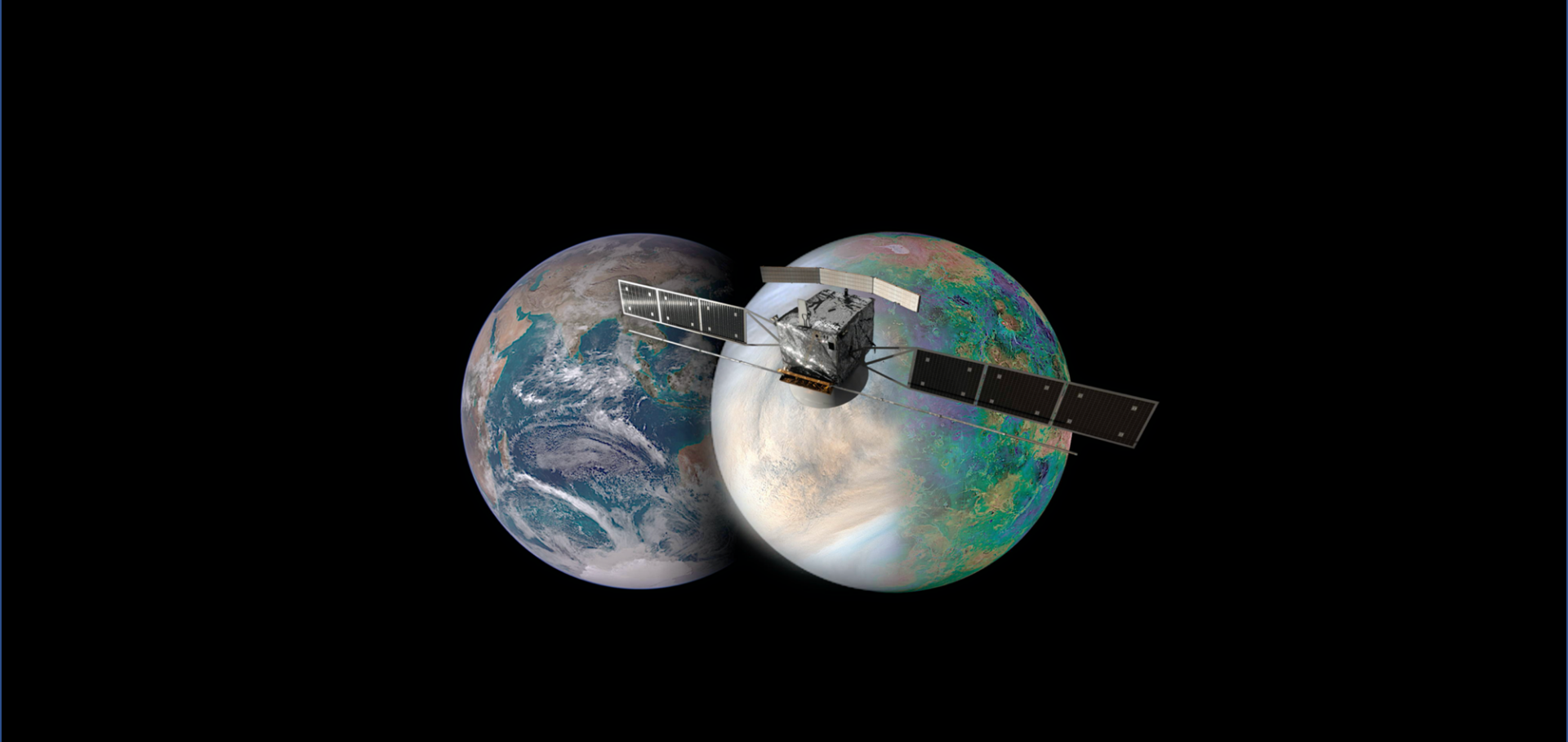
The EnVision Venus orbiter mission, proposed to ESA

Colin Wilson

Visitor

Research theme

  • Exoplanets and planetary physics

Sub department

  • Atmospheric, Oceanic and Planetary Physics

Research groups

  • Planetary atmosphere observation analysis
  • Planetary surfaces
  • Solar system
  • Space instrumentation
Colin.Wilson@physics.ox.ac.uk
Telephone: 01865 (2)72086
Atmospheric Physics Clarendon Laboratory, room 301
  • About
  • Publications

Explosive volcanic activity on Venus: The roles of volatile contribution, degassing, and external environment

Planetary and Space Science 113-114 (2015) 33-48

Authors:

MW Airey, TA Mather, DM Pyle, LS Glaze, RC Ghail, CF Wilson

Abstract:

Abstract We investigate the conditions that will promote explosive volcanic activity on Venus. Conduit processes were simulated using a steady-state, isothermal, homogeneous flow model in tandem with a degassing model. The response of exit pressure, exit velocity, and degree of volatile exsolution was explored over a range of volatile concentrations (H2O and CO2), magma temperatures, vent altitudes, and conduit geometries relevant to the Venusian environment. We find that the addition of CO2 to an H2O-driven eruption increases the final pressure, velocity, and volume fraction gas. Increasing vent elevation leads to a greater degree of magma fragmentation, due to the decrease in the final pressure at the vent, resulting in a greater likelihood of explosive activity. Increasing the magmatic temperature generates higher final pressures, greater velocities, and lower final volume fraction gas values with a correspondingly lower chance of explosive volcanism. Cross-sectionally smaller, and/or deeper, conduits were more conducive to explosive activity. Model runs show that for an explosive eruption to occur at Scathach Fluctus, at Venus' mean planetary radius (MPR), 4.5% H2O or 3% H2O with 3% CO2 (from a 25 m radius conduit) would be required to initiate fragmentation; at Ma'at Mons (~9 km above MPR) only ~2% H2O is required. A buoyant plume model was used to investigate plume behaviour. It was found that it was not possible to achieve a buoyant column from a 25 m radius conduit at Scathach Fluctus, but a buoyant column reaching up to ~20 km above the vent could be generated at Ma'at Mons with an H2O concentration of 4.7% (at 1300 K) or a mixed volatile concentration of 3% H2O with 3% CO2 (at 1200 K). We also estimate the flux of volcanic gases to the lower atmosphere of Venus, should explosive volcanism occur. Model results suggest explosive activity at Scathach Fluctus would result in an H2O flux of ~107 kg s-1. Were Scathach Fluctus emplaced in a single event, our model suggests that it may have been emplaced in a period of ~15 days, supplying 1-2×10⁴ Mt H2O to the atmosphere locally. An eruption of this scale might increase local atmospheric H2O abundance by several ppm over an area large enough to be detectable by near-infrared nightside sounding using the 1.18 μm spectral window such as that carried out by the Venus Express/VIRTIS spectrometer. Further interrogation of the VIRTIS dataset is recommended to search for ongoing volcanism on Venus.
More details from the publisher

The CO2 continuum absorption in the 1.10- and 1.18-μm windows on Venus from Maxwell Montes transits by SPICAV IR onboard Venus express

Planetary and Space Science 113-114 (2015) 66-77

Authors:

A Fedorova, B Bézard, JL Bertaux, O Korablev, C Wilson

Abstract:

Abstract One of the difficulties in modeling Venus' nightside atmospheric windows is the need to apply CO2 continuum opacity due to collision-induced CO2 bands and/or extreme far wings of strong allowed CO2 bands. Characterizing the CO2 continuum absorption at near-IR wavelengths as well as searching for a possible vertical gradient of minor species near the surface require observations over different surface elevations. The largest change in altitude occurs during a passage above Maxwell Montes at high northern latitudes. In 2011, 2012 and 2013 the SPICAV instrument aboard the Venus Express satellite performed three sets of observations over Maxwell Montes with variation of surface altitude from -2 to 9 km in the 1.10, 1.18 and 1.28-μm windows. The retrieved CO2 continuum absorption for the 1.10- and 1.18-μm windows varies from 0.29 to 0.66×10⁻⁹ cm-1 amagat-2 and from 0.30 to 0.78×10⁻⁹ cm-1 amagat-2, respectively, depending on the assumed input parameters. The retrieval is sensitive to possible variations of the surface emissivity. Our values fall between the results of Bézard et al., (2009, 2011) based on VIRTIS-M observations and laboratory measurements by Snels et al. (2014). We can also conclude that the continuum absorption at 1.28 μm can be constrained below 2.0×10⁻⁹ cm-1 amagat-2. Based on the 1.18 μm window the constant H2O mixing ratio varying from 25.7+1.4-1.2 ppm to 29.4+1.6-1.4 ppm has been retrieved assuming the surface emissivity of 0.95 and 0.6, respectively. No firm conclusion from SPICAV data about the vertical gradient of water vapor content at 10-20 km altitude could be drawn because of low signal-to-noise ratio and uncertainties in the surface emissivity.
More details from the publisher

Explosive volcanic activity on Venus: The roles of volatile contribution, degassing, and external environment

Planetary and Space Science Elsevier 113 (2015) 33-48

Authors:

MW Airey, TA Mather, DM Pyle, LS Glaze, RC Ghail, CF Wilson
More details from the publisher

Introduction to the special issue on Venus exploration

Planetary and Space Science Elsevier 113 (2015) 1

Authors:

H Svedhem, C Wilson, G Piccioni
More details from the publisher

The CO2 continuum absorption in the 1.10- and 1.18-μm windows on Venus from Maxwell Montes transits by SPICAV IR onboard Venus express

Planetary and Space Science Elsevier 113 (2015) 66-77

Authors:

Anna Fedorova, Bruno Bézard, Jean-Loup Bertaux, Oleg Korablev, Colin Wilson
More details from the publisher
More details

Pagination

  • First page First
  • Previous page Prev
  • …
  • Page 11
  • Page 12
  • Page 13
  • Page 14
  • Current page 15
  • Page 16
  • Page 17
  • Page 18
  • Page 19
  • …
  • Next page Next
  • Last page Last

Footer Menu

  • Contact us
  • Giving to the Dept of Physics
  • Work with us
  • Media

User account menu

  • Log in

Follow us

FIND US

Clarendon Laboratory,

Parks Road,

Oxford,

OX1 3PU

CONTACT US

Tel: +44(0)1865272200

University of Oxfrod logo Department Of Physics text logo
IOP Juno Champion logo Athena Swan Silver Award logo

© University of Oxford - Department of Physics

Cookies | Privacy policy | Accessibility statement

Built by: Versantus

  • Home
  • Research
  • Study
  • Engage
  • Our people
  • News & Comment
  • Events
  • Our facilities & services
  • About us
  • Giving to Physics
  • Current students
  • Staff intranet