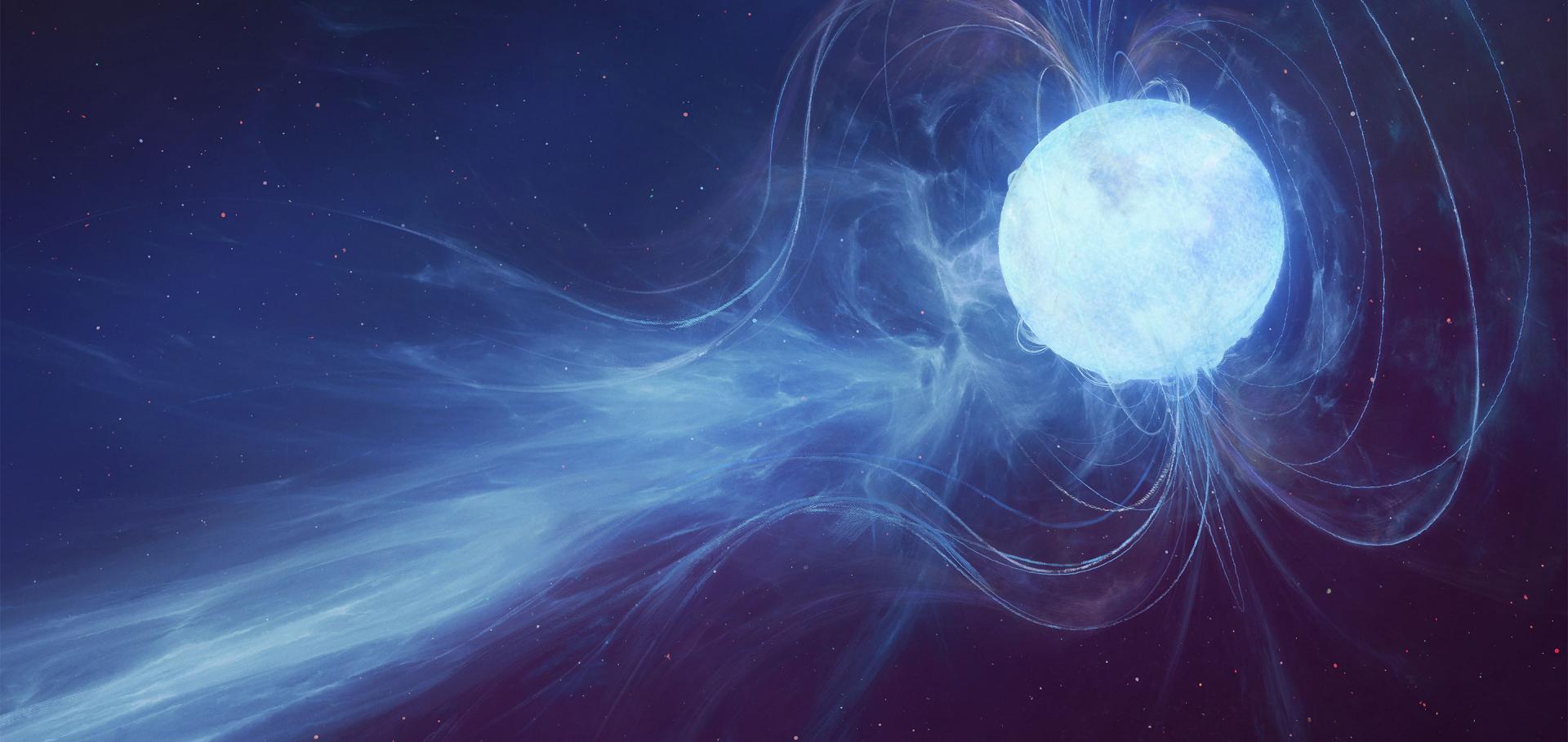
AT 2024wpp: An Extremely Luminous Fast Ultraviolet Transient Powered by Accretion onto a Black Hole

Monthly Notices of the Royal Astronomical Society Oxford University Press (OUP) (2026) stag678

Authors:

Daniel A Perley, Anna YQ Ho, Zoë McGrath, Michael Camilo, Cassie Sevilla, Ping Chen, Genevieve Schroeder, Taya Govreen-Segal, Aleksandra Bochenek, Yu-Jing Qin, James H Gillanders, Benjamin Amend, Joseph P Anderson, Igor Andreoni, Amar Aryan, Eric C Bellm, Joshua S Bloom, Thomas de Boer, Jonathan Carney, Ilaria Caiazzo, Ken C Chambers, Panos Charalampopoulos, Ting-Wan Chen, Tracy X Chen, Eric R Coughlin, Michael Coughlin, Michel Dennefeld, Georgios Dimitriadis, Christoffer Fremling, Danielle Frostig, Avishay Gal-Yam, Lluís Galbany, Anjashay Gangopadhyay, Melzie Ghendrih, Matthew J Graham, Mariusz Gromadzki, Steven L Groom, Claudia P Gutiérrez, K-Ryan Hinds, Mark E Huber, Cosimo Inserra, Benjamin C Kaiser, Mansi M Kasliwal, Niilo E Koivisto, Chien-Cheng Lin, Chang Liu, Thomas B Lowe, Eugene Magnier, Ashish A Mahabal, Andrew Milligan, Paloma Minguez, Geoffrey Mo, Tomás E Müller-Bravo, Matt Nicholl, Priscila J Pessi, Giuliano Pignata, Josiah Purdum, Nabeel Rehemtulla, R Michael Rich, Anwesha Sahu, Avinash Singh, Stephen J Smartt, Ian A Smith, Jesper Sollerman, Gokul Srinivasaragavan, Shubham Srivastav, Robert D Stein, Steve Schulze, Jack W Tweddle, Richard Wainscoat, Jacob L Wise, Lin Yan, David R Young

Abstract:

Abstract We present the discovery of AT 2024wpp (‘Whippet’), a fast and luminous 18cow-like transient. At a redshift of z = 0.0868, revealed by Keck Cosmic Web Imager spectroscopy of its faint star-forming host, it is the fourth-nearest example of its class to date. Rapid identification of the source in the Zwicky Transient Facility data stream permitted ultraviolet-through-optical observations to be obtained prior to peak, allowing the first determination of the peak bolometric luminosity (2 × 1045 erg s−1), maximum photospheric radius (1015 cm), and total radiated energy (1051 erg) of an 18cow-like object. We present results from a comprehensive multiwavelength observing campaign, including a far-UV spectrum from the Cosmic Origins Spectrograph on the Hubble Space Telescope and deep imaging extending >100 days post-explosion from the Very Large Telescope, Hubble Space Telescope, Very Large Array, and Atacama Large Millimetre Array. We interpret the observations under a model in which a rapidly-accreting central engine blows a fast (∼ 0.2 c) wind into the surrounding medium and irradiates it with X-rays. The high Doppler velocities and intense ionization within this wind prevent identifiable spectroscopic features from appearing in the ejecta or in the surrounding circumstellar material. Weak H and He signatures do emerge in the spectra after 35 days in the form of double-peaked narrow lines. Each peak is individually narrow (full width δv ∼ 3000 km s−1) but the two components are separated by Δv ∼ 6600 km s−1, indicating stable structures of denser material, possibly representing streams of tidal ejecta or an ablated companion star.

Identifying Transient Hosts in LSST’s Deep Drilling Fields with Galaxy Catalogs

The Astrophysical Journal American Astronomical Society 1000:2 (2026) 289

Authors:

JG Weston, DR Young, SJ Smartt, M Nicholl, MJ Jarvis, IH Whittam

Abstract:

The upcoming Vera C. Rubin Observatory Legacy Survey of Space and Time (LSST) will enable astronomers to discover rare and distant astrophysical transients. Host-galaxy association is crucial for selecting the most scientifically interesting transients for follow-up. LSST deep drilling field (DDF) observations will detect distant transients occurring in galaxies below the detection limits of most all-sky catalogs. Here, we investigate the use of preexisting, field-specific catalogs for host identification in the DDFs and a ranking of their usefulness. We have compiled a database of 70 deep catalogs that overlap with the Rubin DDFs and constructed thin catalogs to be homogenized and combined for transient-host matching. A systematic ranking of their utility is discussed and applied based on the inclusion of information such as spectroscopic redshifts and morphological information. Utilizing this data against a Dark Energy Survey sample of supernovae with pre-identified hosts in the XMM-Large Scale Structure and the Extended Chandra Deep Field-South fields, we evaluate different methods for transient-host association in terms of both accuracy and processing speed. We also apply light data-cleaning techniques to identify and remove contaminants within our associations, such as diffraction spikes and blended galaxies where the correct host cannot be determined with confidence. We use a lightweight machine learning approach in the form of extreme gradient boosting to generate confidence scores in our contaminant selections and associated metrics. Finally, we discuss the computational expense of implementation within the LSST transient alert brokers, which will require efficient, fast-paced processing to handle the large stream of survey data.

Discovery of energy-dependent phase variations in the polarization angle of Cen X-3

Astronomy & Astrophysics EDP Sciences 708 (2026) a94

Authors:

Qing-Chang Zhao, Lian Tao, Sergey S Tsygankov, Juri Poutanen, Hua Feng, Shuang-Nan Zhang, Hancheng Li, Mingyu Ge, Liang Zhang, Alexander A Mushtukov

Abstract:

We present a detailed polarimetric analysis of Cen X-3 using IXPE observations during its high state, revealing a complex, energy-dependent polarization behavior. While phase-averaged polarization shows marginal energy dependence, phase-resolved analysis reveals that the energy dependence of the polarization angle is strongly phase-dependent, with dramatic variations visible in a few specific phase intervals. We modeled this behavior using a two-component polarization framework consisting of a pulsed component governed by the rotating vector model (RVM) and an additional phase-dependent component. By allowing the additional component’s polarized flux to vary with pulse phase while fixing its PA, the observed complex behavior can be reconciled with a single set of RVM parameters across all energies. Spectroscopic analysis using IXPE , NICER, and NuSTAR during the high state reveals phase-modulated intrinsic hydrogen column density and covering fraction, suggesting that the wind properties are modulated with pulse phase. Our findings indicate that phase-dependent scattering in the disk wind may significantly alter the observed polarization properties of X-ray pulsars.

The Depletion of Collisionless Dark Matter Spikes

(2026)

Authors:

Charlie Sharpe, Yonadav Barry Ginat, Thomas FM Spieksma, Bence Kocsis

The second H.E.S.S. gamma-ray burst catalogue: 15 years of observations with the H.E.S.S. telescopes

(2026)

Authors:

A Acharyya, F Aharonian, C Arcaro, H Ashkar, M Backes, V Barbosa Martins, R Batzofin, Y Becherini, D Berge, K Bernlöhr, M Böttcher, C Boisson, J Bolmont, J Borowska, F Brun, B Bruno, C Burger-Scheidlin, S Casanova, J Celic, M Cerruti, S Chandra, A Chen, M Chernyakova, JO Chibueze, O Chibueze, T Collins, B Cornejo, G Cotter, J Damascene Mbarubucyeye, ID Davids, J de Assis Scarpin, M de Bony de Lavergne, M de Naurois, E de Oña Wilhelmi, AG Delgado Giler, J Devin, A Djannati-Ataï, J Djuvsland, A Dmytriiev, K Egberts, K Egg, J-P Ernenwein, C Escañuela Nieves, MD Filipovic, G Fontaine, S Funk, S Gabici, YA Gallant, M Genaro, JF Glicenstein, J Glombitza, M-H Grondin, L Heckmann, B Heß, JA Hinton, W Hofmann, TL Holch, M Holler, D Horns, Z Huang, M Jamrozy, F Jankowsky, I Jaroschewski, D Jimeno Sanchez, I Jung-Richardt, E Kasai, K Kasprzak, K Katarzyński, D Kerszberg, B Khélifi, W Kluzniak, N Komin, K Kosack, D Kostunin, RG Lang, S Lazarević, M Lemoine-Goumard, J-P Lenain, P Liniewicz, A Luashvili, J Mackey, D Malyshev, D Malyshev, V Marandon, M Mayer, A Mehta, A Mikhno, AMW Mitchell, R Moderski, MO Moghadam, L Mohrmann, A Montanari, E Moulin, J Niemiec, P O'Brien, L Olivera-Nieto, S Panny, M Panter, RD Parsons, U Pensec, P Pichard, S Pita, G Pühlhofer, M Punch, A Quirrenbach, M Regeard, A Reimer, O Reimer, I Reis, H Ren, B Reville, F Rieger, G Rowell, B Rudak, E Ruiz-Velasco, K Sabri, V Sahakian, H Salzmann, DA Sanchez, A Santangelo, M Sasaki, F Schüssler, M Senniappan, JNS Shapopi, W Si Said, H Sol, S Spencer, Ł Stawarz, S Steinmassl, T Tanaka, AM Taylor, GL Taylor, R Terrier, M Tsirou, T Unbehaun, C van Eldik, M Vecchi, C Venter, J Vink, T Wach, SJ Wagner, A Wierzcholska, M Zacharias, AA Zdziarski, W Zhong, SJ Zhu, A Zech