Home
Department Of Physics text logo
  • Research
    • Our research
    • Our research groups
    • Our research in action
    • Research funding support
    • Summer internships for undergraduates
  • Study
    • Undergraduates
    • Postgraduates
  • Engage
    • For young people
    • For teachers
    • For the public
    • For alumni
    • For business
  • Support
Menu
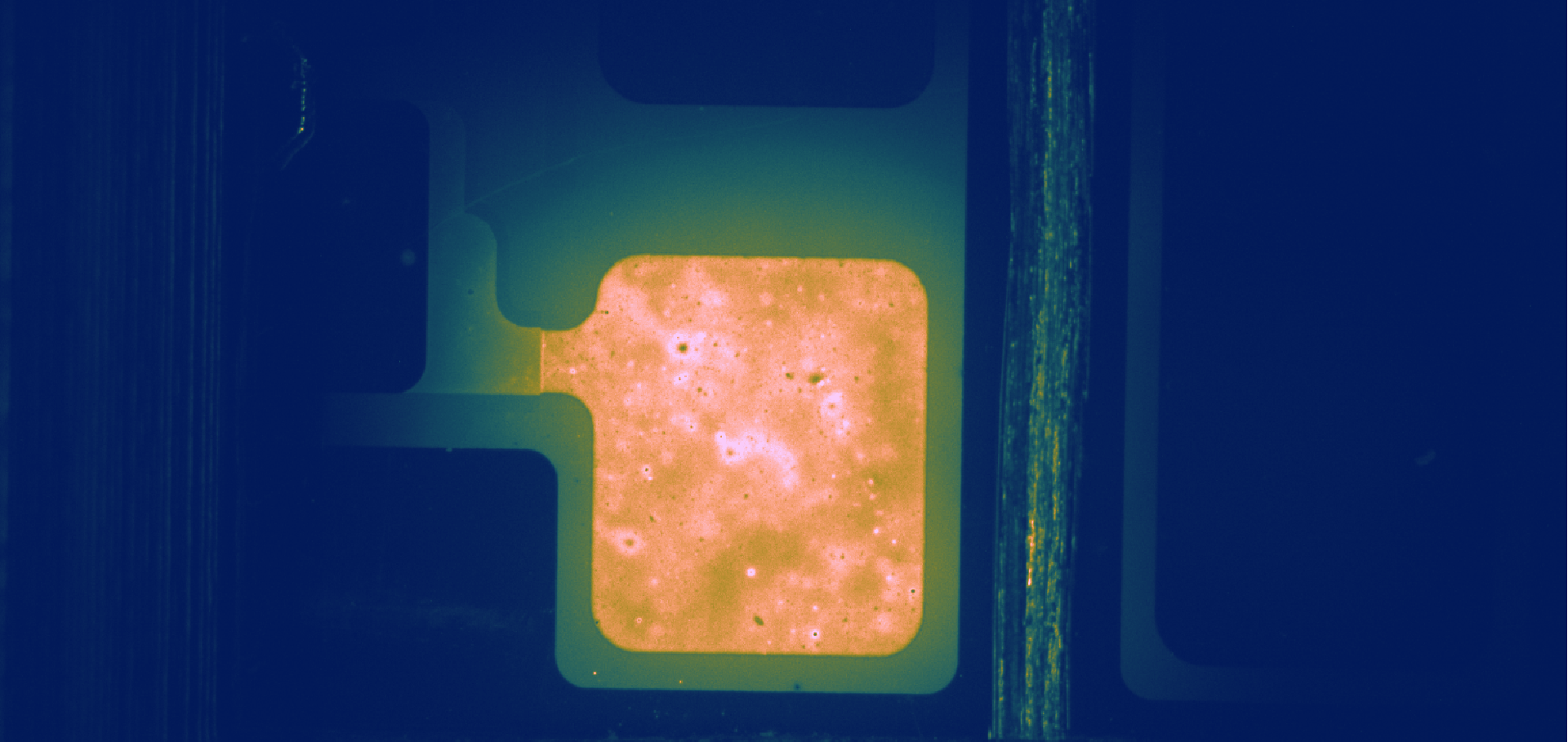
Sample_image

Akash Dasgupta

Visitor - Long Term

Research theme

  • Photovoltaics and nanoscience

Sub department

  • Condensed Matter Physics
akash.dasgupta@physics.ox.ac.uk
Personal Website
  • About
  • Publications

Visualizing macroscopic inhomogeneities in perovskite solar cells

University of Oxford (2022)

Authors:

Akash Dasgupta, Suhas Mahesh, Pietro Caprioglio, Yen-Hung Lin, Karl-Augustin Zaininger, Robert DJ Oliver, Philippe Holzhey, Suer Zhou, Melissa McCarthy, Joel Smith, Maximilian Frenzel, M Greyson Christoforo, James Ball, Bernard Wenger, Henry J Snaith

Abstract:

This contains all data used in the paper: ACS Energy Lett. 2022, 7, 7, 2311–2322, DOI: https://doi.org/10.1021/acsenergylett.2c01094. Data has been sorted into raw and processed, and organised by which figure they appear in. Arrays require Python and the numpy package to load (np.load('filename.npy')). All other data is in text format of some form, easily openable. Some plots require Origin labs to open, but no data in these files are inaccessible from the txt files/ csvs etc.
More details from the publisher
Details from ORA

The Impact of C60-Self-Assembled Monolayer Electron-Transport Layers in Negative–Intrinsic–Positive Perovskite Solar Cells

ACS Energy Letters (2026)

Authors:

Suer Zhou, Luca Gregori, Seongrok Seo, Raghunath R Dasari, Jae Eun Lee, Edoardo Mosconi, Heon Jin, Francesca Nunzi, Fengning Yang, Manuel Kober-Czerny, Alexandra J Ramadan, Akash Dasgupta, Leonardo Pacifici, Igal Levine, Joel Smith, Stephen Barlow, Laura M Herz, Filippo De Angelis, Seth R Marder, Henry J Snaith

Abstract:

We investigate the impact of employing fullerene self-assembled monolayers (SAMs) in conjunction with SnO2 electron-transport layers (ETLs) in negative–intrinsic–positive (n–i–p) perovskite solar cells. We compare the efficacy of the fullerene-SAM surface-binding group—carboxylic or phosphonic acid—on the passivation, charge transport, and energetics of the modified-SnO2 surface. Planar n–i–p perovskite solar cells with these SAM-modified SnO2 exhibit significantly reduced hysteresis, and the steady-state maximum power point tracked efficiencies (η MPP) of the devices improved from an average of 18.6–20.0% comparing devices with neat SnO2 to the C60-PA SAM inclusion, respectively. While C60-PA SAM improved the initial solar cell efficiency, this benefit was not maintained during light exposure at elevated temperatures as the fullerene SAM weakened adhesion at the perovskite/metal oxide interface in the aged devices. These results highlight the importance of improving the mechanical robustness of perovskite/charge-transport layer interfaces under operational aging conditions.
More details from the publisher
More details

Stabilized perovskite ink for scalable coating enables high-efficiency perovskite modules

Science Advances American Association for the Advancement of Science 12:1 (2026) eaec0915

Authors:

Yangyang Liu, Junke Wang, Tianxiao Liu, Lingyuan Wang, Yuhan Zhou, Yaoyao Zhang, Yunjie Dou, Xiaoyu Shi, He Yan, Akash Dasgupta, Henry J Snaith, Shangshang Chen

Abstract:

Perovskite inks play critical roles in determining film quality and device performance, and ink stability is desired to ensure high device reproducibility. Here, we reveal the instability issue of current cesium-formamidinium lead triiodide (CsxFA1-xPbI3) inks whose aggregation and precipitation tendencies are induced by excessively strong solvent-lead-halide coordination. By modulating coordination strength between precursor salts and solvents, we identify solvent coordination-dispersion equilibrium as the governing factor for ink stability and develop a stable ink that exhibits a remarkable increase in the shelf life. It effectively tunes ink drying and film crystallization, resulting in blade-coated perovskite films with excellent uniformity and low defect density. This enhancement led to increased aperture efficiency of ambient-fabricated p-i-n perovskite modules to 23.5%. The resultant devices also exhibit high durability, and 99% of the initial PCE was retained after 1700 hours of maximum power point tracking following the ISOS-L-2 standard protocol.
More details from the publisher
Details from ORA
More details
More details

Perovskite dielectric constants repository

University of Oxford (2026)

Abstract:

Raw data and derived dielectric constants (*n*, *k*, α) for neat Pb and mixed PbSn perovskite compositions
Details from ORA

Approaching the radiative limits for wide bandgap perovskite solar cells using fullerene blend electron transport interlayers †

EES Solar Royal Society of Chemistry (2025)

Authors:

Josephine L Surel, Pietro Caprioglio, Joel A Smith, Akash Dasgupta, Francesco Furlan, Charlie Henderson, Fengning Yang, Benjamin M Gallant, Seongrok Seo, Alexander Knight, Manuel Kober-Czerny, Joel Luke, David P McMeekin, Alexander I Tartakovskii, Ji-Seon Kim, Nicola Gasparini, Henry J Snaith

Abstract:

Performance losses in positive–intrinsic–negative architecture perovskite solar cells are dominated by nonradiative recombination at the perovskite/organic electron transport layer interface, which is particularly problematic for wider bandgap perovskites. Large endeavours have been dedicated to the replacement of fullerenes, which are the most commonly used class of electron transport layers, with limited success thus far. In this work, we demonstrate blending the fullerene derivatives [6,6]-phenyl C61 butyric acid methyl ester (PCBM) and indene-C60 bis-adduct (ICBA) as a thin interlayer between 1.77 eV bandgap perovskite and an evaporated C60 layer. By tuning the fullerene blend to a trace 2% by mass of PCBM in ICBA, we remarkably form an interlayer which features improved energetic alignment with the perovskite and the PCBM : ICBA fullerene mixture, together with a stronger molecular ordering and an order of magnitude higher electron mobility than either neat PCBM or ICBA. Additional molecular surface passivation approaches are found to be beneficial in conjunction with this approach, resulting in devices with 19.5% steady state efficiency, a fill factor of 0.85 and an open-circuit voltage of 1.33 V, which is within 10% of the radiative limit of the latter two device parameters for this bandgap. This work highlights the complex nonlinear energetic behaviour with fullerene mixing, and how control of the energetics and crystallinity of these materials is crucial in overcoming the detrimental recombination losses that have historically limited perovskite solar cells.
More details from the publisher
Details from ORA

Pagination

  • Current page 1
  • Page 2
  • Page 3
  • Page 4
  • Page 5
  • Page 6
  • Next page Next
  • Last page Last

Footer Menu

  • Contact us
  • Giving to the Dept of Physics
  • Work with us
  • Media

User account menu

  • Log in

Follow us

FIND US

Clarendon Laboratory,

Parks Road,

Oxford,

OX1 3PU

CONTACT US

Tel: +44(0)1865272200

University of Oxfrod logo Department Of Physics text logo
IOP Juno Champion logo Athena Swan Silver Award logo

© University of Oxford - Department of Physics

Cookies | Privacy policy | Accessibility statement

Built by: Versantus

  • Home
  • Research
  • Study
  • Engage
  • Our people
  • News & Comment
  • Events
  • Our facilities & services
  • About us
  • Giving to Physics
  • Current students
  • Staff intranet