


The atmosphere of Mars
JBIS Journal of the British Interplanetary Society 52:5-6 (1999) 209-216
Abstract:
Mars, one of the most Earth-like of the planets, is today a cold, dry and barren world. However, there is good evidence that it may have been much warmer and wetter in the past and perhaps even supported life. The public interest aroused by these findings and by recent studies of 'SNC' meteorites, believed to have come from Mars, with their claims of the evidence of ancient Martian life, has focused attention on the ambitious programme of Mars Exploration currently being undertaken by NASA and ESA and has provided additional impetus. Improved measurements of the conditions on Mars' surface and in its atmosphere are central to both agencies' plans, and current atmospheric missions are reviewed in this paper together with possible future designs.Network science landers for Mars
Advances in Space Research Elsevier 23:11 (1999) 1915-1924
Band parameters and k coefficients for self-broadened ammonia in the range 4000-11000 cm-1
JOURNAL OF QUANTITATIVE SPECTROSCOPY & RADIATIVE TRANSFER 62:2 (1999) 193-204
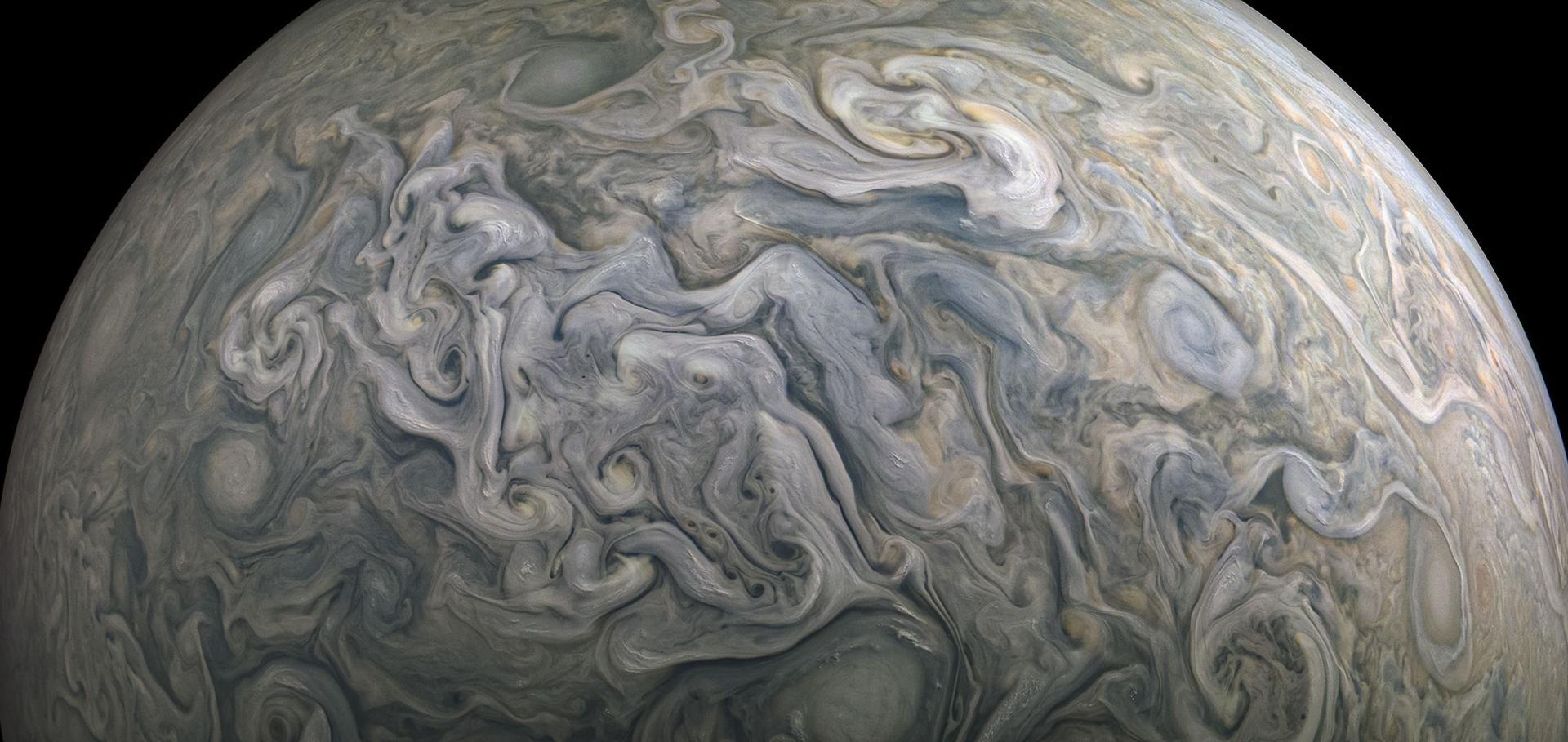
Jovian atmospheric studies with the Galileo near infrared mapping spectrometer: An update
ADV SPACE RES 23:9 (1999) 1623-1632
Abstract:
In its first two years of operation since arrival at Jupiter in December 1995, the Near Infrared Mapping spectrometer (NIMS) on the Galileo orbiter spacecraft obtained extensive coverage of the planet, including detailed coverage of the north equatorial belt (NEB) 'hot spot' region and the Great Red Spot. We will present the current state of data analysis including recent results on the abundances and variability of several minor constituents (H2O, CH4, NH3, GeH4, CH3D and PH3) and the cloud structure and morphology. (C) 1999 COSPAR. Published by Elsevier Science Ltd.Investigation of Saturn's atmosphere by Cassini
PLANET SPACE SCI 46:9-10 (1998) 1315-1324