Home
Department Of Physics text logo
  • Research
    • Our research
    • Our research groups
    • Our research in action
    • Research funding support
    • Summer internships for undergraduates
  • Study
    • Undergraduates
    • Postgraduates
  • Engage
    • For alumni
    • For business
    • For schools
    • For the public
  • Support
Menu
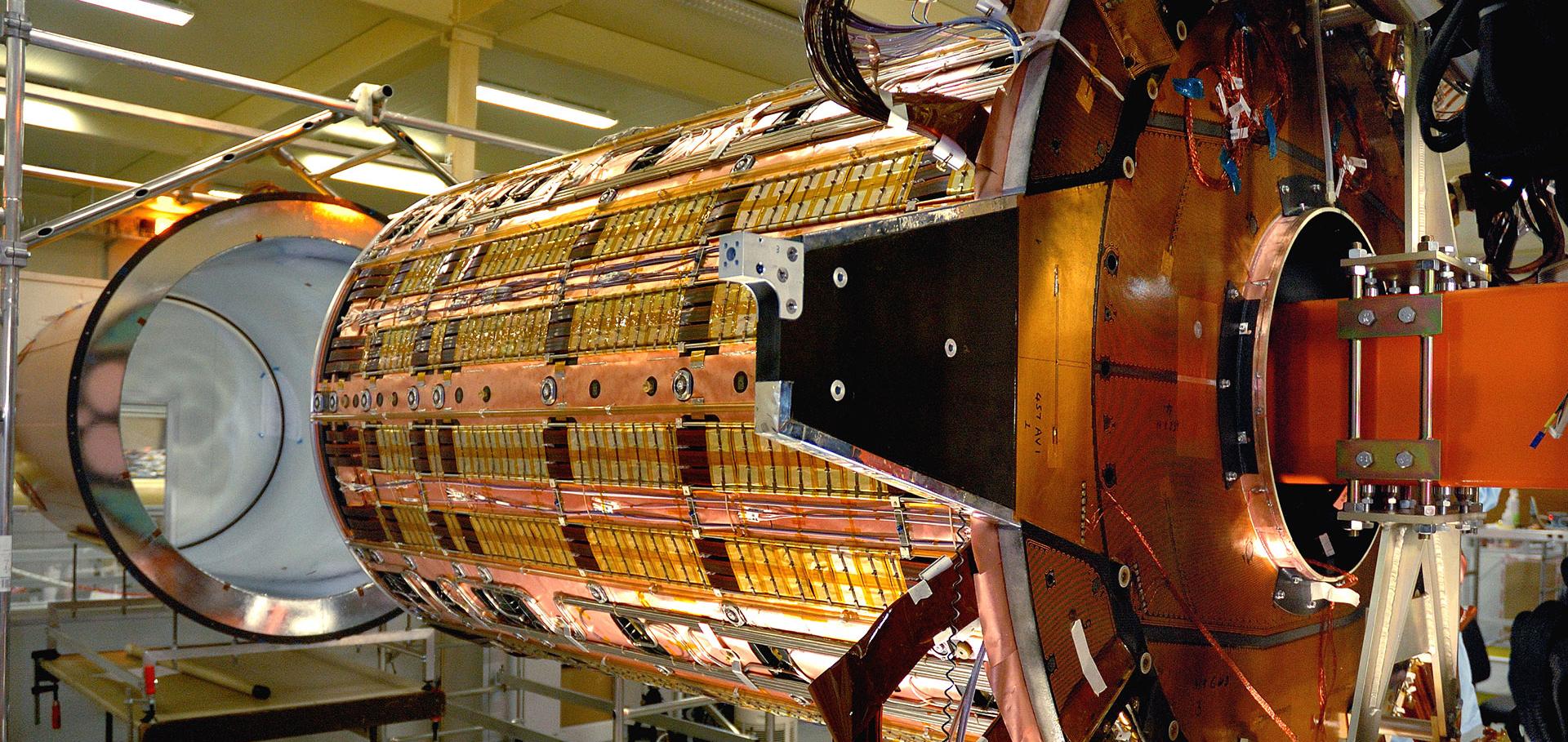
Insertion of STC into TRT at the Department of Physics, Oxford
Credit: CERN

Professor Amanda Cooper-Sarkar

Emeritus Professor

Research theme

  • Fundamental particles and interactions

Sub department

  • Particle Physics

Research groups

  • ATLAS
Amanda.Cooper-Sarkar@physics.ox.ac.uk
Telephone: 01865 (2)73406
Denys Wilkinson Building, room 659
  • About
  • Publications

The PDF4LHC Working Group Interim Recommendations

arXiv (2011)

Authors:

M Botje, J Butterworth, M Cooper-Sarkar, A de Roeck, J Feltesse, S Forte, A Glazov, J Huston, R McNulty, T Sjostrand, R Thorne

Abstract:

This note provides an interim summary of the current recommendations of the PDF4LHC working group for the use of parton distribution functions (PDFs) and of PDF uncertainties at the LHC, for cross section and cross section uncertainty calculations. It also contains a succinct user guide to the computation of PDF uncertainties and correlations using available PDF sets. A companion note (the PDF4LHC Working Group Interim Report) summarizes predictions for benchmark cross sections at the LHC (7 TeV) at NLO using modern PDFs currently available from 6 PDF fitting groups.

A search for new physics in dijet mass and angular distributions in ppcollisions at √s=7 TeV measured with the ATLAS detector

New Journal of Physics 13 (2011)

Authors:

G Aad, B Abbott, J Abdallah, AA Abdelalim, A Abdesselam, O Abdinov, B Abi, M Abolins, H Abramowicz, H Abreu, E Acerbi, BS Acharya, DL Adams, TN Addy, J Adelman, M Aderholz, S Adomeit, P Adragna, T Adye, S Aefsky, JA Aguilar-Saavedra, M Aharrouche, SP Ahlen, F Ahles, A Ahmad, M Ahsan, G Aielli, T Akdogan, TPA Åkesson, G Akimoto, AV Akimov, A Akiyama, MS Alam, MA Alam, S Albrand, M Aleksa, IN Aleksandrov, M Aleppo, F Alessandria, C Alexa, G Alexander, G Alexandre, T Alexopoulos, M Alhroob, M Aliev, G Alimonti, J Alison, M Aliyev, PP Allport, SE Allwood-Spiers, J Almond, A Aloisio, R Alon, A Alonso, MG Alviggi, K Amako, P Amaral, C Amelung, VV Ammosov, A Amorim, G Amorós, N Amram, C Anastopoulos, T Andeen, CF Anders, KJ Anderson, A Andreazza, V Andrei, ML Andrieux, XS Anduaga, A Angerami, F Anghinolfi, N Anjos, A Annovi, A Antonaki, M Antonelli, S Antonelli, A Antonov, J Antos, F Anulli, S Aoun, LA Bella, R Apolle, G Arabidze, I Aracena, Y Arai, ATH Arce, JP Archambault, S Arfaoui, JF Arguin, E Arik, M Arik, AJ Armbruster, O Arnaez, C Arnault, A Artamonov, G Artoni, D Arutinov, S Asai, R Asfandiyarov

Abstract:

A search for new interactions and resonances produced in LHC proton-proton (pp) collisions at a centre-of-mass energy √s = 7 TeV was performed with the ATLAS detector. Using a dataset with an integrated luminosity of 36 pb -1, dijet mass and angular distributions were measured up to dijet masses of ∼3.5TeV and were found to be in good agreement with Standard Model predictions. This analysis sets limits at 95% CL on various models for new physics: an excited quark is excluded for mass between 0.60 and 2.64 TeV, an axigluon hypothesis is excluded for axigluon masses between 0.60 and 2.10 TeV and quantum black holes are excluded in models with six extra space-time dimensions for quantum gravity scales between 0.75 and 3.67 TeV. Production cross section limits as a function of dijet mass are set using a simplified Gaussian signal model to facilitate comparisons with other hypotheses. Analysis of the dijet angular distribution using a novel technique simultaneously employing the dijet mass excludes quark contact interactions with a compositeness scale A below 9.5 TeV. © 2011 CERN for the benefit of the ATLAS Collaboration.
More details from the publisher
Details from ORA
More details

Limits on the production of the standard model Higgs boson in pp collisions at √s=7 TeV with the ATLAS detector

European Physical Journal C 71:9 (2011) 1-30

Authors:

The ATLAS Collaboration, G Aad, B Abbott, J Abdallah, AA Abdelalim, A Abdesselam, O Abdinov, B Abi, M Abolins, H Abramowicz, H Abreu, E Acerbi, BS Acharya, DL Adams, TN Addy, J Adelman, M Aderholz, S Adomeit, P Adragna, T Adye, S Aefsky, JA Aguilar-Saavedra, M Aharrouche, SP Ahlen, F Ahles, A Ahmad, M Ahsan, G Aielli, T Akdogan, TPA Åkesson, G Akimoto, AV Akimov, A Akiyama, MS Alam, MA Alam, S Albrand, M Aleksa, IN Aleksandrov, F Alessandria, C Alexa, G Alexander, G Alexandre, T Alexopoulos, M Alhroob, M Aliev, G Alimonti, J Alison, M Aliyev, PP Allport, SE Allwood-Spiers, J Almond, A Aloisio, R Alon, A Alonso, MG Alviggi, K Amako, P Amaral, C Amelung, VV Ammosov, A Amorim, G Amorós, N Amram, C Anastopoulos, N Andari, T Andeen, CF Anders, KJ Anderson, A Andreazza, V Andrei, M Andrieux, XS Anduaga, A Angerami, F Anghinolfi, N Anjos, A Annovi, A Antonaki, M Antonelli, A Antonov, J Antos, F Anulli, S Aoun, LA Bella, R Apolle, G Arabidze, I Aracena, Y Arai, ATH Arce, JP Archambault, S Arfaoui, J Arguin, E Arik, M Arik, AJ Armbruster, O Arnaez, C Arnault, A Artamonov, G Artoni, D Arutinov, S Asai, R Asfandiyarov

Abstract:

A search for the Standard Model Higgs boson at the Large Hadron Collider (LHC) running at a centre-of-mass energy of 7 TeV is reported, based on a total integrated luminosity of up to 40 pb-1 collected by the ATLAS detector in 2010. Several Higgs boson decay channels: H→γγ, H→ZZ(*)→ℓℓℓℓ, H→ZZ→ℓℓνν, H→ZZ→ℓℓqq, H→WW(*)→ℓνℓν and H→WW→ℓνqq (ℓ is e, μ) are combined in a mass range from 110 GeV to 600 GeV. The highest sensitivity is achieved in the mass range between 160 GeV and 170 GeV, where the expected 95% CL exclusion sensitivity is at Higgs boson production cross sections 2. 3 times the Standard Model prediction. Upper limits on the cross section for its production are determined. Models with a fourth generation of heavy leptons and quarks with Standard Model-like couplings to the Higgs boson are also investigated and are excluded at 95% CL for a Higgs boson mass in the range from 140 GeV to 185 GeV. © 2011 CERN for the benefit of the ATLAS collaboration.
More details from the publisher
More details

Measurement of the Υ(1S) production cross-section in pp collisions at s=7 TeV in ATLAS

Physics Letters, Section B: Nuclear, Elementary Particle and High-Energy Physics 705:1-2 (2011) 9-27

Authors:

G Aad, B Abbott, J Abdallah, AA Abdelalim, A Abdesselam, O Abdinov, B Abi, M Abolins, H Abramowicz, H Abreu, E Acerbi, BS Acharya, DL Adams, TN Addy, J Adelman, M Aderholz, S Adomeit, P Adragna, T Adye, S Aefsky, JA Aguilar-Saavedra, M Aharrouche, SP Ahlen, F Ahles, A Ahmad, M Ahsan, G Aielli, T Akdogan, TPA Åkesson, G Akimoto, AV Akimov, A Akiyama, MS Alam, MA Alam, S Albrand, M Aleksa, IN Aleksandrov, F Alessandria, C Alexa, G Alexander, G Alexandre, T Alexopoulos, M Alhroob, M Aliev, G Alimonti, J Alison, M Aliyev, PP Allport, SE Allwood-Spiers, J Almond, A Aloisio, R Alon, A Alonso, MG Alviggi, K Amako, P Amaral, C Amelung, VV Ammosov, A Amorim, G Amorós, N Amram, C Anastopoulos, N Andari, T Andeen, CF Anders, KJ Anderson, A Andreazza, V Andrei, ML Andrieux, XS Anduaga, A Angerami, F Anghinolfi, N Anjos, A Annovi, A Antonaki, M Antonelli, A Antonov, J Antos, F Anulli, S Aoun, L Aperio Bella, R Apolle, G Arabidze, I Aracena, Y Arai, ATH Arce, JP Archambault, S Arfaoui, JF Arguin, E Arik, M Arik, AJ Armbruster, O Arnaez, C Arnault, A Artamonov, G Artoni, D Arutinov, S Asai, R Asfandiyarov, S Ask

Abstract:

A measurement of the cross-section for Υ(1S)→μ+μ- production in proton-proton collisions at centre of mass energy of 7 TeV is presented. The cross-section is measured as a function of the Υ(1S) transverse momentum in two bins of rapidity, |yΥ(1S)|<1.2 and 1.2<|yΥ(1S)|<2.4. The measurement requires that both muons have transverse momentum pTμ>4 GeV and pseudorapidity |ημ|<2.5 in order to reduce theoretical uncertainties on the acceptance, which depend on the poorly known polarisation. The results are based on an integrated luminosity of 1.13 pb-1, collected with the ATLAS detector at the Large Hadron Collider. The cross-section measurement is compared to theoretical predictions: it agrees to within a factor of two with a prediction based on the NRQCD model including colour-singlet and colour-octet matrix elements as implemented in Pythia while it disagrees by up to a factor of ten with the next-to-leading order prediction based on the colour-singlet model. © 2011 CERN.
More details from the publisher

PDFs for the LHC

19th International Workshop on Deep-Inelastic Scattering and Related Subjects, DIS 2011 (2011)

Abstract:

The PDF4LHC group has benchmarked six modern PDF sets and used them to make predictions for W,Z prdocution and Higgs production at the LHC. The reasons why pre- dictions differ are examined and recent updates to the PDFs and their predictions are presented.

Pagination

  • First page First
  • Previous page Prev
  • …
  • Page 489
  • Page 490
  • Page 491
  • Page 492
  • Current page 493
  • Page 494
  • Page 495
  • Page 496
  • Page 497
  • …
  • Next page Next
  • Last page Last

Footer Menu

  • Contact us
  • Giving to the Dept of Physics
  • Work with us
  • Media

User account menu

  • Log in

Follow us

FIND US

Clarendon Laboratory,

Parks Road,

Oxford,

OX1 3PU

CONTACT US

Tel: +44(0)1865272200

University of Oxfrod logo Department Of Physics text logo
IOP Juno Champion logo Athena Swan Silver Award logo

© University of Oxford - Department of Physics

Cookies | Privacy policy | Accessibility statement

Built by: Versantus

  • Home
  • Research
  • Study
  • Engage
  • Our people
  • News & Comment
  • Events
  • Our facilities & services
  • About us
  • Giving to Physics
  • Current students
  • Staff intranet