Home
Department Of Physics text logo
  • Research
    • Our research
    • Our research groups
    • Our research in action
    • Research funding support
    • Summer internships for undergraduates
  • Study
    • Undergraduates
    • Postgraduates
  • Engage
    • For alumni
    • For business
    • For schools
    • For the public
  • Support
Menu
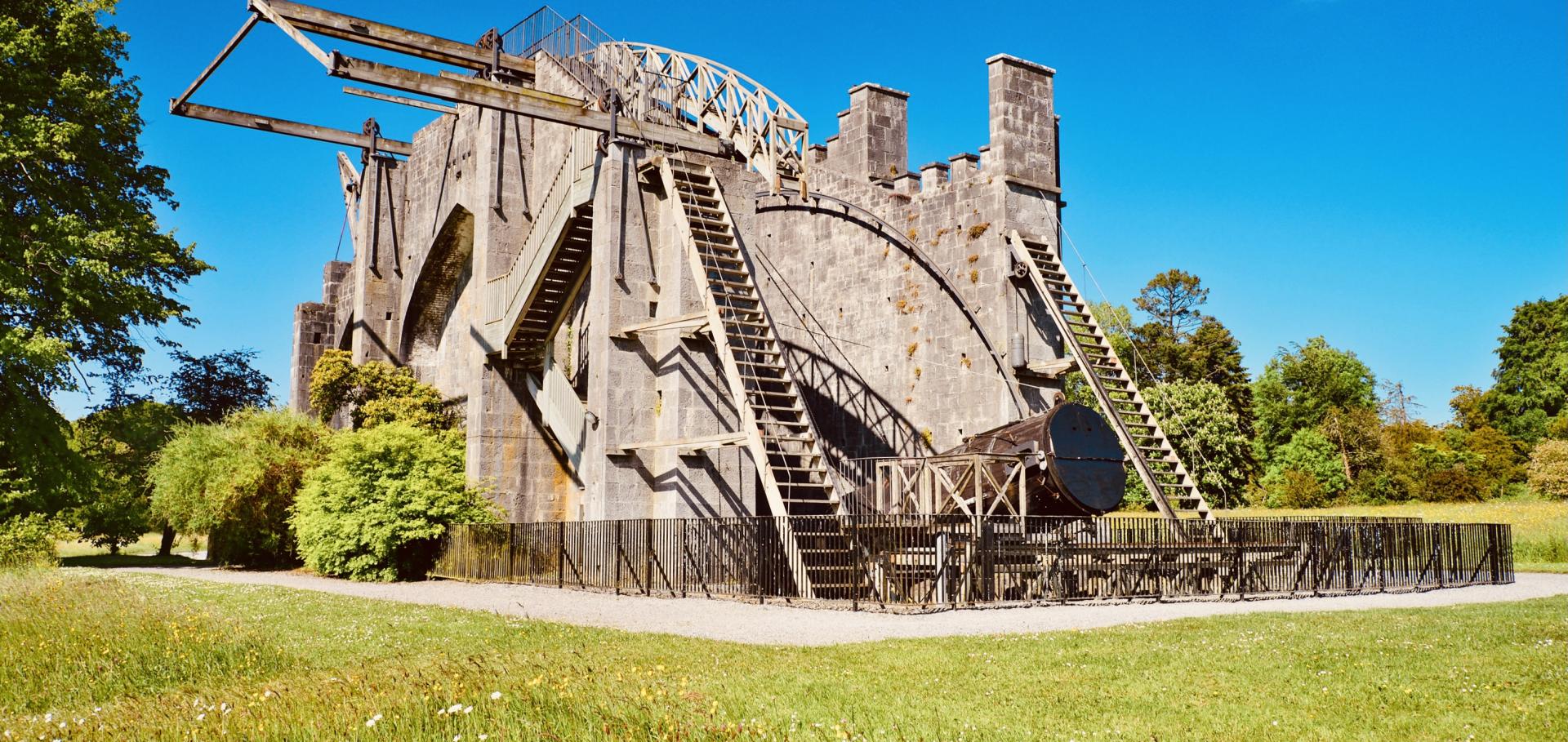
Rosse Telescope

Garret Cotter

Professor of Physics

Research theme

  • Astronomy and astrophysics
  • Particle astrophysics & cosmology

Sub department

  • Astrophysics

Research groups

  • Pulsars, transients and relativistic astrophysics
  • The Square Kilometre Array (SKA)
  • Gamma-ray astronomy
Garret.Cotter@physics.ox.ac.uk
Telephone: 01865 (2)73604
Denys Wilkinson Building, room Dalitz 4
  • About
  • Publications

The Cosmic Evolution of Fermi BL Lacertae Objects

(2013)

Authors:

M Ajello, RW Romani, D Gasparrini, MS Shaw, J Bolmer, G Cotter, J Finke, J Greiner, SE Healey, O King, W Max-Moerbeck, PF Michelson, WJ Potter, A Rau, ACS Readhead, JL Richards, P Schady
More details from the publisher

The dual-mirror Small Size Telescope for the Cherenkov Telescope Array

(2013)

Authors:

G Pareschi, G Agnetta, LA Antonelli, D Bastieri, G Bellassai, M Belluso, C Bigongiari, S Billotta, B Biondo, G Bonanno, G Bonnoli, P Bruno, A Bulgarelli, R Canestrari, M Capalbi, P Caraveo, A Carosi, E Cascone, O Catalano, M Cereda, P Conconi, V Conforti, G Cusumano, V De Caprio, A De Luca, A Di Paola, F Di Pierro, D Fantinel, M Fiorini, D Fugazza, D Gardiol, M Ghigo, F Gianotti, S Giarrusso, E Giro, A Grillo, D Impiombato, S Incorvaia, A La Barbera, N La Palombara, V La Parola, G La Rosa, L Lessio, G Leto, S Lombardi, F Lucarelli, MC Maccarone, G Malaguti, G Malaspina, V Mangano, D Marano, E Martinetti, R Millul, T Mineo, A MistÒ, C Morello, G Morlino, MR Panzera, G Rodeghiero, P Romano, F Russo, B Sacco, N Sartore, J Schwarz, A Segreto, G Sironi, G Sottile, A Stamerra, E Strazzeri, L Stringhetti, G Tagliaferri, V Testa, MC Timpanaro, G Toso, G Tosti, M Trifoglio, P Vallania, S Vercellone, V Zitelli, JP Amans, C Boisson, C Costille, JL Dournaux, D Dumas, G Fasola, O Hervet, JM Huet, P Laporte, C Rulten, H Sol, A Zech, R White, J Hinton, D Ross, J Sykes, S Ohm, J Schmoll, P Chadwick, T Greenshaw, M Daniel, G Cotter, GS Varner, S Funk, J Vandenbroucke, L Sapozhnikov, J Buckley, P Moore, D Williams, S Markoff, J Vink, D Berge, N Hidaka, A Okumura, H Tajima
More details from the publisher

A Compact High Energy Camera for the Cherenkov Telescope Array

(2013)

Authors:

MK Daniel, RJ White, D Berge, J Buckley, PM Chadwick, G Cotter, S Funk, T Greenshaw, N Hidaka, J Hinton, J Lapington, S Markoff, P Moore, S Nolan, S Ohm, A Okumura, D Ross, L Sapozhnikov, J Schmoll, P Sutcliffe, J Sykes, H Tajima, GS Varner, J Vandenbroucke, J Vink, D Williams
More details from the publisher

Synchrotron and inverse-Compton emission from blazar jets - III. Compton-dominant blazars

(2013)

Authors:

William J Potter, Garret Cotter
More details from the publisher

Synchrotron and inverse-compton emission from blazar jets - II. An accelerating jet model with a geometry set by observations of M87

Monthly Notices of the Royal Astronomical Society 429:2 (2013) 1189-1205

Authors:

WJ Potter, G Cotter

Abstract:

In this paper we develop the jet model of Potter & Cotter to include a magnetically dominated accelerating parabolic base transitioning to a slowly decelerating conical jet with a geometry set by recent radio observations of M87. We conserve relativistic energy-momentum and particle number along the jet and calculate the observed synchrotron emission from the jet by calculating the integrated line-of-sight synchrotron opacity through the jet in the rest frame of each section of plasma. We calculate the inverse-Compton emission from synchrotron, cosmic microwave background (CMB), accretion disc, starlight, broad-line region (BLR), dusty torus and narrow-line region photons by transforming into the rest frame of the plasma along the jet. We fit our model to simultaneous multi-wavelength observations of the Compton-dominant FSRQ type blazar PKS 0227-369, with a jet geometry set by M87 and an accelerating bulk Lorentz factor consistent with simulations and theory. We investigate models in which the jet comes into equipartition at different distances along the jet and equipartition is maintained via the conversion of jet bulk kinetic energy into particle acceleration. We find that the jet must still be magnetically dominated within the BLR and cannot be in equipartition due to the severe radiative energy losses. The model fits the observations, including radio data, very well if the jet comes into equipartition outside the BLR within the dusty torus (1.5 pc) or at further distances (34 pc). The fits require a high-power jet with a large bulk Lorentz factor observed close to the line of sight, consistent with our expectations for a Compton-dominant blazar. We find that our fit in which the jet comes into equipartition furthest along the jet, which has a jet with the geometry of M87 scaled linearly with black hole mass, has an inferred black hole mass close to previous estimates. This implies that the jet of PKS 0227 might be well described by the same jet geometry as M87. © 2012 The Authors. Published by Oxford University Press on behalf of the Royal Astronomical Society.
More details from the publisher
More details

Pagination

  • First page First
  • Previous page Prev
  • …
  • Page 28
  • Page 29
  • Page 30
  • Page 31
  • Current page 32
  • Page 33
  • Page 34
  • Page 35
  • Page 36
  • …
  • Next page Next
  • Last page Last

Footer Menu

  • Contact us
  • Giving to the Dept of Physics
  • Work with us
  • Media

User account menu

  • Log in

Follow us

FIND US

Clarendon Laboratory,

Parks Road,

Oxford,

OX1 3PU

CONTACT US

Tel: +44(0)1865272200

University of Oxfrod logo Department Of Physics text logo
IOP Juno Champion logo Athena Swan Silver Award logo

© University of Oxford - Department of Physics

Cookies | Privacy policy | Accessibility statement

Built by: Versantus

  • Home
  • Research
  • Study
  • Engage
  • Our people
  • News & Comment
  • Events
  • Our facilities & services
  • About us
  • Giving to Physics
  • Current students
  • Staff intranet