


Neutrally- and stably-stratified boundary layers adjustments to a step change in surface roughness
Experiments in Fluids Springer 64:4 (2023) 86
Abstract:
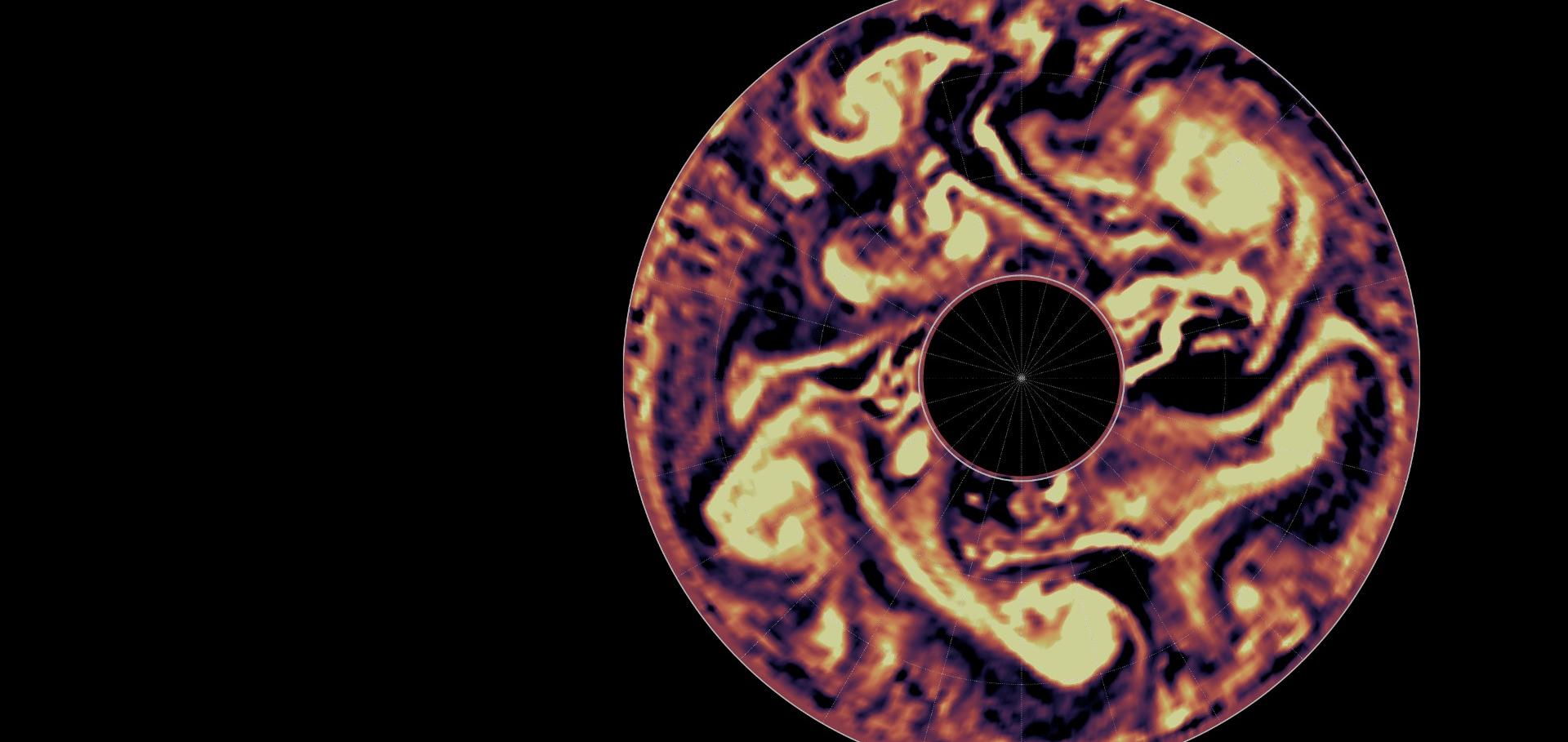
Abstract In this work, we study the development of the internal boundary layer (IBL) induced by a surface roughness discontinuity, where the downstream surface has a roughness length greater than that upstream. The work is carried out in the EnFlo meteorological wind tunnel, at the University of Surrey, in both thermally neutral and stable cases with varying degrees of stability. For the neutrally-stratified boundary layer, the IBL development in the log-law region shows good agreement with the diffusion model proposed by Panofsky and Dutton (Atmospheric turbulence, Wiley, New York, 1984) provided that a modified origin condition is introduced and its growth rate is dictated by a constant diffusion term. However, the model over-predicts the growth of the IBL in the outer layer, where the IBL depth grows slowly with fetch following a power function with exponent n being 0.61 (whereas the original model prescribes $$n\approx 0.8$$ n ≈ 0.8 ). For the stably-stratified boundary layers, n is found to further reduce as the bulk Richardson number, $$\textrm{Ri}_\textrm{b}$$ Ri b , increases. The analysis of the top region of the IBL shows that the slow growth rate is due to a combination of the decay of the diffusion term and a significantly negative mean wall-normal velocity, which transports fluid elements towards the wall. Considering these two effects, a modified diffusion model is proposed which well captures the growth of the IBL for both neutrally and stably-stratified boundary layers. Graphical abstractVortex patterns in rapidly rotating Rayleigh–Bénard convection under spatial periodic forcing
Journal of Fluid Mechanics Cambridge University Press (CUP) 950 (2022) R1
Abstract:
Pattern selection and restricted vortex dynamics by spatial periodic forcing in rapidly rotating Rayleigh-Bénard convection
ArXiv 2201.09492 (2022)
Neutrally- and Stably-Stratified Boundary Layers Adjustments to a Step Change in Surface Roughness
(2022)
Inverse centrifugal effect induced by collective motion of vortices in rotating thermal convection
Nature Communications Nature Research 12:1 (2021) 5585