

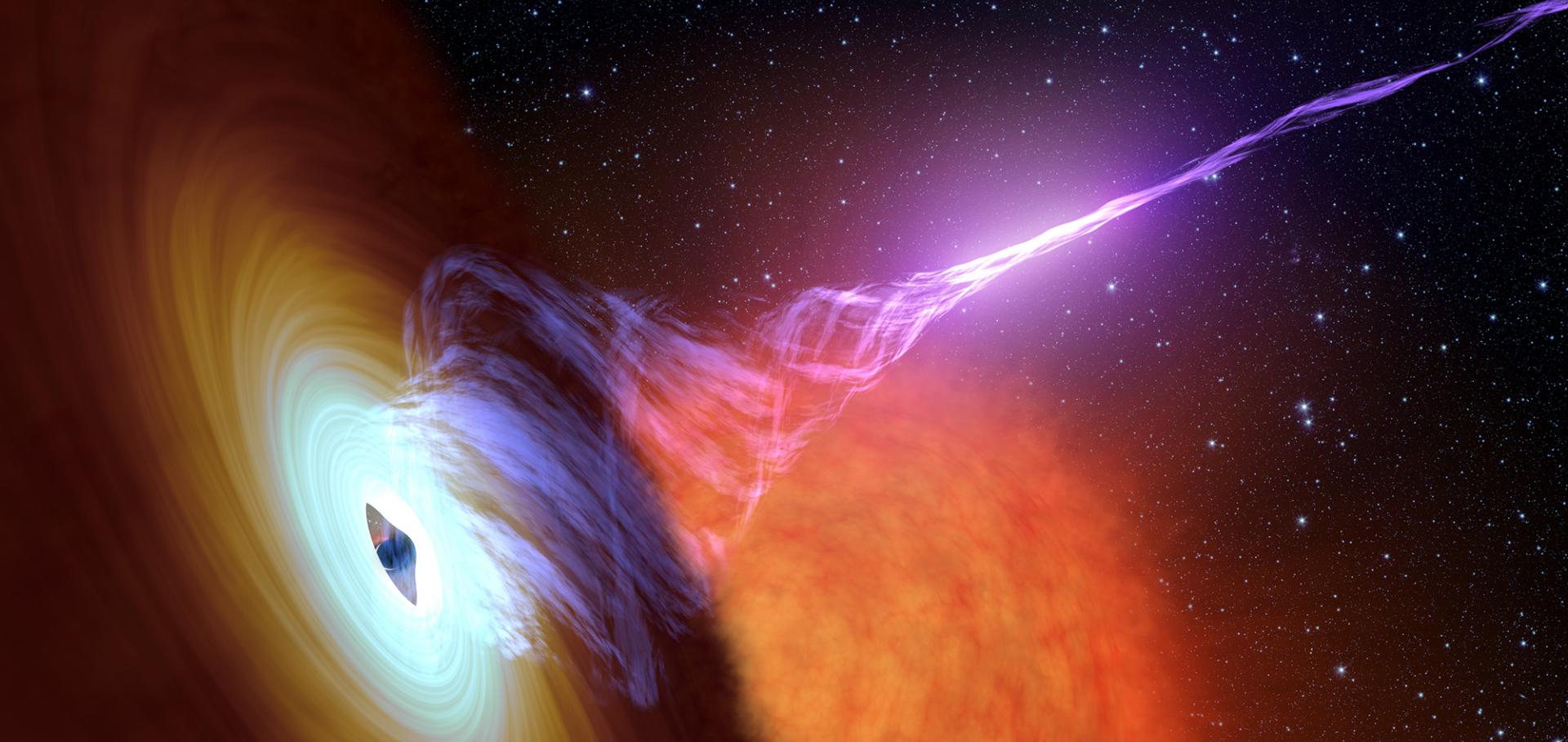

A Multi-Wavelength Picture of the Surprisingly Short 2024/25 Outburst from EXO 0748-676
(2026)
JWST/MIRI Spectroscopy of the Quiescent Black Hole X-ray Binary XTE J1118+480: Constraints on Jet and Circumbinary Dust Contributions to the Mid-infrared Emission
(2026)
Kink instability as a particle acceleration mechanism in X-ray binaries and the connection to the outburst cycle
(2026)
Archival Transients Detected with the MeerLICHT Telescope. I. Supernovae
Publications of the Astronomical Society of the Pacific 138:9 (2026)
Abstract:
Wide-field optical transient surveys collectively discover ∼50 new transients per night, making rapid, multi-filter and/or spectroscopic follow-up of all but the most exceptional events unfeasible. Consequently, the (early) light-curve properties of most supernovae (SNe), particularly sub-luminous events, are often poorly characterised. Here, we showcase recovery of key parameters by combining publicly available data from multiple, contemporaneous surveys. We built a catalogue of 125 SNe by cross-matching the MeerLICHT (ML) transient survey with the Transient Name Server list of spectroscopically classified SNe detected between 2017 August and 2022 October. For a subset of 14 SNe with good multi-survey photometric coverage, we combined ML-q, ZTF-g, r, and ATLAS-c, o data to construct composite early-time light curves. We then applied an expanding fireball (t2) model to constrain their explosion dates and rest-frame rise times. We find that this simple model provides a reliable description for the early emission of most SNe in our sample and successfully constrains their rise time, a key parameter for characterising SN categories and probing progenitor origins. This multi-survey approach, only using standard survey products, provides a powerful method to characterise large numbers of SNe that would otherwise be lost, a technique that will be essential for maximising the scientific return from current and future surveys such as GOTO, BlackGEM, the Vera C. Rubin Observatory’s LSST, and Global Open Transient Telescope Array (GOTTA).Archival transients detected with the MeerLICHT telescope I: Supernovae
(2026)