Home
Department Of Physics text logo
  • Research
    • Our research
    • Our research groups
    • Our research in action
    • Research funding support
    • Summer internships for undergraduates
  • Study
    • Undergraduates
    • Postgraduates
  • Engage
    • For young people
    • For teachers
    • For the public
    • For alumni
    • For business
  • Support
Menu
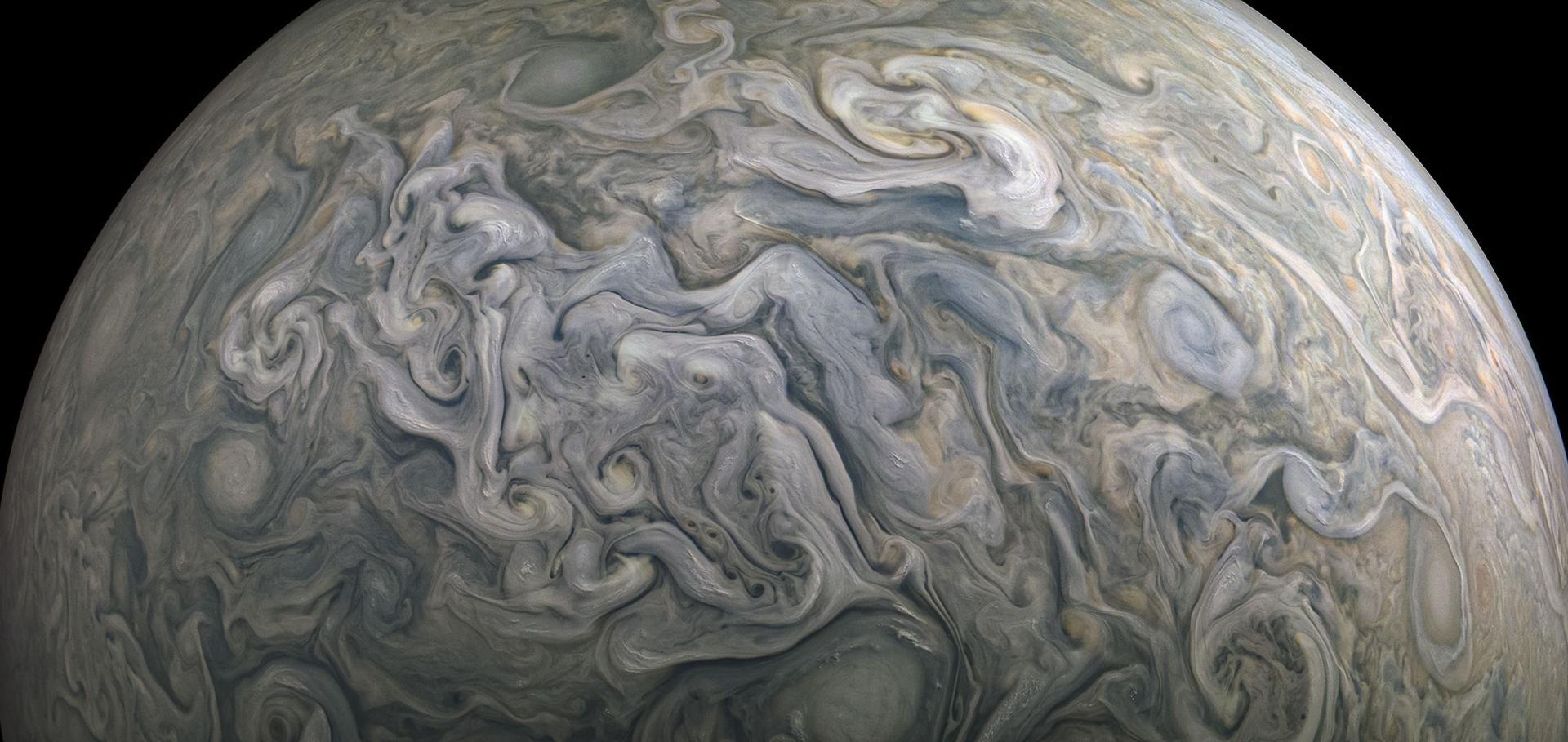
Juno Jupiter image

Professor Roy Grainger

Reader in Atmospheric Physics

Research theme

  • Climate physics

Sub department

  • Atmospheric, Oceanic and Planetary Physics

Research groups

  • Earth Observation Data Group
Don.Grainger@physics.ox.ac.uk
Telephone: 01865 (2)72888
Robert Hooke Building, room S47
  • About
  • Publications

Unveiling aerosol–cloud interactions–Part 1: Cloud contamination in satellite products enhances the aerosol indirect forcing estimate

Atmospheric Chemistry and Physics European Geosciences Union 17 (2017) 21

Authors:

Matthew W Christensen, David Neubauer, Caroline A Poulsen, Gareth E Thomas, Gregory R McGarragh, Adam C Povey, Simon R Proud, Roy G Grainger
More details from the publisher
Details from ORA
More details

Retrieval of ash properties from IASI measurements

ATMOSPHERIC MEASUREMENT TECHNIQUES 9:11 (2016) 5407-5422

Authors:

LJ Ventress, G McGarragh, E Carboni, AJ Smith, RG Grainger
More details from the publisher
Details from ORA
More details

Balloon-borne measurement of the aerosol size distribution from an Icelandic flood basalt eruption

Earth and Planetary Science Letters 453 (2016) 252-259

Authors:

D Vignelles, TJ Roberts, E Carboni, E Ilyinskaya, M Pfeffer, P Dagsson Waldhauserova, A Schmidt, G Berthet, F Jegou, JB Renard, H Ólafsson, B Bergsson, R Yeo, N Fannar Reynisson, RG Grainger, B Galle, V Conde, S Arellano, T Lurton, B Coute, V Duverger

Abstract:

© 2016 Elsevier B.V.We present in situ balloon-borne measurements of aerosols in a volcanic plume made during the Holuhraun eruption (Iceland) in January 2015. The balloon flight intercepted a young plume at 8 km distance downwind from the crater, where the plume is ∼15 min of age. The balloon carried a novel miniature optical particle counter LOAC (Light Optical Aerosol Counter) which measures particle number concentration and size distribution in the plume, alongside a meteorological payload. We discuss the possibility of calculating particle flux by combining LOAC data with measurements of sulfur dioxide flux by ground-based UV spectrometer (DOAS). The balloon passed through the plume at altitude range of 2.0–3.1 km above sea level (a.s.l.). The plume top height was determined as 2.7–3.1 km a.s.l., which is in good agreement with data from Infrared Atmospheric Sounding Interferometer (IASI) satellite. Two distinct plume layers were detected, a non-condensed lower layer (300 m thickness) and a condensed upper layer (800 m thickness). The lower layer was characterized by a lognormal size distribution of fine particles (0.2 μm diameter) and a secondary, coarser mode (2.3 μm diameter), with a total particle number concentration of around 100 cm−3 in the 0.2–100 μm detection range. The upper layer was dominated by particle centered on 20 μm in diameter as well as containing a finer mode (2 μm diameter). The total particle number concentration in the upper plume layer was an order of magnitude higher than in the lower layer. We demonstrate that intercepting a volcanic plume with a meteorological balloon carrying LOAC is an efficient method to characterize volcanic aerosol properties. During future volcanic eruptions, balloon-borne measurements could be carried out easily and rapidly over a large spatial area in order to better characterize the evolution of the particle size distribution and particle number concentrations in a volcanic plume.
More details from the publisher
Details from ORA
More details

Development, Production and Evaluation of Aerosol Climate Data Records from European Satellite Observations (Aerosol_cci)

REMOTE SENSING 8:5 (2016) ARTN 421

Authors:

T Popp, G de Leeuw, C Bingen, C Bruehl, V Capelle, A Chedin, L Clarisse, O Dubovik, R Grainger, J Griesfeller, A Heckel, S Kinne, L Klueser, M Kosmale, P Kolmonen, L Lelli, P Litvinov, L Mei, P North, S Pinnock, A Povey, C Robert, M Schulz, L Sogacheva, K Stebel, DS Zweers, G Thomas, LG Tilstra, S Vandenbussche, P Veefkind, M Vountas, Y Xue
More details from the publisher
Details from ORA
More details

Validation of ash optical depth and layer height retrieved from passive satellite sensors using EARLINET and airborne lidar data: the case of the Eyjafjallajökull eruption

Atmospheric Chemistry and Physics Copernicus Publications 16:9 (2016) 5705-5720

Authors:

Dimitris Balis, Maria-Elissavet Koukouli, Nikolaos Siomos, Spyridon Dimopoulos, Lucia Mona, Gelsomina Pappalardo, Franco Marenco, Lieven Clarisse, Lucy J Ventress, Elisa Carboni, Roy G Grainger, Ping Wang, Gijsbert Tilstra, Ronald van der A, Nicolas Theys, Claus Zehner
More details from the publisher
More details

Pagination

  • First page First
  • Previous page Prev
  • …
  • Page 9
  • Page 10
  • Page 11
  • Page 12
  • Current page 13
  • Page 14
  • Page 15
  • Page 16
  • Page 17
  • …
  • Next page Next
  • Last page Last

Footer Menu

  • Contact us
  • Giving to the Dept of Physics
  • Work with us
  • Media

User account menu

  • Log in

Follow us

FIND US

Clarendon Laboratory,

Parks Road,

Oxford,

OX1 3PU

CONTACT US

Tel: +44(0)1865272200

University of Oxfrod logo Department Of Physics text logo
IOP Juno Champion logo Athena Swan Silver Award logo

© University of Oxford - Department of Physics

Cookies | Privacy policy | Accessibility statement

Built by: Versantus

  • Home
  • Research
  • Study
  • Engage
  • Our people
  • News & Comment
  • Events
  • Our facilities & services
  • About us
  • Giving to Physics
  • Current students
  • Staff intranet