


MULTIXS: A new scanning multi-analyzer x-ray emission spectrometer at the GALAXIES beamline at synchrotron SOLEIL.
The Review of scientific instruments 96:5 (2025) 053104
Abstract:
We present the design and performance of a new multi-crystal x-ray emission spectrometer installed at the GALAXIES beamline at Synchrotron SOLEIL. The new instrument, which we name "MULTIXS," can host up to five analyzer crystals and supersedes our previous XES spectrometer design, providing a compact, simple design with all the analyzer crystals contained in the horizontal sample plane. This feature provides a direct view of the sample area and avoids the potential masking of the sample for constrained sample environments. This new design allows for the use of both 0.5 m and 1 m radius spherical analyzer crystals. In addition, the ability to continuously scan the spectrometer energy provides relatively fast scanning with high quality emission data and minimum dead-time overhead.Spatially reconfigurable antiferromagnetic states in topologically rich free-standing nanomembranes
Nature Materials Nature Research 23:5 (2024) 619-626
Abstract:
Antiferromagnets hosting real-space topological textures are promising platforms to model fundamental ultrafast phenomena and explore spintronics. However, they have only been epitaxially fabricated on specific symmetry-matched substrates, thereby preserving their intrinsic magneto-crystalline order. This curtails their integration with dissimilar supports, restricting the scope of fundamental and applied investigations. Here we circumvent this limitation by designing detachable crystalline antiferromagnetic nanomembranes of α-Fe2O3. First, we show—via transmission-based antiferromagnetic vector mapping—that flat nanomembranes host a spin-reorientation transition and rich topological phenomenology. Second, we exploit their extreme flexibility to demonstrate the reconfiguration of antiferromagnetic states across three-dimensional membrane folds resulting from flexure-induced strains. Finally, we combine these developments using a controlled manipulator to realize the strain-driven non-thermal generation of topological textures at room temperature. The integration of such free-standing antiferromagnetic layers with flat/curved nanostructures could enable spin texture designs via magnetoelastic/geometric effects in the quasi-static and dynamical regimes, opening new explorations into curvilinear antiferromagnetism and unconventional computing.Holographic imaging of antiferromagnetic domains with in-situ magnetic field
Optics Express Optica Publishing Group 32:4 (2024) 5885-5897
Abstract:
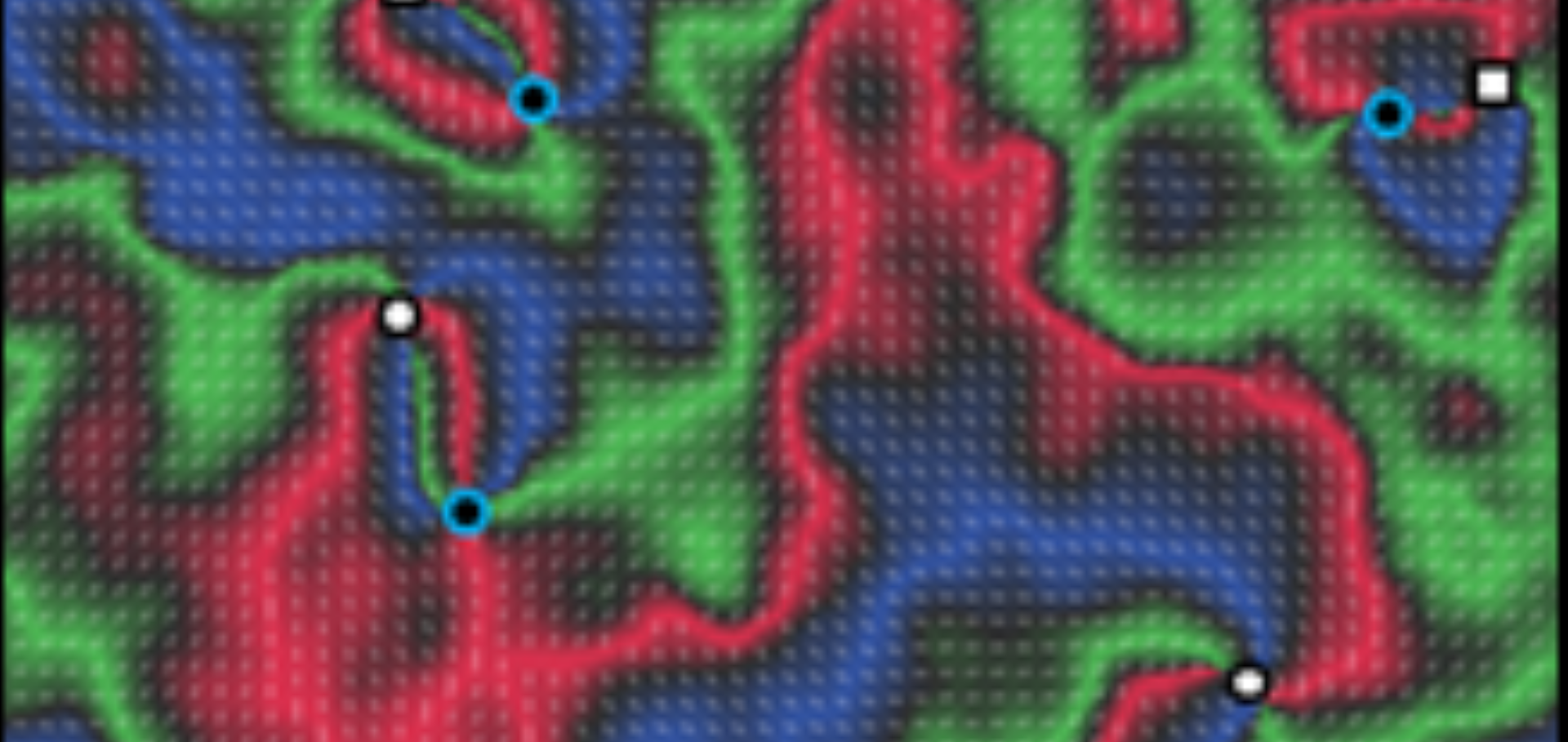
Lensless coherent x-ray imaging techniques have great potential for high-resolution imaging of magnetic systems with a variety of in-situ perturbations. Despite many investigations of ferromagnets, extending these techniques to the study of other magnetic materials, primarily antiferromagnets, is lacking. Here, we demonstrate the first (to our knowledge) study of an antiferromagnet using holographic imaging through the 'holography with extended reference by autocorrelation linear differential operation' technique. Energy-dependent contrast with both linearly and circularly polarized x-rays are demonstrated. Antiferromagnetic domains and topological textures are studied in the presence of applied magnetic fields, demonstrating quasi-cyclic domain reconfiguration up to 500 mT.Holographic imaging of antiferromagnetic domains with in-situ magnetic field
University of Oxford (2024)
Abstract:
Dataset accompanying the publicationHolographic imaging of antiferromagnetic domains with in-situ magnetic field
(2023)