Home
Department Of Physics text logo
  • Research
    • Our research
    • Our research groups
    • Our research in action
    • Research funding support
    • Summer internships for undergraduates
  • Study
    • Undergraduates
    • Postgraduates
  • Engage
    • For alumni
    • For business
    • For schools
    • For the public
  • Support
Menu
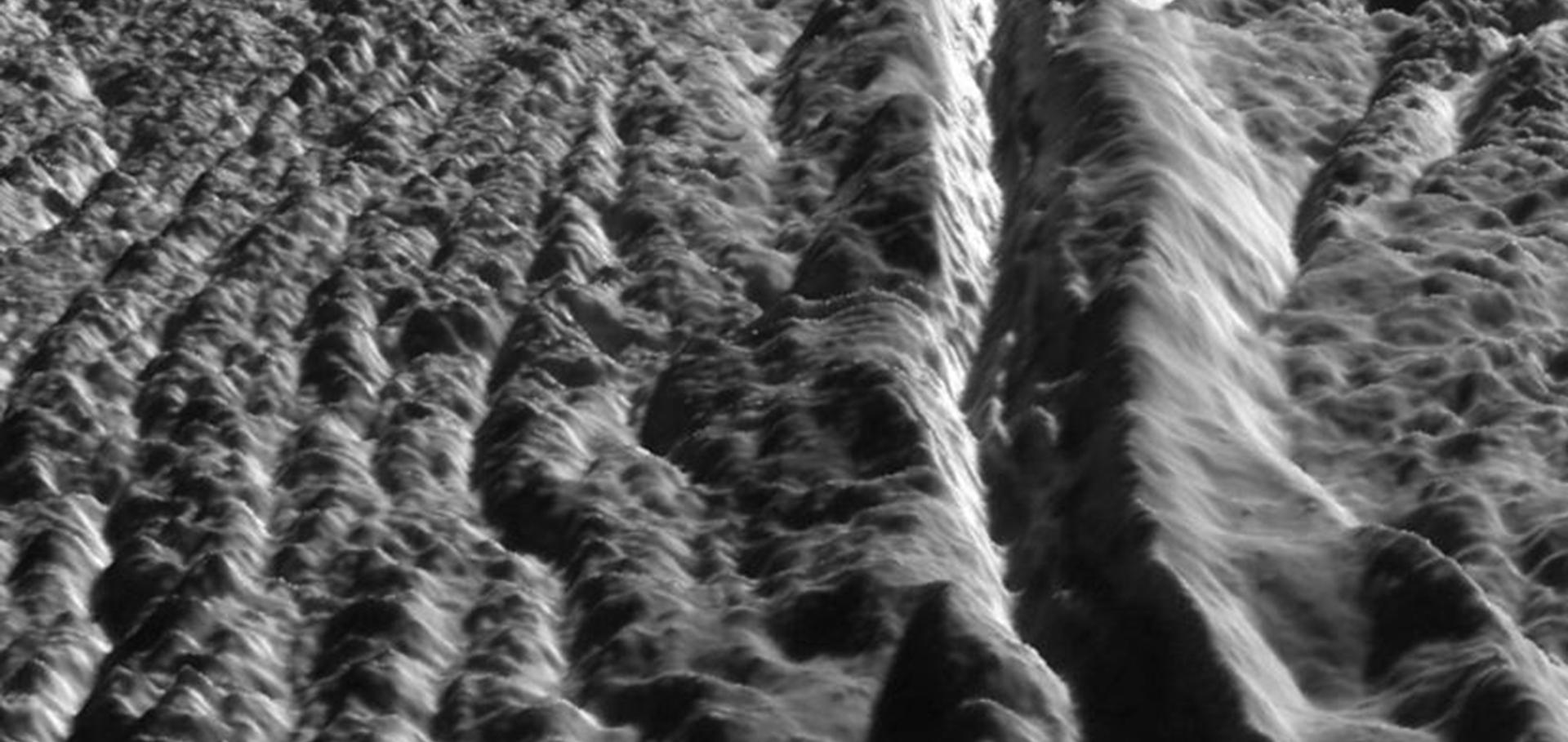
Enceladus' Damascus Sulci

Dr Carly Howett

Associate Professor of Space Instrumentation

Research theme

  • Exoplanets and planetary physics

Sub department

  • Atmospheric, Oceanic and Planetary Physics

Research groups

  • Planetary surfaces
  • Solar system
  • Space instrumentation
carly.howett@physics.ox.ac.uk
Atmospheric Physics Clarendon Laboratory
  • About
  • Publications

Hot Stuff: Looking for new endogenic heat sources on Enceladus

Copernicus Publications (2024)

Authors:

Georgina Miles, Carly Howett
More details from the publisher

TRIDENT Radio Science Objectives and Expected Performance

Copernicus Publications (2024)

Authors:

Paolo Tortora, Kamal Oudrhiri, Adrien Bourgoin, Luis Antonio Gomez Casajus, Marco Zannoni, Dustin Buccino, Yohai Kaspi, Eli Galanti, William Frazier, Louise Prockter, Karl Mitchell, Carly Howett
More details from the publisher

Trident: A Mission to Explore Triton, a Candidate Ocean World

Copernicus Publications (2024)

Authors:

Carly Howett, Louise Procktor, Karl Mitchell, David Bearden, William Smythe
More details from the publisher

Surface Compositions of Trojan Asteroids

Space Science Reviews Springer 220:3 (2024) 28

Authors:

Joshua P Emery, Richard P Binzel, Daniel T Britt, Michael E Brown, Carly JA Howett, Audrey C Martin, Mario D Melita, Ana Carolina Souza-Feliciano, Ian Wong

Abstract:

The Jupiter Trojan asteroids are a key population for understanding the chemical and dynamical evolution of the Solar System. Surface compositions of Trojans, in turn, provide crucial information for reconstructing their histories. NASA’s Lucy mission will soon complete the first spacecraft reconnaissance of this population. This review summarizes the current state of knowledge of Trojan surface compositions and looks ahead to expected advances in that knowledge from Lucy. Surface compositions of Trojans remain uncertain due to a relative lack of diagnostic absorption features, though dedicated observations have begun to provide some clues to compositions. Trojans have uniformly low albedos, with a population average of ∼5.3%, and red spectral slopes at ultraviolet, visible, and near-infrared wavelengths. A bimodality of spectral slopes has been detected and confirmed across all these wavelengths, and the ratio of “less-red” to “red” Trojans increases with decreasing size. A broad absorption at ∼3.1 μm in some less-red Trojans may indicate the presence of N-H bearing material. Mid-infrared emissivity spectra reveal the presence of fine-grained anhydrous silicates on the surfaces. The meteorite collection contains no identifiable analogs to Trojan asteroids. Among small body populations, some Main Belt asteroids, comets, irregular satellites, and Centaurs provide reasonable spectral matches, supporting some genetic relationships among some members of these groups. The cause of the observed spectral properties remains uncertain, but recent suggestions include a combination of volatile ice sublimation and space weathering or a combination of impact gardening and space weathering. The Lucy mission will provide detailed compositional analysis of (3548) Eurybates, (15094) Polymele, (11351) Leucus, (21900) Orus, and (617) Patroclus-Menoetius, a suite of targets that sample the diversity among the Trojan population along several dimensions. With these flybys, the Lucy mission is poised to resolve many of the outstanding questions regarding Trojan surface compositions, thereby revealing how the Trojans formed and evolved and providing a clearer view of Solar System history
More details from the publisher
Details from ORA
More details

Optimising Thermal Mapping Instrument Filters to Unveil Enceladus' Subsurface Secrets

Copernicus Publications (2024)

Authors:

Duncan Lyster, Carly Howett, Neil Bowles, Rory Evans, Tristram Warren, Keith Nowicki
More details from the publisher

Pagination

  • First page First
  • Previous page Prev
  • …
  • Page 4
  • Page 5
  • Page 6
  • Page 7
  • Current page 8
  • Page 9
  • Page 10
  • Page 11
  • Page 12
  • …
  • Next page Next
  • Last page Last

Footer Menu

  • Contact us
  • Giving to the Dept of Physics
  • Work with us
  • Media

User account menu

  • Log in

Follow us

FIND US

Clarendon Laboratory,

Parks Road,

Oxford,

OX1 3PU

CONTACT US

Tel: +44(0)1865272200

University of Oxfrod logo Department Of Physics text logo
IOP Juno Champion logo Athena Swan Silver Award logo

© University of Oxford - Department of Physics

Cookies | Privacy policy | Accessibility statement

Built by: Versantus

  • Home
  • Research
  • Study
  • Engage
  • Our people
  • News & Comment
  • Events
  • Our facilities & services
  • About us
  • Giving to Physics
  • Current students
  • Staff intranet