Home
Department Of Physics text logo
  • Research
    • Our research
    • Our research groups
    • Our research in action
    • Research funding support
    • Summer internships for undergraduates
  • Study
    • Undergraduates
    • Postgraduates
  • Engage
    • For alumni
    • For business
    • For schools
    • For the public
  • Support
Menu
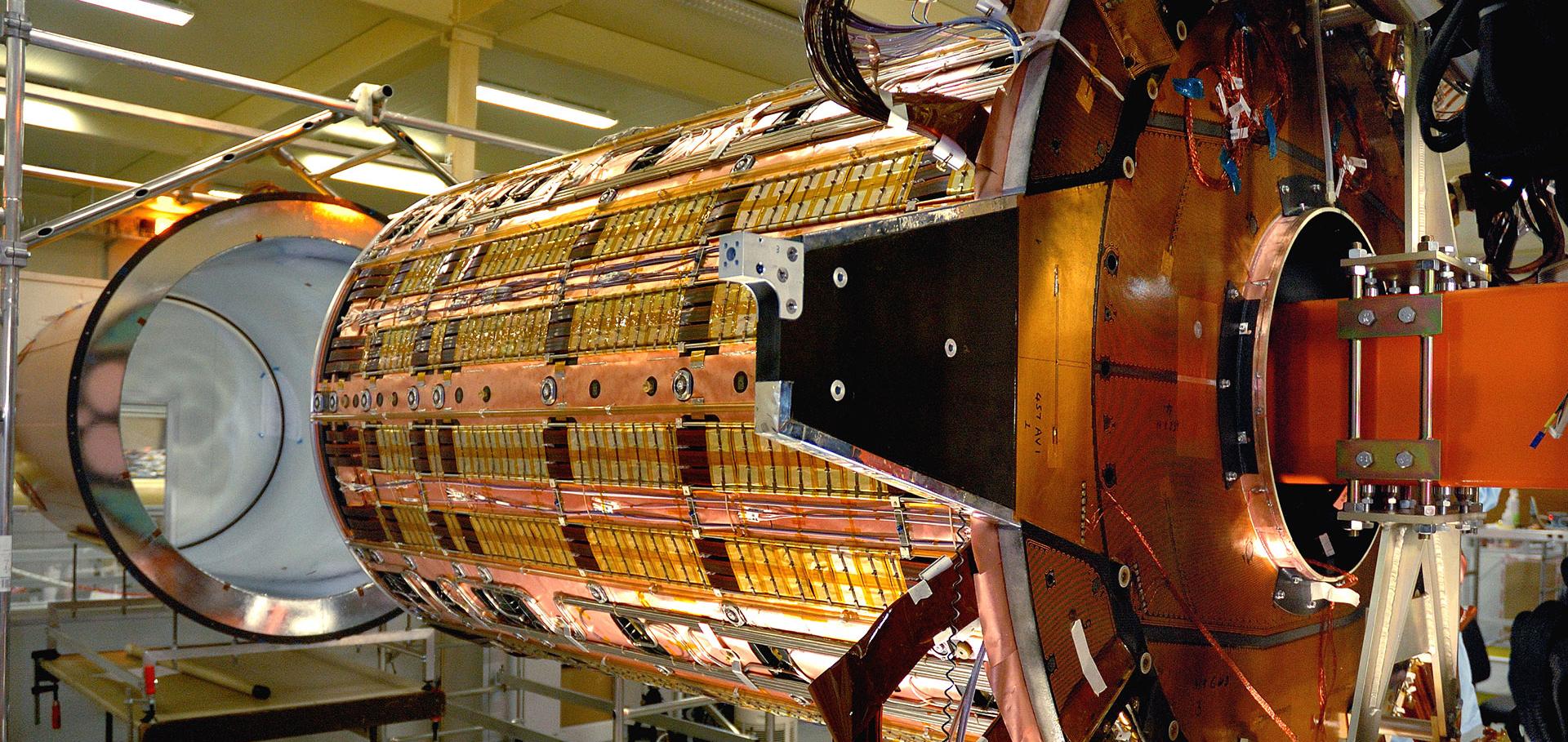
Insertion of STC into TRT at the Department of Physics, Oxford
Credit: CERN

Minoo Kabirnezhad

Royal Society Fellow

Sub department

  • Particle Physics
minoo.kabirnezhad@physics.ox.ac.uk
Telephone: 273449
Denys Wilkinson Building, room 679
  • About
  • Publications

Single pion production in electron-nucleon interactions

Physical Review D American Physical Society (APS) 102:5 (2020) 053009
More details from the publisher
More details

Search for heavy neutrinos with the T2K near detector ND280

Physical Review D American Physical Society 100:5 (2019) 052006

Authors:

K Abe, R Akutsu, A Ali, C Andreopoulos, L Anthony, M Antonova, S Aoki, A Ariga, Y Ashida, Y Awataguchi, Y Azuma, S Ban, M Barbi, GJ Barker, Giles Barr, C Barry, M Batkiewicz-Kwasniak, F Bench, V Berardi, S Berkman, RM Berner, L Berns, S Bhadra, S Bienstock, A Blondel, S Bolognesi, B Bourguille, SB Boyd, D Brailsford, A Bravar, C Bronner, MB Avanzini, J Calcutt, T Campbell, S Cao, SL Cartwright, Catanesi, A Cervera, A Chappell, C Checchia, D Cherdack, N Chikuma, G Christodoulou, J Coleman, G Collazuol, D Coplowe, A Cudd, A Dabrowska, GD Rosa, T Dealtry

Abstract:

This paper reports on the search for heavy neutrinos with masses in the range $140 < M_N < 493$ MeV/c$^2$ using the off-axis near detector ND280 of the T2K experiment. These particles can be produced from kaon decays in the standard neutrino beam and then subsequently decay in ND280. The decay modes under consideration are $N \to \ell^{\pm}_{\alpha} \pi^{\mp}$ and $N \to \ell^+_{\alpha} \ell^-_{\beta} \nu (\bar\nu)$ ($\alpha,\beta=e,\mu$). A search for such events has been made using the Time Projection Chambers of ND280, where the background has been reduced to less than two events in the current dataset in all channels. No excess has been observed in the signal region. A combined Bayesian statistical approach has been applied to extract upper limits on the mixing elements of heavy neutrinos to electron-, muon- and tau- flavoured currents ($U_e^2$, $U_{\mu}^2$, $U_{\tau}^2$) as a function of the heavy neutrino mass, e.g. $U_e^2 < 10^{-9}$ at $90\%$ C.L. for a mass of $390$ MeV/c$^2$. These constraints are competitive with previous experiments.
More details from the publisher
Details from ORA
More details
Details from ArXiV

Search for neutral-current induced single photon production at the ND280 near detector in T2K

Journal of Physics G: Nuclear and Particle Physics IOP Publishing 46:8 (2019) 08LT01

Authors:

K Abe, R Akutsu, A Ali, C Andreopoulos, L Anthony, M Antonova, S Aoki, A Ariga, Y Ashida, Y Awataguchi, Y Azuma, S Ban, M Barbi, GJ Barker, Giles Barr, C Barry, M Batkiewicz-Kwasniak, F Bench, V Berardi, S Berkman, RM Berner, L Berns, S Bhadra, S Bienstock, A Blondel

Abstract:

All rights reserved. Neutrino neutral-current (NC) induced single photon production is a subleading order process for accelerator-based neutrino beam experiments including T2K. It is, however, an important process to understand because it is a background for electron (anti)neutrino appearance oscillation experiments. Here, we performed the first search of this process below 1 GeV using the finegrained detector at the T2K ND280 off-axis near detector. By reconstructing single photon kinematics from electron positron pairs, we achieved 95% pure gamma ray sample from 5.738 1020 protons-on-targets neutrino mode data. We do not find positive evidence of NC induced single photon production in this sample. We set the model-dependent upper limit on the cross-section for this process, at 0.114 10-38 cm2 (90% C.L.) per nucleon, using the J-PARC off-axis neutrino beam with an average energy of .En. ~ 0.6 GeV. This is the first limit on this process below 1.GeV which is important for current and future oscillation experiments looking for electron neutrino appearance oscillation signals.
More details from the publisher
Details from ORA
More details
Details from ArXiV

Search for light sterile neutrinos with the T2K far detector Super-Kamiokande at a baseline of 295km

Physical Review D American Physical Society 99:7 (2019) 071103

Authors:

K Abe, R Akutsu, A Ali, C Andreopoulos, L Anthony, M Antonova, S Aoki, A Ariga, Y Ashida, Y Awataguchi, Y Azuma, S Ban, M Barbi, GJ Barker, G Barr, C Barry, M Batkiewicz-Kwasniak, F Bench, V Berardi, S Berkman, RM Berner, L Berns, S Bhadra, S Bienstock, A Blondel, S Bolognesi, B Bourguille, SB Boyd, D Brailsford, A Bravar, C Bronner, MB Avanzini, J Calcutt, T Campbell, S Cao, SL Cartwright, A Cervera, A Chappell, C Checchia, D Cherdack, N Chikuma, G Christodoulou, J Coleman, G Collazuol, D Coplowe, A Cudd, A Dabrowska, G De Rosa, T Dealtry

Abstract:

We perform a search for light sterile neutrinos using the data from the T2K far detector at a baseline of 295 km, with an exposure of 14.7(7.6)×10^20 protons on target in neutrino (antineutrino) mode. A selection of neutral-current interaction samples is also used to enhance the sensitivity to sterile mixing. No evidence of sterile neutrino mixing in the 3+1 model was found from a simultaneous fit to the charged-current muon, electron and neutral-current neutrino samples. We set the most stringent limit on the sterile oscillation amplitude sin^2θ24 for the sterile neutrino mass splitting Δm^2v41<3×10^−3eV^2/c^4.
More details from the publisher
Details from ORA
More details
Details from ArXiV

The status of neutrino interaction theory and its impact on future neutrino oscillation experiments

Sissa Medialab Srl (2019) 033
More details from the publisher

Pagination

  • Current page 1
  • Page 2
  • Page 3
  • Page 4
  • Page 5
  • Page 6
  • Page 7
  • Next page Next
  • Last page Last

Footer Menu

  • Contact us
  • Giving to the Dept of Physics
  • Work with us
  • Media

User account menu

  • Log in

Follow us

FIND US

Clarendon Laboratory,

Parks Road,

Oxford,

OX1 3PU

CONTACT US

Tel: +44(0)1865272200

University of Oxfrod logo Department Of Physics text logo
IOP Juno Champion logo Athena Swan Silver Award logo

© University of Oxford - Department of Physics

Cookies | Privacy policy | Accessibility statement

Built by: Versantus

  • Home
  • Research
  • Study
  • Engage
  • Our people
  • News & Comment
  • Events
  • Our facilities & services
  • About us
  • Giving to Physics
  • Current students
  • Staff intranet