Home
Department Of Physics text logo
  • Research
    • Our research
    • Our research groups
    • Our research in action
    • Research funding support
    • Summer internships for undergraduates
  • Study
    • Undergraduates
    • Postgraduates
  • Engage
    • For alumni
    • For business
    • For schools
    • For the public
  • Support
Menu
CMP
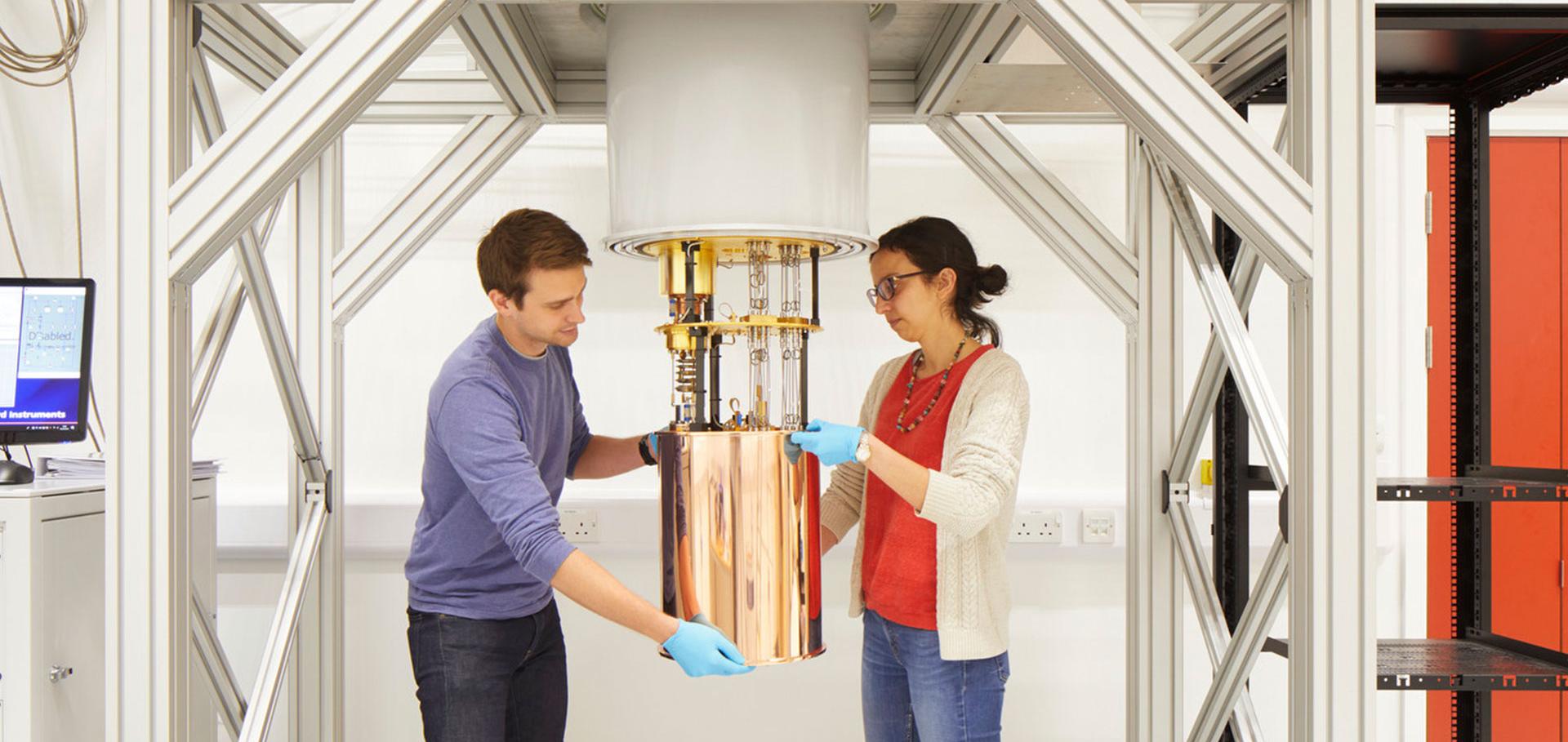
Credit: Jack Hobhouse

David Keen

Visiting Professor

Sub department

  • Condensed Matter Physics

Research groups

  • X-ray and neutron scattering
david.keen@physics.ox.ac.uk
Telephone: 01865 (2)72310
Clarendon Laboratory, room 106
  • About
  • Publications

Soft-mode anisotropy in the negative thermal expansion material ReO3

Physical Review B American Physical Society (APS) 104:21 (2021) 214102

Authors:

Tobias A Bird, Mark GL Wilkinson, David A Keen, Ronald I Smith, Nicholas C Bristowe, Martin T Dove, Anthony E Phillips, Mark S Senn
More details from the publisher
More details

From n- to p‑Type Material: Effect of Metal Ion on Charge Transport in Metal–Organic Materials

ACS Applied Materials & Interfaces American Chemical Society (ACS) 13:44 (2021) 52055-52062

Authors:

Sungwon Yoon, A Alec Talin, Vitalie Stavila, Austin M Mroz, Thomas D Bennett, Yuping He, David A Keen, Christopher H Hendon, Mark D Allendorf, Monica C So
More details from the publisher
More details

Structural units of binary vanadate glasses by X-ray and neutron diffraction

Journal of Non-Crystalline Solids Elsevier 572 (2021) 121120

Authors:

U Hoppe, A Ghosh, S Feller, AC Hannon, DA Keen, J Neuefeind
More details from the publisher

Illustrated formalisms for total scattering data: a guide for new practitioners. Corrigendum and addendum

Journal of Applied Crystallography International Union of Crystallography (IUCr) 54:5 (2021) 1542-1545

Authors:

Peter F Peterson, David A Keen
More details from the publisher
More details
More details

Ionic liquid facilitated melting of the metal-organic framework ZIF-8

Nature Communications Nature Research 12:1 (2021) 5703

Authors:

Vahid Nozari, Courtney Calahoo, Joshua M Tuffnell, David A Keen, Thomas D Bennett, Lothar Wondraczek

Abstract:

Hybrid glasses from melt-quenched metal-organic frameworks (MOFs) have been emerging as a new class of materials, which combine the functional properties of crystalline MOFs with the processability of glasses. However, only a handful of the crystalline MOFs are meltable. Porosity and metal-linker interaction strength have both been identified as crucial parameters in the trade-off between thermal decomposition of the organic linker and, more desirably, melting. For example, the inability of the prototypical zeolitic imidazolate framework (ZIF) ZIF-8 to melt, is ascribed to the instability of the organic linker upon dissociation from the metal center. Here, we demonstrate that the incorporation of an ionic liquid (IL) into the porous interior of ZIF-8 provides a means to reduce its melting temperature to below its thermal decomposition temperature. Our structural studies show that the prevention of decomposition, and successful melting, is due to the IL interactions stabilizing the rapidly dissociating ZIF-8 linkers upon heating. This understanding may act as a general guide for extending the range of meltable MOF materials and, hence, the chemical and structural variety of MOF-derived glasses
More details from the publisher
Details from ORA
More details
More details

Pagination

  • First page First
  • Previous page Prev
  • …
  • Page 9
  • Page 10
  • Page 11
  • Page 12
  • Current page 13
  • Page 14
  • Page 15
  • Page 16
  • Page 17
  • …
  • Next page Next
  • Last page Last

Footer Menu

  • Contact us
  • Giving to the Dept of Physics
  • Work with us
  • Media

User account menu

  • Log in

Follow us

FIND US

Clarendon Laboratory,

Parks Road,

Oxford,

OX1 3PU

CONTACT US

Tel: +44(0)1865272200

University of Oxfrod logo Department Of Physics text logo
IOP Juno Champion logo Athena Swan Silver Award logo

© University of Oxford - Department of Physics

Cookies | Privacy policy | Accessibility statement

Built by: Versantus

  • Home
  • Research
  • Study
  • Engage
  • Our people
  • News & Comment
  • Events
  • Our facilities & services
  • About us
  • Giving to Physics
  • Current students
  • Staff intranet