Home
Department Of Physics text logo
  • Research
    • Our research
    • Our research groups
    • Our research in action
    • Research funding support
    • Summer internships for undergraduates
  • Study
    • Undergraduates
    • Postgraduates
  • Engage
    • For alumni
    • For business
    • For schools
    • For the public
  • Support
Menu
CMP
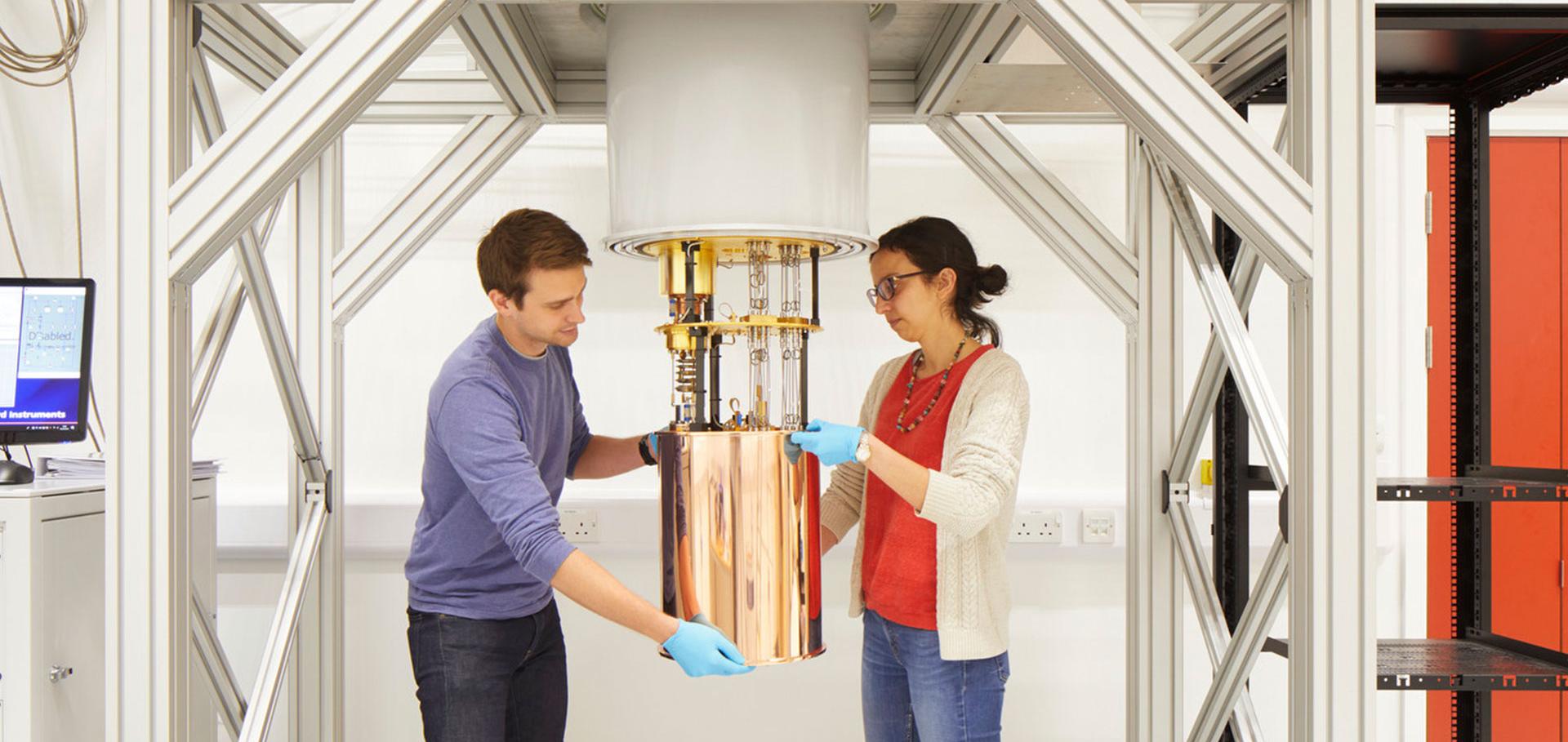
Credit: Jack Hobhouse

David Keen

Visiting Professor

Sub department

  • Condensed Matter Physics

Research groups

  • X-ray and neutron scattering
david.keen@physics.ox.ac.uk
Telephone: 01865 (2)72310
Clarendon Laboratory, room 106
  • About
  • Publications

Glassy behaviour of mechanically amorphised ZIF-62 isomorphs

Chemical Communications Royal Society of Chemistry 57:73 (2021) 9272-9275

Authors:

Michael F Thorne, Adam F Sapnik, Lauren N McHugh, Alice M Bumstead, Celia Castillo-Blas, Dean S Keeble, Maria Diaz Lopez, Phillip A Chater, David A Keen, Thomas D Bennett

Abstract:

Zeolitic imidazolate frameworks (ZIFs) can be melt-quenched to form glasses. Here, we present an alternative route to glassy ZIFs via mechanically induced amorphisation.
More details from the publisher
Details from ORA
More details
More details

Melting of hybrid organic–inorganic perovskites

Nature Chemistry Springer Nature 13:8 (2021) 778-785

Authors:

Bikash Kumar Shaw, Ashlea R Hughes, Maxime Ducamp, Stephen Moss, Anup Debnath, Adam F Sapnik, Michael F Thorne, Lauren N McHugh, Andrea Pugliese, Dean S Keeble, Philip Chater, Juan M Bermudez-Garcia, Xavier Moya, Shyamal K Saha, David A Keen, François-Xavier Coudert, Frédéric Blanc, Thomas D Bennett
More details from the publisher
More details

Spin-ice physics in cadmium cyanide

Nature Communications Royal Society of Chemistry 12 (2021) 2272

Authors:

Chloe S Coates, Mia Baise, Adrian Schmutzler, Arkadiy Simonov, Joshua Makepeace, Andrew Seel, Ronald I Smith, Helen Y Playford, David A Keen, Renée Siegel, Jürgen Senker, Ben Slater, Andrew Goodwin

Abstract:

Spin-ices are frustrated magnets that support a particularly rich variety of emergent physics. Typically, it is the interplay of magnetic dipole interactions, spin anisotropy, and geometric frustration on the pyrochlore lattice that drives spin-ice formation. The relevant physics occurs at temperatures commensurate with the magnetic interaction strength, which for most systems is 1–5 K. Here, we show that non-magnetic cadmium cyanide, Cd(CN)2, exhibits analogous behaviour to magnetic spin-ices, but does so on a temperature scale that is nearly two orders of magnitude greater. The electric dipole moments of cyanide ions in Cd(CN)2 assume the role of magnetic pseudospins, with the difference in energy scale reflecting the increased strength of electric vs magnetic dipolar interactions. As a result, spin-ice physics influences the structural behaviour of Cd(CN)2 even at room temperature.
More details from the publisher
Details from ORA
More details
More details

Stepwise collapse of a giant pore metal–organic framework

Dalton Transactions Royal Society of Chemistry 50:14 (2021) 5011-5022

Authors:

Adam F Sapnik, Duncan N Johnstone, Sean M Collins, Giorgio Divitini, Alice M Bumstead, Christopher W Ashling, Philip A Chater, Dean S Keeble, Timothy Johnson, David A Keen, Thomas D Bennett

Abstract:

Defect engineering is a powerful tool that can be used to tailor the properties of metal–organic frameworks (MOFs). Here, we incorporate defects through ball milling to systematically vary the porosity of the giant pore MOF, MIL-100 (Fe). We show that milling leads to the breaking of metal–linker bonds, generating additional coordinatively unsaturated metal sites, and ultimately causes amorphisation. Pair distribution function analysis shows the hierarchical local structure is partially retained, even in the amorphised material. We find that solvents can be used to stabilise the MIL-100 (Fe) framework against collapse, which leads to a substantial retention of porosity over the non-stabilised material
More details from the publisher
Details from ORA
More details
More details

Mixed hierarchical local structure in a disordered metal–organic framework

Nature Communications Nature Research 12:1 (2021) 2062

Authors:

Adam F Sapnik, Irene Bechis, Sean M Collins, Duncan N Johnstone, Giorgio Divitini, Andrew J Smith, Philip A Chater, Matthew A Addicoat, Timothy Johnson, David A Keen, Kim E Jelfs, Thomas D Bennett

Abstract:

This three-year Ph.D. research project is the result of the collaboration among the research group of Prof. Guido Ennas from University of Cagliari (Italy), expert in innovative and green synthesis approaches of micro- and nanomaterials, including mechanochemistry and sonochemistry, and the research group of Dr. Sarah Hudson from University of Limerick (Ireland), expert in biocatalysts and drug-delivery systems. The research focuses on the development of innovative synthesis routes for the preparation of proteins/enzymes – Metal Organic Frameworks (MOFs) hybrid composite materials for biomedical applications. In particular, alternative sonochemical and mechanochemical methods have been explored for the one-pot synthesis of glucose oxidase – iron(III) trimesate composites under eco- and bio-compatible conditions. Conventional harsh synthesis conditions have been overcome in order to minimise enzyme denaturation and activity loss, while retaining structural and textural features of the MOF. Beside their biocompatibility and low cost, one of the advantages of using iron(III) trimesate materials to immobilise biomolecules is their peroxidase-mimic behaviour. Indeed, such MOFs do not act as passive supports for the immobilisation of glucose oxidase, but also perform as enzyme-mimics, avoiding the immobilisation of additional peroxidase enzymes. Hybrid glucose oxidase – iron(III) trimesate composites prepared via mechanochemical and sonochemical approaches under mild conditions were applied as sensitive biosensors for glucose colorimetric detection
More details from the publisher
Details from ORA
More details
More details

Pagination

  • First page First
  • Previous page Prev
  • …
  • Page 10
  • Page 11
  • Page 12
  • Page 13
  • Current page 14
  • Page 15
  • Page 16
  • Page 17
  • Page 18
  • …
  • Next page Next
  • Last page Last

Footer Menu

  • Contact us
  • Giving to the Dept of Physics
  • Work with us
  • Media

User account menu

  • Log in

Follow us

FIND US

Clarendon Laboratory,

Parks Road,

Oxford,

OX1 3PU

CONTACT US

Tel: +44(0)1865272200

University of Oxfrod logo Department Of Physics text logo
IOP Juno Champion logo Athena Swan Silver Award logo

© University of Oxford - Department of Physics

Cookies | Privacy policy | Accessibility statement

Built by: Versantus

  • Home
  • Research
  • Study
  • Engage
  • Our people
  • News & Comment
  • Events
  • Our facilities & services
  • About us
  • Giving to Physics
  • Current students
  • Staff intranet