Home
Department Of Physics text logo
  • Research
    • Our research
    • Our research groups
    • Our research in action
    • Research funding support
    • Summer internships for undergraduates
  • Study
    • Undergraduates
    • Postgraduates
  • Engage
    • For young people
    • For teachers
    • For the public
    • For alumni
    • For business
  • Support
Menu
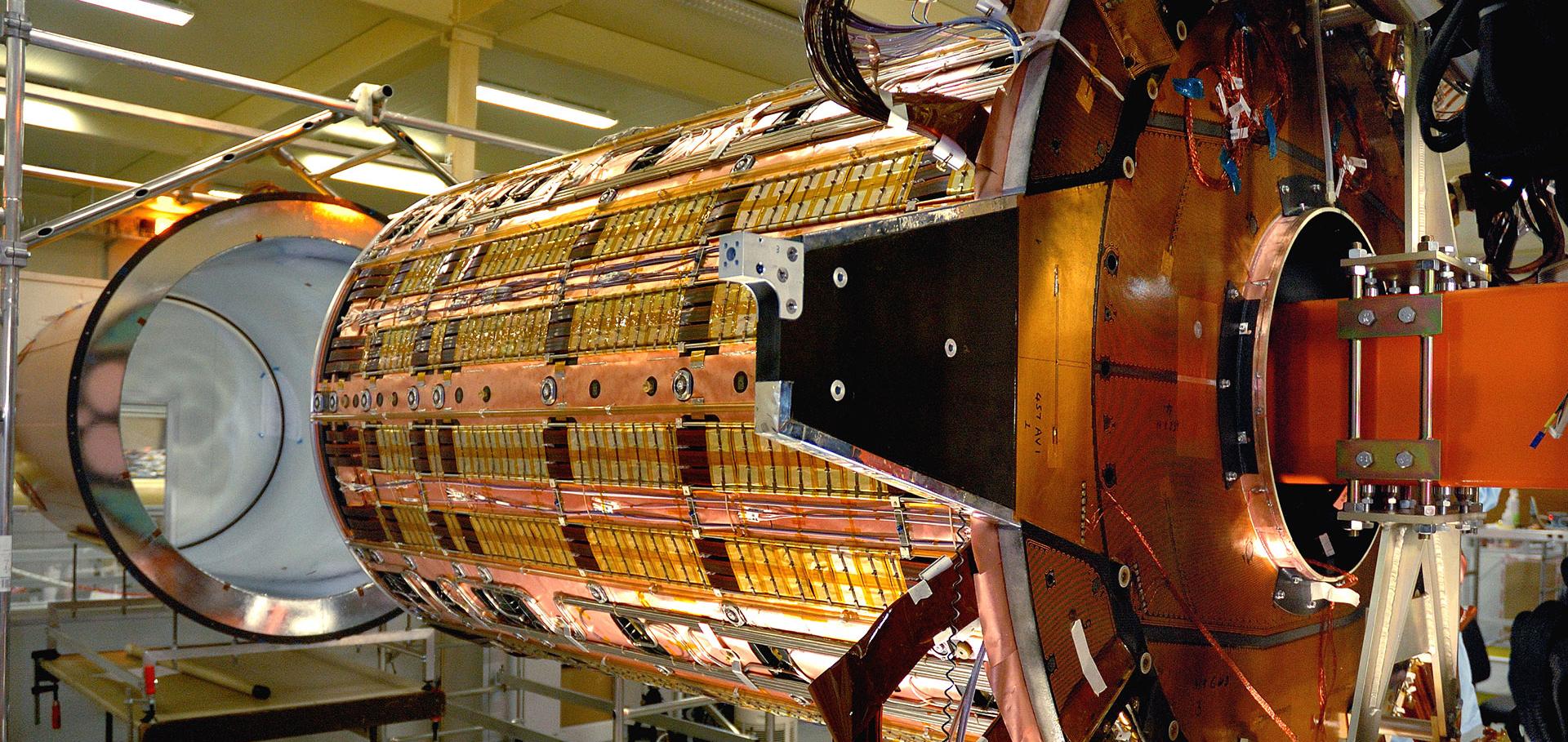
Insertion of STC into TRT at the Department of Physics, Oxford
Credit: CERN

Hans Kraus

Professor of Physics

Research theme

  • Particle astrophysics & cosmology

Sub department

  • Particle Physics

Research groups

  • LUX-ZEPLIN
Hans.Kraus@physics.ox.ac.uk
Telephone: 01865 (2)73361
Denys Wilkinson Building, room 623
  • About
  • Publications

Detector Development for the CRESST Experiment

Journal of Low Temperature Physics Springer 216:1-2 (2024) 393-401

Authors:

G Angloher, S Banik, G Benato, A Bento, A Bertolini, R Breier, C Bucci, J Burkhart, L Canonica, A D’Addabbo, S Di Lorenzo, L Einfalt, A Erb, FV Feilitzsch, S Fichtinger, D Fuchs, A Garai, VM Ghete, P Gorla, PV Guillaumon, S Gupta, D Hauff, M Ješkovský, J Jochum, H Kraus

Abstract:

Recently low-mass dark matter direct searches have been hindered by a low-energy background, drastically reducing the physics reach of the experiments. In the CRESST-III experiment, this signal is characterised by a significant increase of events below 200 eV. As the origin of this background is still unknown, it became necessary to develop new detector designs to reach a better understanding of the observations. Within the CRESST collaboration, three new different detector layouts have been developed, and they are presented in this contribution.
More details from the publisher
Details from ORA
More details

First constraints on WIMP-nucleon effective field theory couplings in an extended energy region from LUX-ZEPLIN

Physical Review D American Physical Society (APS) 109:9 (2024) 092003

Authors:

J Aalbers, DS Akerib, AK Al Musalhi, F Alder, CS Amarasinghe, A Ames, TJ Anderson, N Angelides, HM Araújo, JE Armstrong, M Arthurs, A Baker, S Balashov, J Bang, JW Bargemann, A Baxter, K Beattie, T Benson, A Bhatti, A Biekert, TP Biesiadzinski, HJ Birch, E Bishop, GM Blockinger, B Boxer, CAJ Brew, P Brás, S Burdin, M Buuck, MC Carmona-Benitez, M Carter, A Chawla, H Chen, JJ Cherwinka, NI Chott, MV Converse, A Cottle, G Cox, D Curran, CE Dahl, A David, J Delgaudio, S Dey, L de Viveiros, C Ding, JEY Dobson, E Druszkiewicz, SR Eriksen, A Fan, NM Fearon, S Fiorucci, H Flaecher, ED Fraser, TMA Fruth, RJ Gaitskell, A Geffre, J Genovesi, C Ghag, R Gibbons, S Gokhale, J Green, MGD van der Grinten, CR Hall, S Han, E Hartigan-O’Connor, SJ Haselschwardt, MA Hernandez, SA Hertel, G Heuermann, GJ Homenides, M Horn, DQ Huang, D Hunt, CM Ignarra, E Jacquet, RS James, J Johnson, AC Kaboth, AC Kamaha, D Khaitan, A Khazov, I Khurana, J Kim, J Kingston, R Kirk, D Kodroff, L Korley, EV Korolkova, H Kraus, S Kravitz, L Kreczko, B Krikler, VA Kudryavtsev, J Lee, DS Leonard, KT Lesko, C Levy, J Lin, A Lindote, R Linehan, WH Lippincott, MI Lopes, E Lopez Asamar, W Lorenzon, C Lu, S Luitz, PA Majewski, A Manalaysay, RL Mannino, C Maupin, ME McCarthy, G McDowell, DN McKinsey, J McLaughlin, R McMonigle, EH Miller, E Mizrachi, A Monte, ME Monzani, JD Morales Mendoza, E Morrison, BJ Mount, M Murdy, A St. J. Murphy, A Naylor, C Nedlik, HN Nelson, F Neves, A Nguyen, JA Nikoleyczik, I Olcina, KC Oliver-Mallory, J Orpwood, KJ Palladino, J Palmer, NJ Pannifer, N Parveen, SJ Patton, B Penning, G Pereira, E Perry, T Pershing, A Piepke, Y Qie, J Reichenbacher, CA Rhyne, Q Riffard, GRC Rischbieter, HS Riyat, R Rosero, T Rushton, D Rynders, D Santone, ABMR Sazzad, RW Schnee, S Shaw, T Shutt, JJ Silk, C Silva, G Sinev, R Smith, VN Solovov, P Sorensen, J Soria, I Stancu, A Stevens, K Stifter, B Suerfu, TJ Sumner, M Szydagis, WC Taylor, DR Tiedt, M Timalsina, Z Tong, DR Tovey, J Tranter, M Trask, M Tripathi, DR Tronstad, W Turner, A Vacheret, AC Vaitkus, V Velan, A Wang, JJ Wang, Y Wang, JR Watson, RC Webb, L Weeldreyer, TJ Whitis, M Williams, WJ Wisniewski, FLH Wolfs, S Woodford, D Woodward, CJ Wright, Q Xia, X Xiang, J Xu, M Yeh, EA Zweig
More details from the publisher
More details

Constraints On Covariant WIMP-Nucleon Effective Field Theory Interactions from the First Science Run of the LUX-ZEPLIN Experiment

(2024)

Authors:

J Aalbers, DS Akerib, AK Al Musalhi, F Alder, CS Amarasinghe, A Ames, TJ Anderson, N Angelides, HM Araújo, JE Armstrong, M Arthurs, A Baker, S Balashov, J Bang, EE Barillier, JW Bargemann, K Beattie, T Benson, A Bhatti, A Biekert, TP Biesiadzinski, HJ Birch, EJ Bishop, GM Blockinger, B Boxer, CAJ Brew, P Brás, S Burdin, M Buuck, MC Carmona-Benitez, M Carter, A Chawla, H Chen, JJ Cherwinka, YT Chin, NI Chott, MV Converse, A Cottle, G Cox, D Curran, CE Dahl, A David, J Delgaudio, S Dey, L de Viveiros, L Di Felice, C Ding, JEY Dobson, E Druszkiewicz, SR Eriksen, A Fan, NM Fearon, S Fiorucci, H Flaecher, ED Fraser, TMA Fruth, RJ Gaitskell, A Geffre, J Genovesi, C Ghag, R Gibbons, S Gokhale, J Green, MGD van der Grinten, JH Haiston, CR Hall, S Han, E Hartigan-O'Connor, SJ Haselschwardt, MA Hernandez, SA Hertel, G Heuermann, GJ Homenides, M Horn, DQ Huang, D Hunt, CM Ignarra, E Jacquet, RS James, J Johnson, AC Kaboth, AC Kamaha, M Kannichankandy, D Khaitan, A Khazov, I Khurana, J Kim, J Kingston, R Kirk, D Kodroff, L Korley, EV Korolkova, H Kraus, S Kravitz, L Kreczko, VA Kudryavtsev, J Lee, DS Leonard, KT Lesko, C Levy, J Lin, A Lindote, R Linehan, WH Lippincott, MI Lopes, W Lorenzon, C Lu, S Luitz, PA Majewski, A Manalaysay, RL Mannino, C Maupin, ME McCarthy, G McDowell, DN McKinsey, J McLaughlin, JB McLaughlin, R McMonigle, EH Miller, E Mizrachi, A Monte, ME Monzani, JD Morales Mendoza, E Morrison, BJ Mount, M Murdy, A St J Murphy, A Naylor, HN Nelson, F Neves, A Nguyen, JA Nikoleyczik, I Olcina, KC Oliver-Mallory, J Orpwood, KJ Palladino, J Palmer, NJ Pannifer, N Parveen, SJ Patton, B Penning, G Pereira, E Perry, T Pershing, A Piepke, Y Qie, J Reichenbacher, CA Rhyne, Q Riffard, GRC Rischbieter, HS Riyat, R Rosero, T Rushton, D Rynders, D Santone, ABMR Sazzad, RW Schnee, S Shaw, T Shutt, JJ Silk, C Silva, G Sinev, J Siniscalco, R Smith, VN Solovov, P Sorensen, J Soria, I Stancu, A Stevens, K Stifter, B Suerfu, TJ Sumner, M Szydagis, WC Taylor, DR Tiedt, M Timalsina, Z Tong, DR Tovey, J Tranter, M Trask, M Tripathi, DR Tronstad, A Vacheret, AC Vaitkus, O Valentino, V Velan, A Wang, JJ Wang, Y Wang, JR Watson, RC Webb, L Weeldreyer, TJ Whitis, M Williams, WJ Wisniewski, FLH Wolfs, S Woodford, D Woodward, CJ Wright, Q Xia, X Xiang, J Xu, M Yeh, EA Zweig
More details from the publisher
Details from ArXiV

Light dark matter search using a diamond cryogenic detector

The European Physical Journal C SpringerOpen 84:3 (2024) 324

Authors:

G Angloher, S Banik, G Benato, A Bento, A Bertolini, R Breier, C Bucci, J Burkhart, L Canonica, A D’Addabbo, S Di Lorenzo, L Einfalt, A Erb, FV Feilitzsch, S Fichtinger, D Fuchs, A Garai, VM Ghete, P Gorla, PV Guillaumon, S Gupta, D Hauff, M Jes̆kovský, J Jochum, H Kraus

Abstract:

Diamond operated as a cryogenic calorimeter is an excellent target for direct detection of low-mass dark matter candidates. Following the realization of the first low-threshold cryogenic detector that uses diamond as absorber for astroparticle physics applications, we now present the resulting exclusion limits on the elastic spin-independent interaction cross-section of dark matter with diamond. We measured two 0.175 g CVD (Chemical Vapor Deposition) diamond samples, each instrumented with a Transition Edge Sensor made of Tungsten (W-TES). Thanks to the energy threshold of just 16.8 eV of one of the two detectors, we set exclusion limits on the elastic spin-independent interaction of dark matter particles with carbon nuclei down to dark matter masses as low as 0.122 GeV/c2. This work shows the scientific potential of cryogenic detectors made from diamond and lays the foundation for the use of this material as target for direct detection dark matter experiments.
More details from the publisher
Details from ORA
More details

Background modeling and simulation of the calibration source for the CRESST dark matter search experiment

Proceedings of Science 441 (2024)

Authors:

S Banik, G Angloher, G Benato, A Bento, A Bertolini, R Breier, C Bucci, J Burkhart, L Canonica, A D'Addabbo, S Di Lorenzo, L Einfalt, A Erb, FV Feilitzsch, S Fichtinger, D Fuchs, A Garai, VM Ghete, P Gorla, PV Guillaumon, S Gupta, D Hauff, M Ješkovský, J Jochum, M Kaznacheeva, A Kinast, H Kluck, H Kraus, S Kuckuk, A Langenkämper, M Mancuso, L Marini, B Mauri, L Meyer, V Mokina, M Olmi, T Ortmann, C Pagliarone, L Pattavina, F Petricca, W Potzel, P Povinec, F Pröbst, F Pucci, F Reindl, J Rothe, K Schäffner, J Schieck, S Schönert, C Schwertner, M Stahlberg, L Stodolsky, C Strandhagen, R Strauss, I Usherov, F Wagner, M Willers, V Zema

Abstract:

The Cryogenic Rare Event Search with Superconducting Thermometers (CRESST) experiment employs scintillating crystals at extremely low temperatures (O(10 mK)) to search for nuclear recoils from hypothetical dark matter (DM) particles. CRESST has achieved thresholds below 100 eV with a wide range of target materials including CaWO4, LiAlO2, Al2O3, and Si. However, at these energies, the ability to discriminate between potential DM signals and electromagnetic background is insufficient. A detailed Geant4-based electromagnetic background model was developed for CRESST and is being continuously adapted to CRESST's current inventory of detector modules. We use a high-dimensional Bayesian likelihood fit of spectral templates to the measured spectrum to infer activities of various background sources. A template for the calibration source used to calculate the energy scale will be included in the likelihood fit. We present the status of CRESST's background model, and results from the simulation of the energy calibration. Our future plans of improving the background model are also discussed.
More details

Pagination

  • First page First
  • Previous page Prev
  • …
  • Page 4
  • Page 5
  • Page 6
  • Page 7
  • Current page 8
  • Page 9
  • Page 10
  • Page 11
  • Page 12
  • …
  • Next page Next
  • Last page Last

Footer Menu

  • Contact us
  • Giving to the Dept of Physics
  • Work with us
  • Media

User account menu

  • Log in

Follow us

FIND US

Clarendon Laboratory,

Parks Road,

Oxford,

OX1 3PU

CONTACT US

Tel: +44(0)1865272200

University of Oxfrod logo Department Of Physics text logo
IOP Juno Champion logo Athena Swan Silver Award logo

© University of Oxford - Department of Physics

Cookies | Privacy policy | Accessibility statement

Built by: Versantus

  • Home
  • Research
  • Study
  • Engage
  • Our people
  • News & Comment
  • Events
  • Our facilities & services
  • About us
  • Giving to Physics
  • Current students
  • Staff intranet