Home
Department Of Physics text logo
  • Research
    • Our research
    • Our research groups
    • Our research in action
    • Research funding support
    • Summer internships for undergraduates
  • Study
    • Undergraduates
    • Postgraduates
  • Engage
    • For alumni
    • For business
    • For schools
    • For the public
Menu
CMP
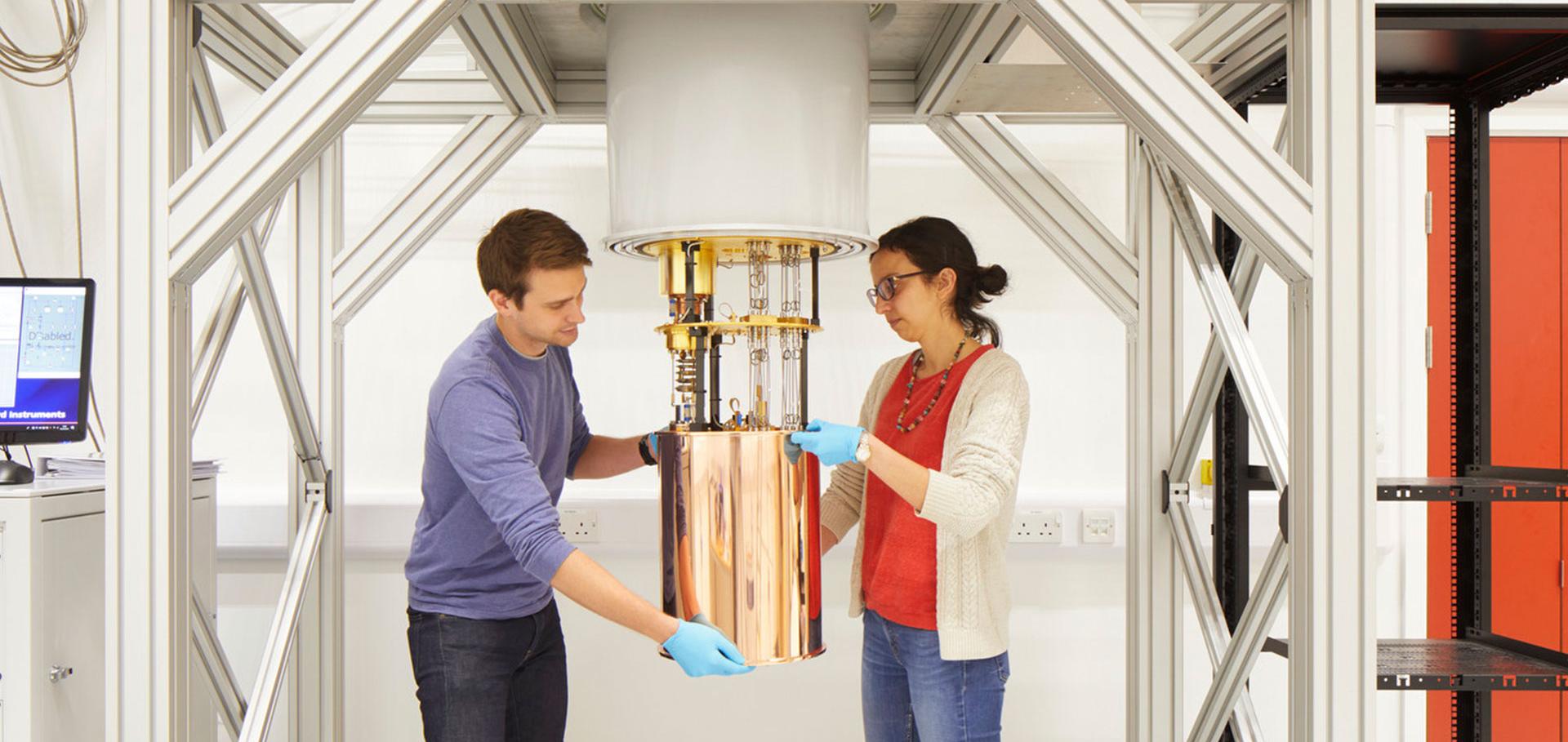
Credit: Jack Hobhouse

Peter Leek

Research Fellow

Sub department

  • Condensed Matter Physics

Research groups

  • Superconducting quantum devices
peter.leek@physics.ox.ac.uk
Telephone: 01865 (2)72364,01865 (2)82066
Clarendon Laboratory, room 018,104
  • About
  • Publications

Quantum dot admittance probed at microwave frequencies with an on-chip resonator

(2012)

Authors:

T Frey, PJ Leek, M Beck, J Faist, A Wallraff, K Ensslin, T Ihn, M Büttiker
More details from the publisher

Dipole Coupling of a Double Quantum Dot to a Microwave Resonator

PHYSICAL REVIEW LETTERS 108:4 (2012) ARTN 046807

Authors:

T Frey, PJ Leek, M Beck, A Blais, T Ihn, K Ensslin, A Wallraff
More details from the publisher
More details
Details from ArXiV

Dipole coupling of a double quantum dot to a microwave resonator

(2011)

Authors:

T Frey, PJ Leek, M Beck, A Blais, T Ihn, K Ensslin, A Wallraff
More details from the publisher

Characterization of a microwave frequency resonator via a nearby quantum dot

(2011)

Authors:

T Frey, PJ Leek, M Beck, K Ensslin, A Wallraff, T Ihn
More details from the publisher

Correlation measurements of individual microwave photons emitted from a symmetric cavity

Journal of Physics: Conference Series 264:1 (2011)

Authors:

D Bozyigit, C Lang, L Steffen, JM Fink, C Eichler, M Baur, R Bianchetti, PJ Leek, S Filipp, A Wallraff, MP Da Silva, A Blais

Abstract:

Superconducting circuits have been successfully established as systems to prepare and investigate microwave light fields at the quantum level. In contrast to optical experiments where light is detected using photon counters, microwaves are usually measured with well developed linear amplifiers. This makes measurements of correlation functions - one of the important tools in optics - harder to achieve because they traditionally rely on photon counters and beam splitters. Here, we demonstrate a system where we can prepare on demand single microwave photons in a cavity and detect them at the two outputs of the cavity using linear amplifiers. Together with efficient data processing, this allows us to measure different observables of the cavity photons, including the first-order correlation function. Using these techniques we demonstrate cooling of a thermal background field in the cavity. © Published under licence by IOP Publishing Ltd.
More details from the publisher
More details

Pagination

  • First page First
  • Previous page Prev
  • …
  • Page 10
  • Page 11
  • Page 12
  • Page 13
  • Current page 14
  • Page 15
  • Page 16
  • Page 17
  • Page 18
  • …
  • Next page Next
  • Last page Last

Footer Menu

  • Contact us
  • Giving to the Dept of Physics
  • Work with us
  • Media

User account menu

  • Log in

Follow us

FIND US

Clarendon Laboratory,

Parks Road,

Oxford,

OX1 3PU

CONTACT US

Tel: +44(0)1865272200

University of Oxfrod logo Department Of Physics text logo
IOP Juno Champion logo Athena Swan Silver Award logo

© University of Oxford - Department of Physics

Cookies | Privacy policy | Accessibility statement

Built by: Versantus

  • Home
  • Research
  • Study
  • Engage
  • Our people
  • News & Comment
  • Events
  • Our facilities & services
  • About us
  • Giving to Physics
  • Current students
  • Staff intranet