Home
Department Of Physics text logo
  • Research
    • Our research
    • Our research groups
    • Our research in action
    • Research funding support
    • Summer internships for undergraduates
  • Study
    • Undergraduates
    • Postgraduates
  • Engage
    • For alumni
    • For business
    • For schools
    • For the public
  • Support
Menu
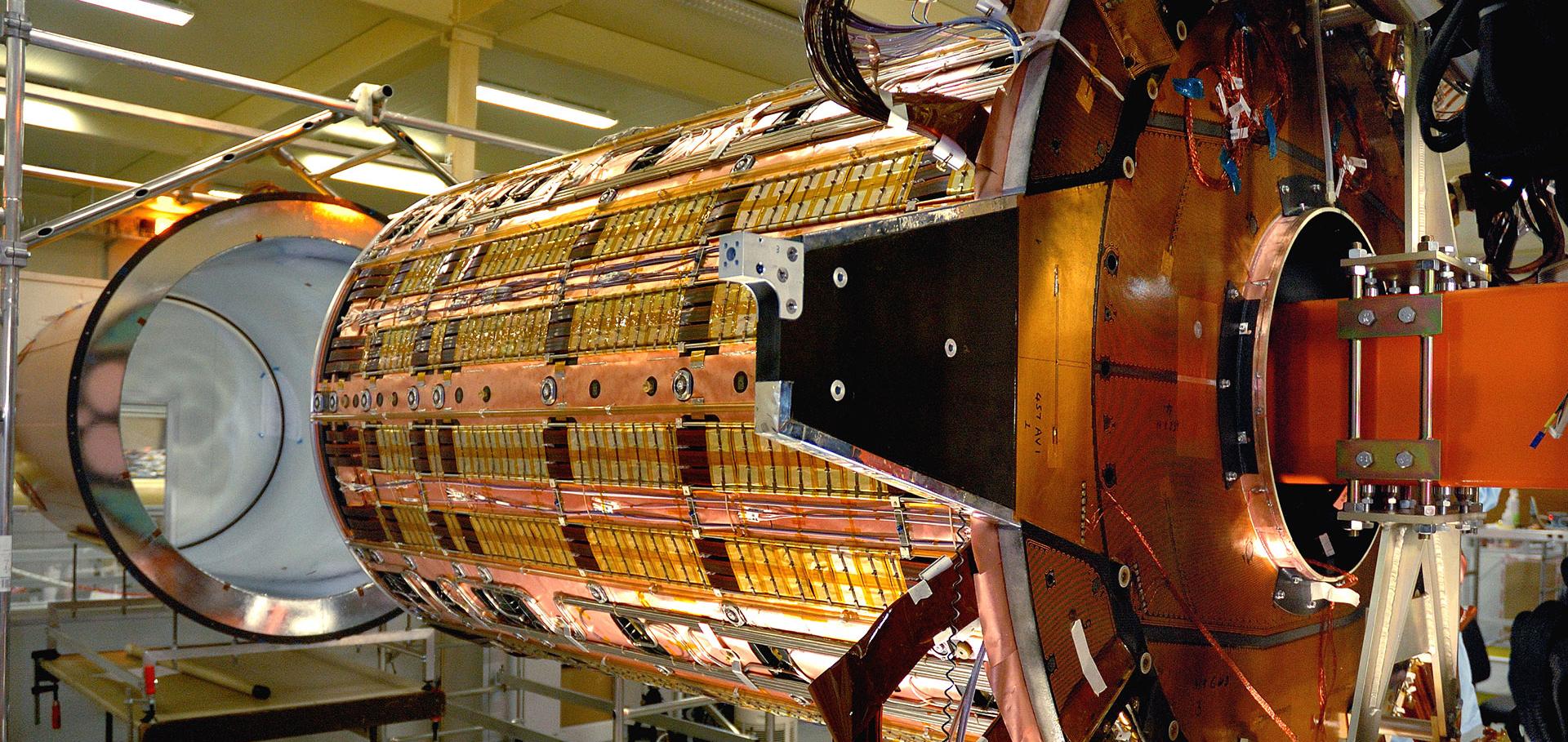
Insertion of STC into TRT at the Department of Physics, Oxford
Credit: CERN

Sneha Malde

Associate Professor of Physics

Sub department

  • Particle Physics

Research groups

  • LHCb
Sneha.Malde@physics.ox.ac.uk
Telephone: 01865 (2)73357
Denys Wilkinson Building, room 673
  • About
  • Publications

Search for radiative leptonic decay D + → γe + ν e using deep learning * * This work is supported in part by National Key R&D Program of China (2020YFA0406400, 2023YFA1606000, 2020YFA0406300); National Natural Science Foundation of China (NSFC) (11635010, 11735014, 11935015, 11935016, 11935018, 12025502, 12035009, 12035013, 12061131003, 12192260, 12192261, 12192262, 12192263, 12192264, 12192265, 12221005, 12225509, 12235017, 12361141819); the Chinese Academy of Sciences (CAS) Large-Scale Scientific Facility Program; the CAS Center for Excellence in Particle Physics (CCEPP); Joint Large-Scale Scientific Facility Funds of the NSFC and CAS (U1832207); CAS (YSBR-101); 100 Talents Program of CAS; CAS Project for Young Scientists in Basic Research (YSBR-117); The Institute of Nuclear and Particle Physics (INPAC) and Shanghai Key Laboratory for Particle Physics and Cosmology; Agencia Nacional de Investigación y Desarrollo de Chile (ANID), Chile (ANID PIA/APOYO AFB230003); German Research Foundation DFG (FOR5327); Istituto Nazionale di Fisica Nucleare, Italy; Knut and Alice Wallenberg Foundation (2021.0174, 2021.0299); Ministry of Development of Turkey (DPT2006K-120470); National Research Foundation of Korea (NRF-2022R1A2C1092335); National Science and Technology fund of Mongolia; National Science Research and Innovation Fund (NSRF) via the Program Management Unit for Human Resources & Institutional Development, Research and Innovation of Thailand (B50G670107); Polish National Science Centre (2019/35/O/ST2/02907); Swedish Research Council (2019.04595); The Swedish Foundation for International Cooperation in Research and Higher Education (CH2018-7756); U. S. Department of Energy (DE-FG02-05ER41374)

Chinese Physics C IOP Publishing 49:8 (2025) 083001

Authors:

M Ablikim, MN Achasov, P Adlarson, XC Ai, R Aliberti, A Amoroso, Q An, Y Bai, O Bakina, Y Ban, H-R Bao, V Batozskaya, K Begzsuren, N Berger, M Berlowski, M Bertani, D Bettoni, F Bianchi, E Bianco, A Bortone, I Boyko, RA Briere, A Brueggemann, H Cai

Abstract:

Using 20.3 fb–1 of annihilation data collected at a center-of-mass energy of 3.773 GeV with the BESIII detector, we report on an improved search for the radiative leptonic decay . An upper limit on its partial branching fraction for photon energies MeV was determined to be at a 90% confidence level; this excludes most current theoretical predictions. A sophisticated deep learning approach, which includes thorough validation and is based on the Transformer architecture, was implemented to efficiently distinguish the signal from massive backgrounds.
More details from the publisher
Details from ORA
More details

Observation of the $${{{\varLambda } ^0_{b}} \!\rightarrow {{J \hspace{-1.66656pt}/\hspace{-1.111pt}\psi }} {{\varXi } ^-} {{K} ^+} }$$ and $${{{{\varXi } ^0_{b}} \!\rightarrow {{J \hspace{-1.66656pt}/\hspace{-1.111pt}\psi }} {{\varXi } ^-} {{\pi } ^+} }}$$ decays

The European Physical Journal C SpringerOpen 85:7 (2025) 812

Authors:

R Aaij, ASW Abdelmotteleb, C Abellan Beteta, F Abudinén, T Ackernley, AA Adefisoye, B Adeva, M Adinolfi, P Adlarson, C Agapopoulou, CA Aidala, Z Ajaltouni, S Akar, K Akiba, P Albicocco, J Albrecht, F Alessio, M Alexander, Z Aliouche, P Alvarez Cartelle, R Amalric, S Amato, JL Amey, Y Amhis, L An, L Anderlini, M Andersson, A Andreianov, P Andreola, M Andreotti, D Andreou, A Anelli, D Ao, F Archilli, M Argenton, S Arguedas Cuendis, A Artamonov, M Artuso, E Aslanides, R Ataíde Da Silva, M Atzeni, B Audurier, D Bacher, I Bachiller Perea, S Bachmann, M Bachmayer, JJ Back, P Baladron Rodriguez, V Balagura, A Balboni

Abstract:

The first observation of the Ξb0 → J/ψΞ− π+ decay and the most precise measurement of the branching fraction of the Λb0 → J/ψΞ− K+ decay are reported, using proton-proton collision data from the LHCb experiment collected in 2016–2018 at a centre of-mass energy of 13 TeV, corresponding to an integrated luminosity of 5.4 fb−1. Using the Λb0 → J/ψΛ and Ξb0 → J/ψΞ− decays as normalisation channels, the ratios of branching fractions are measured to be B(Λb0 → J/ψΞ− K+)/B(Λb0 → J/ψΛ) = (1.17 ± 0.14 ± 0.08) × 10−2, B(Ξb0 → J/ψΞ− π+)/B(Ξb0 → J/ψΞ−) = (11.9 ± 1.4 ± 0.6) × 10−2, where the first uncertainty is statistical and the second systematic
More details from the publisher
Details from ORA
More details

Measurement of the ψ (2S) to J /ψ cross-section ratio as a function of centrality in PbPb collisions at s NN = 5. 02 TeV

Journal of High Energy Physics Springer 2025:7 (2025) 235

Authors:

R Aaij, ASW Abdelmotteleb, C Abellan Beteta, F Abudinén, T Ackernley, AA Adefisoye, B Adeva, M Adinolfi, P Adlarson, C Agapopoulou, CA Aidala, Z Ajaltouni, S Akar, K Akiba, P Albicocco, J Albrecht, F Alessio, M Alexander, Z Aliouche, P Alvarez Cartelle, R Amalric, S Amato, JL Amey, Y Amhis, D Bacher

Abstract:

The ratio of prompt production cross-sections of ψ(2S) and J/ψ mesons in their dimuon final state is measured as a function of centrality, using data collected by the LHCb detector in PbPb collisions at sNN = 5.02 TeV, for the first time in the forward rapidity region. The measured ratio shows no dependence on the collision centrality, and is compared to the latest theory predictions and to the recent measurements in literature.
More details from the publisher
Details from ORA
More details

Measurement of the branching fraction ratio R K at large dilepton invariant mass

Journal of High Energy Physics Springer 2025:7 (2025) 198

Authors:

R Aaij, ASW Abdelmotteleb, C Abellan Beteta, F Abudinén, T Ackernley, AA Adefisoye, B Adeva, M Adinolfi, P Adlarson, C Agapopoulou, CA Aidala, Z Ajaltouni, S Akar, K Akiba, P Albicocco, J Albrecht, F Alessio, Z Aliouche, P Alvarez Cartelle, R Amalric, S Amato, JL Amey, Y Amhis, L An, D Bacher

Abstract:

A test of lepton universality between muons and electrons is performed using B+ → K+ℓ+ℓ− decays (where ℓ = e, μ), in the dilepton invariant-mass-squared region above 14.3 GeV2/c4. The data used for the measurement consists of beauty meson decays produced in proton-proton collisions, corresponding to an integrated luminosity of 9 fb−1, collected by the LHCb experiment between 2011 and 2018. The ratio of branching fractions for B+→ K+μ+μ− and B+→ K+e+e− decays is measured to be RK=1.08−0.09+0.11stat−0.04+0.04syst, which is consistent with the Standard Model prediction of unity. This constitutes the most precise test of lepton flavour universality using B+ → K+ℓ+ℓ− decays with dilepton invariant-mass-squared above the ψ(2S) mass, whilst being the first of its kind at a hadron collider.
More details from the publisher
Details from ORA
More details

Observation of charge–parity symmetry breaking in baryon decays

Nature Nature Research 643:8074 (2025) 1223-1228

Authors:

R Aaij, ASW Abdelmotteleb, C Abellan Beteta, F Abudinén, T Ackernley, AA Adefisoye, B Adeva, M Adinolfi, P Adlarson, C Agapopoulou, CA Aidala, Z Ajaltouni, S Akar, K Akiba, P Albicocco, J Albrecht, F Alessio, M Alexander, Z Aliouche, P Alvarez Cartelle, R Amalric, S Amato, JL Amey, Y Amhis, L An, L Anderlini, M Andersson, A Andreianov, P Andreola, M Andreotti, D Andreou, A Anelli, D Ao, F Archilli, M Argenton, S Arguedas Cuendis, A Artamonov, M Artuso, E Aslanides, R Ataíde Da Silva, M Atzeni, B Audurier, D Bacher, I Bachiller Perea, S Bachmann, M Bachmayer, JJ Back, P Baladron Rodriguez, V Balagura, A Balboni

Abstract:

The Standard Model of particle physics—the theory of particles and interactions at the smallest scale—predicts that matter and antimatter interact differently due to violation of the combined symmetry of charge conjugation (C) and parity (P). Charge conjugation transforms particles into their antimatter particles, whereas the parity transformation inverts spatial coordinates. This prediction applies to both mesons, which consist of a quark and an antiquark, and baryons, which are composed of three quarks. However, despite having been discovered in various meson decays, CP violation has yet to be observed in baryons, the type of matter that makes up the observable Universe. Here we report a study of the decay of the beauty baryon Λ0b$${\varLambda }_{0}^{b}$$ to the pK−π+π− final state, which proceeds through b → u or b → s quark-level transitions, and its CP-conjugated process, using data collected by the Large Hadron Collider beauty experiment1 at the European Organization for Nuclear Research (CERN). The results reveal significant asymmetries between the decay rates of the Λ0b$${\varLambda }_{0}^{b}$$ baryon and its CP-conjugated antibaryon, providing, to our knowledge, the first observation of CP violation in baryon decays and demonstrating the different behaviours of baryons and antibaryons. In the Standard Model, CP violation arises from the Cabibbo–Kobayashi–Maskawa mechanism2, and new forces or particles beyond the Standard Model could provide further contributions. This discovery opens a new path in the search for physics beyond the Standard Model.
More details from the publisher
Details from ORA
More details
More details

Pagination

  • First page First
  • Previous page Prev
  • Page 1
  • Page 2
  • Page 3
  • Current page 4
  • Page 5
  • Page 6
  • Page 7
  • Page 8
  • Page 9
  • …
  • Next page Next
  • Last page Last

Footer Menu

  • Contact us
  • Giving to the Dept of Physics
  • Work with us
  • Media

User account menu

  • Log in

Follow us

FIND US

Clarendon Laboratory,

Parks Road,

Oxford,

OX1 3PU

CONTACT US

Tel: +44(0)1865272200

University of Oxfrod logo Department Of Physics text logo
IOP Juno Champion logo Athena Swan Silver Award logo

© University of Oxford - Department of Physics

Cookies | Privacy policy | Accessibility statement

Built by: Versantus

  • Home
  • Research
  • Study
  • Engage
  • Our people
  • News & Comment
  • Events
  • Our facilities & services
  • About us
  • Giving to Physics
  • Current students
  • Staff intranet