Home
Department Of Physics text logo
  • Research
    • Our research
    • Our research groups
    • Our research in action
    • Research funding support
    • Summer internships for undergraduates
  • Study
    • Undergraduates
    • Postgraduates
  • Engage
    • For young people
    • For teachers
    • For the public
    • For alumni
    • For business
  • Support
Menu
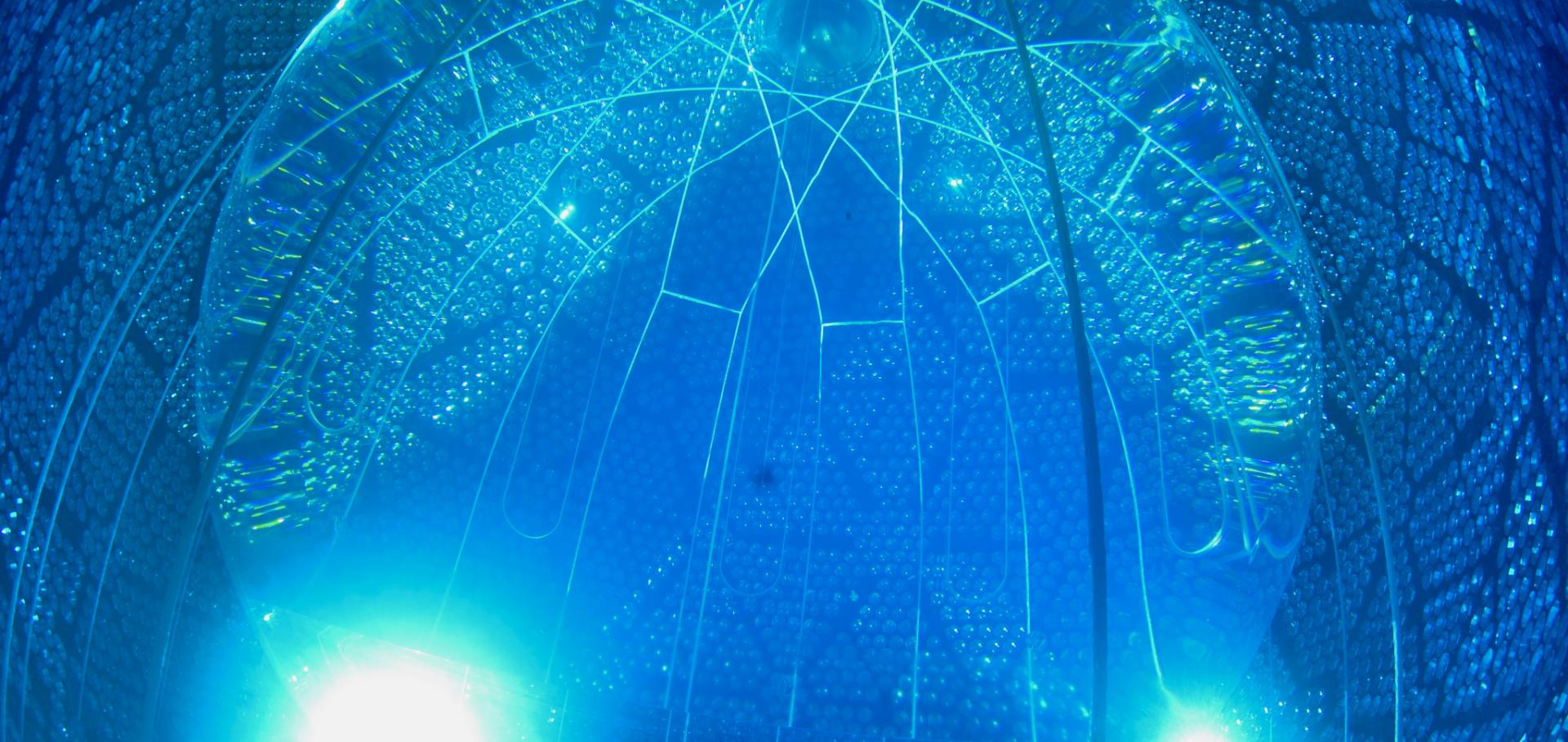
The inside of the SNO+ experiment, showing the acrylic vessel, hold up/down ropes and PMTs. At this stage the vessel was nearly filled with scintillator.

Dr William Parker

Postdoctoral Research Assistant

Research theme

  • Fundamental particles and interactions

Sub department

  • Particle Physics

Research groups

  • SNO+
william.parker@physics.ox.ac.uk
Denys Wilkinson Building, room 568C
  • About
  • Publications

Search for heavy neutrinos with the T2K near detector ND280

Phys. Rev. D100 (2019) 5

Authors:

K Abe, others
More details from the publisher
Details from ORA
More details
Details from ArXiV

J-PARC neutrino beamline upgrade technical design report

arXiv Cornell University (2019)

Authors:

K Abe, H Aihara, A Ajmi, C Alt, C Andreopoulos, M Antonova, S Aoki, Y Asada, Y Ashida, A Atherton, E Atkin, S Ban, FCT Barbato, M Barbi, GJ Barker, G Barr, M Batkiewicz, A Beloshapkin, V Berardi, L Berns, S Bhadra, J Bian, S Bienstock, A Blondel, S Bolognesi, J Borg, B Bourguille, SB Boyd, D Brailsford, A Bravar, S Bron, C Bronner, MB Avanzini, NF Calabria, J Calcutt, RG Calland, D Calvet, T Campbell, S Cao, SL Cartwright, Catanesi, A Cervera, A Chappell, D Cherdack, N Chikuma, G Christodoulou, M Cicerchia, A Clifton, G Cogo, J Coleman

Abstract:

In this document, technical details of the upgrade plan of the J-PARC neutrino beamline for the extension of the T2K experiment are described. T2K has proposed to accumulate data corresponding to $2\times{}10^{22}$ protons-on-target in the next decade, aiming at an initial observation of CP violation with $3\sigma$ or higher significance in the case of maximal CP violation. Methods to increase the neutrino beam intensity, which are necessary to achieve the proposed data increase, are described.
Details from ORA
Details from ArXiV

Search for neutral-current induced single photon production at the ND280 near detector in T2K

Journal of Physics G: Nuclear and Particle Physics IOP Publishing 46:8 (2019) 08LT01

Authors:

K Abe, R Akutsu, A Ali, C Andreopoulos, L Anthony, M Antonova, S Aoki, A Ariga, Y Ashida, Y Awataguchi, Y Azuma, S Ban, M Barbi, GJ Barker, Giles Barr, C Barry, M Batkiewicz-Kwasniak, F Bench, V Berardi, S Berkman, RM Berner, L Berns, S Bhadra, S Bienstock, A Blondel

Abstract:

All rights reserved. Neutrino neutral-current (NC) induced single photon production is a subleading order process for accelerator-based neutrino beam experiments including T2K. It is, however, an important process to understand because it is a background for electron (anti)neutrino appearance oscillation experiments. Here, we performed the first search of this process below 1 GeV using the finegrained detector at the T2K ND280 off-axis near detector. By reconstructing single photon kinematics from electron positron pairs, we achieved 95% pure gamma ray sample from 5.738 1020 protons-on-targets neutrino mode data. We do not find positive evidence of NC induced single photon production in this sample. We set the model-dependent upper limit on the cross-section for this process, at 0.114 10-38 cm2 (90% C.L.) per nucleon, using the J-PARC off-axis neutrino beam with an average energy of .En. ~ 0.6 GeV. This is the first limit on this process below 1.GeV which is important for current and future oscillation experiments looking for electron neutrino appearance oscillation signals.
More details from the publisher
Details from ORA
More details
Details from ArXiV

Search for light sterile neutrinos with the T2K far detector Super-Kamiokande at a baseline of 295 km

Phys. Rev. D99 (2019) 7

Authors:

K Abe, others
More details from the publisher
Details from ORA
More details
Details from ArXiV

T2K ND280 Upgrade - Technical Design Report

(2019)

Authors:

K Abe, H Aihara, A Ajmi, C Andreopoulos, M Antonova, S Aoki, Y Asada, Y Ashida, A Atherton, E Atkin, D Attié, S Ban, M Barbi, GJ Barker, G Barr, M Batkiewicz, A Beloshapkin, V Berardi, L Berns, S Bhadra, J Bian, S Bienstock, A Blondel, J Boix, S Bolognesi, J Borg, S Bordoni, B Bourguille, SB Boyd, D Brailsford, A Bravar, C Bronner, D Browning, MB Avanzini, F Cadoux, NF Calabria, J Calcutt, RG Calland, D Calvet, T Campbell, S Cao, SL Cartwright, R Castillo, Catanesi, W Ceria, A Cervera, A Chappell, D Cherdack, N Chikuma, G Christodoulou

Abstract:

In this document, we present the Technical Design Report of the Upgrade of the T2K Near Detector ND280. The goal of this upgrade is to improve the Near Detector performance to measure the neutrino interaction rate and to constrain the neutrino interaction cross-sections so that the uncertainty in the number of predicted events at Super-Kamiokande is reduced to about 4%. This will allow to improve the physics reach of the T2K-II project. This goal is achieved by modifying the upstream part of the detector, adding a new highly granular scintillator detector (Super-FGD), two new TPCs (High-Angle TPC) and six TOF planes. Details about the detector concepts, design and construction methods are presented, as well as a first look at the test-beam data taken in Summer 2018. An update of the physics studies is also presented.
Details from ORA
Details from ArXiV

Pagination

  • First page First
  • Previous page Prev
  • Page 1
  • Page 2
  • Page 3
  • Page 4
  • Page 5
  • Page 6
  • Page 7
  • Current page 8
  • Page 9
  • Next page Next
  • Last page Last

Footer Menu

  • Contact us
  • Giving to the Dept of Physics
  • Work with us
  • Media

User account menu

  • Log in

Follow us

FIND US

Clarendon Laboratory,

Parks Road,

Oxford,

OX1 3PU

CONTACT US

Tel: +44(0)1865272200

University of Oxfrod logo Department Of Physics text logo
IOP Juno Champion logo Athena Swan Silver Award logo

© University of Oxford - Department of Physics

Cookies | Privacy policy | Accessibility statement

Built by: Versantus

  • Home
  • Research
  • Study
  • Engage
  • Our people
  • News & Comment
  • Events
  • Our facilities & services
  • About us
  • Giving to Physics
  • Current students
  • Staff intranet