Home
Department Of Physics text logo
  • Research
    • Our research
    • Our research groups
    • Our research in action
    • Research funding support
    • Summer internships for undergraduates
  • Study
    • Undergraduates
    • Postgraduates
  • Engage
    • For alumni
    • For business
    • For schools
    • For the public
  • Support
Menu
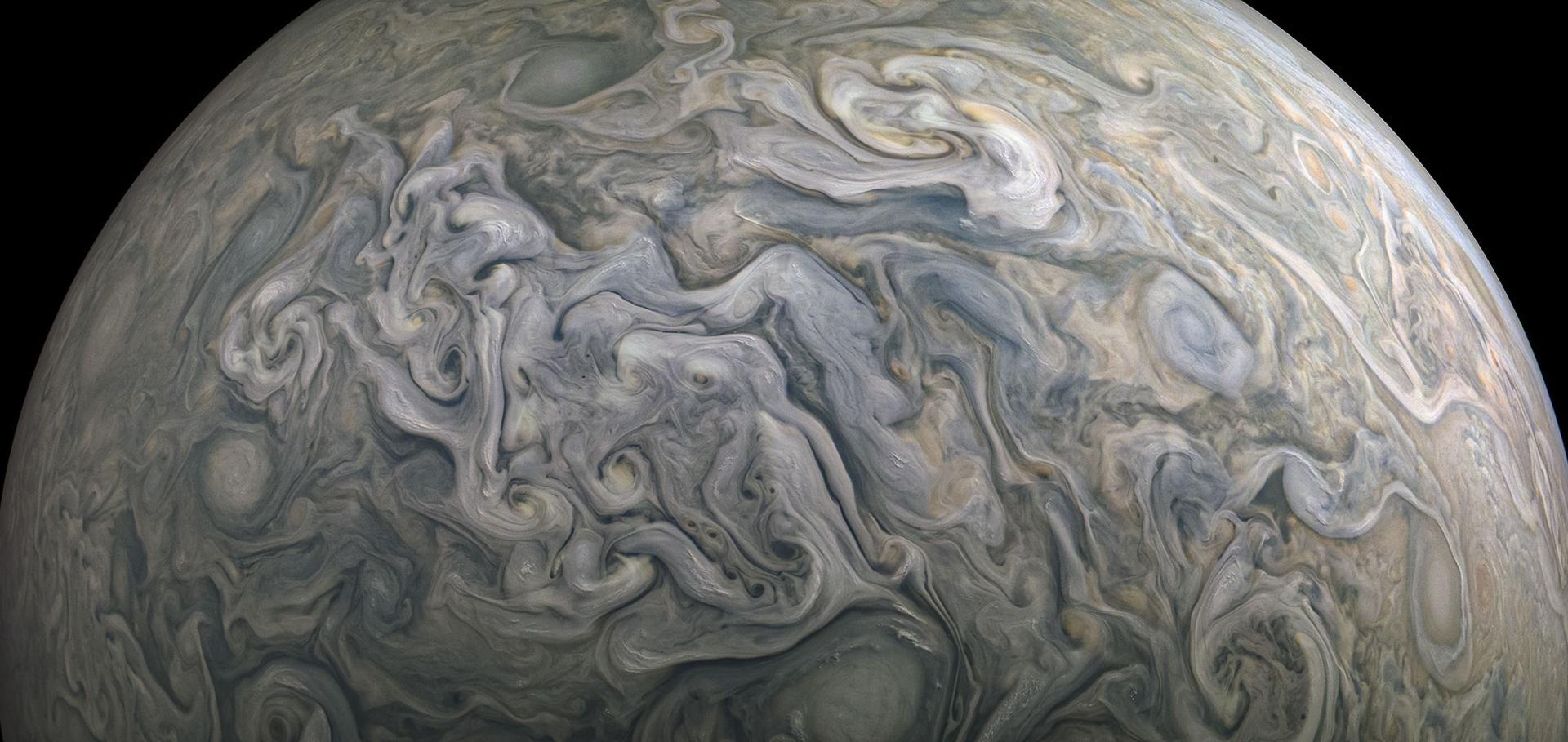
Juno Jupiter image

Dr Matt Patterson

Visitor

Research theme

  • Climate physics

Sub department

  • Atmospheric, Oceanic and Planetary Physics

Research groups

  • Climate dynamics
matthew.patterson@physics.ox.ac.uk
Telephone: 01865 (2)72912
Atmospheric Physics Clarendon Laboratory, room 206
  • About
  • Publications

Wintertime Southern Hemisphere jet streams shaped by interaction of transient eddies with Antarctic orography

Journal of Climate Wiley 33:24 (2020) 10505-10522

Authors:

Matthew Patterson, Tim Woollings, Tom Bracegirdle, Neil Lewis

Abstract:

The wintertime Southern Hemisphere extratropical circulation exhibits considerable zonal asymmetries. We investigate the roles of various surface boundary conditions in shaping the mean state using a semi-realistic, atmosphere-only climate model. We find, in agreement with previous literature, that tropical sea surface temperature (SST) patterns are an important contributor to the mean state, while midlatitude SSTs and sea ice extent play a smaller role. Our main finding is that Antarctic orography has a first-order effect on the structure of the midlatitude circulation. In the absence of Antarctic orography, equatorward eddy momentum fluxes associated with the orography are removed and hence convergence of eddy momentum in midlatitudes is reduced. This weakens the Indian Ocean jet, making Rossby wave propagation downstream to the South Pacific less favorable. Consequently, the flow stagnates over the mid- to high-latitude South Pacific and the characteristic split jet pattern is destroyed. Removing Antarctic orography also results in a substantial warming over East Antarctica partly because transient eddies are able to penetrate farther poleward, enhancing poleward heat transport. However, experiments in which a high-latitude cooling is applied indicate that these temperature changes are not the primary driver of circulation changes in the midlatitudes. Instead, we invoke a simple barotropic mechanism in which the orographic slope creates an effective potential vorticity gradient that alters the eddy momentum flux.
More details from the publisher
Details from ORA
More details

Improvements in Circumpolar Southern Hemisphere Extratropical Atmospheric Circulation in CMIP6 Compared to CMIP

Earth and Space Science American Geophysical Union (AGU) (2020)

Authors:

Tj Bracegirdle, Cr Holmes, Js Hosking, Gj Marshall, M Osman, M Patterson, T Rackow
More details from the publisher
Details from ORA
More details

The connection between the Southern Annular Mode and a feature-based perspective on Southern Hemisphere mid-latitude winter variability

Journal of Climate American Meteorological Society (2019) JCLI-D-19-0224.1

Authors:

Clemens Spensberger, Michael J Reeder, Thomas Spengler, Matthew Patterson
More details from the publisher
Details from ORA
More details

Southern Hemisphere atmospheric blocking in CMIP5 and future changes in the Australia‐New Zealand sector

Geophysical Research Letters American Geophysical Union (AGU) (2019) 2019GL083264

Authors:

Matthew Patterson, Thomas Bracegirdle, Tim Woollings
More details from the publisher
Details from ORA
More details

The representation of surface temperature trends in C3S seasonal forecast systems

Atmospheric Science Letters Wiley Open Access

Authors:

Matthew Patterson, John Slattery, Daniel Befort, Julia Lockwood, Antje Weisheimer
More details from the publisher
More details

Pagination

  • First page First
  • Previous page Prev
  • Page 1
  • Page 2
  • Page 3
  • Current page 4

Footer Menu

  • Contact us
  • Giving to the Dept of Physics
  • Work with us
  • Media

User account menu

  • Log in

Follow us

FIND US

Clarendon Laboratory,

Parks Road,

Oxford,

OX1 3PU

CONTACT US

Tel: +44(0)1865272200

University of Oxfrod logo Department Of Physics text logo
IOP Juno Champion logo Athena Swan Silver Award logo

© University of Oxford - Department of Physics

Cookies | Privacy policy | Accessibility statement

Built by: Versantus

  • Home
  • Research
  • Study
  • Engage
  • Our people
  • News & Comment
  • Events
  • Our facilities & services
  • About us
  • Giving to Physics
  • Current students
  • Staff intranet