Home
Department Of Physics text logo
  • Research
    • Our research
    • Our research groups
    • Our research in action
    • Research funding support
    • Summer internships for undergraduates
  • Study
    • Undergraduates
    • Postgraduates
  • Engage
    • For alumni
    • For business
    • For schools
    • For the public
Menu
CMP
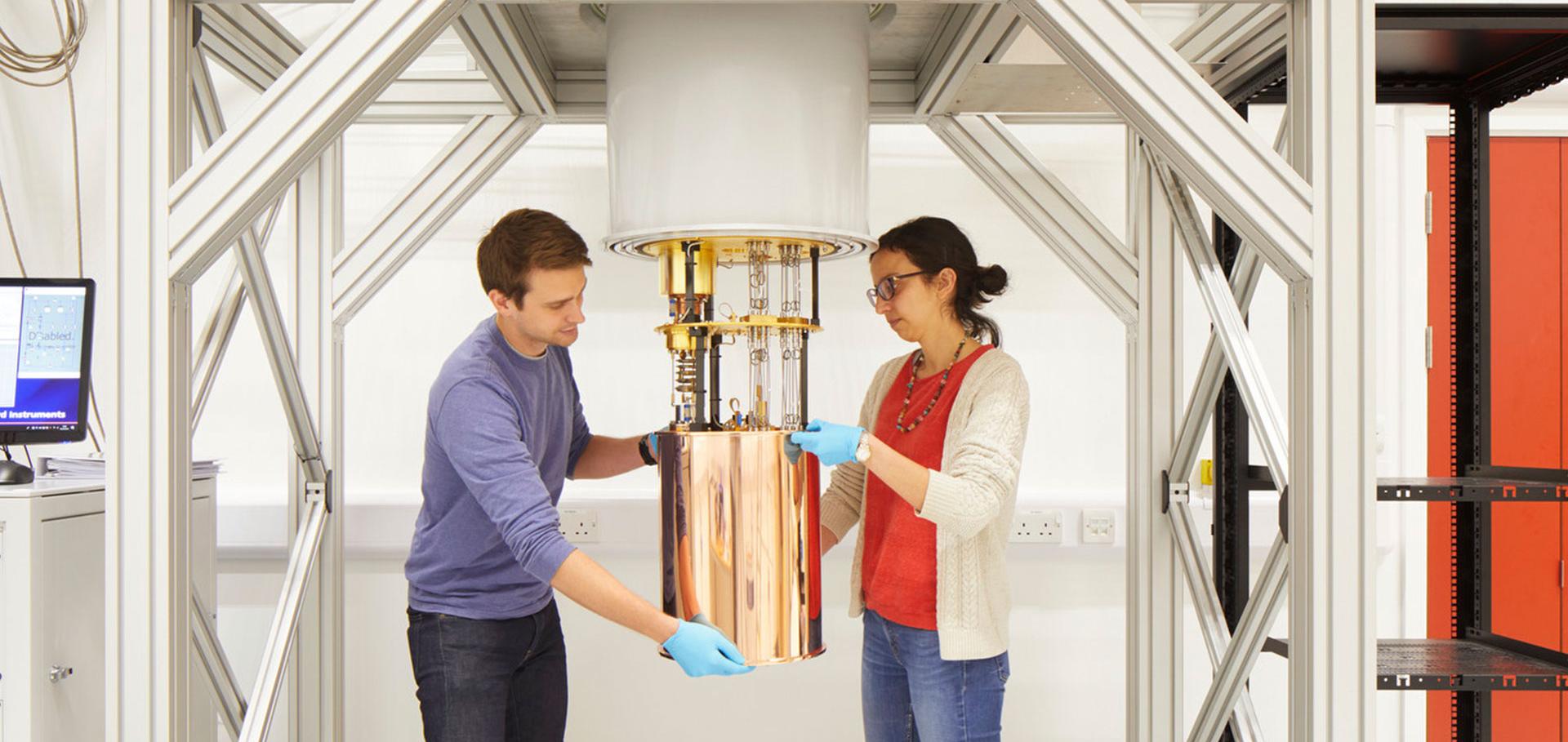
Credit: Jack Hobhouse

Napan Phuphathanaphong

Graduate Student

Sub department

  • Condensed Matter Physics
napan.phuphathanaphong@physics.ox.ac.uk
  • About
  • Publications

Radiative cooling film enabled by droplet-like infrared hot spots via low-cost and scalable spray-coating process for tropical regions

Cell Reports Physical Science Elsevier BV 5:4 (2024) 101899

Authors:

Patawee Sakata, Kullachate Muangnapoh, Worawut Rueangsawang, Chattrarat Ponghiransmith, Chatchai Pornmanat, Napan Phuphathanaphong, Pornnapha Mangthong, Jakrapong Kaewkhao, Supakij Suttiruengwong, Pongsakorn Kanjanaboos
More details from the publisher
More details

Influence of CeF3 on Ga2O3-Lu2O3-Al2O3-Y2O3-B2O3 glass for photonics material

Optik Elsevier BV 296 (2024) 171496

Authors:

E Kaewnuam, S Insiripong, F Khrongchaiyaphum, P Borisut, N Wantana, N Phuphathanaphong, P Kanjanaboos, T Preechayan, S Kothan, J Kaewkhao
More details from the publisher

Eu2O3 doped silicoborate glasses for scintillation material application: Luminescence ability and X-ray imaging

Optik Elsevier BV 294 (2023) 171439

Authors:

N Intachai, S Kothan, N Wantana, S Kaewjaeng, P Pakawanit, N Vittayakorn, P Kanjanaboos, N Phuphathanaphong, HJ Kim, J Kaewkhao
More details from the publisher

Luminescence properties and energy transfer of Nd3+- Er3+/ Nd3+-Pr3+ co-doped LFP glasses system.

Heliyon 9:11 (2023) e21114

Authors:

Juniastel Rajagukguk, Jonny H Panggabean, CS Sarumaha, P Kanjanaboos, N Phuphathanaphong, S Kothan, J Kaewkhao, Mitra Djamal

Abstract:

The motivation for this research is that the emission spectra using directly pumped laser diodes have not yet been found. We want to explore the luminescence properties of a co-doped laser material utilizing a diode laser as an optical pump. The research method used standard melt-quench and was stimulated by a laser diode (808 and 980 nm). The double doped of Nd3+- Er3+/Nd3+-Pr3+ ions with glasses system of lithium-fluorophosphate (LFP) had a strong band emission at 1056 nm, which transitioned at 4F3/2 → 4I11/2 and showed a drop in intensity from co-doping with Er3+ and Pr3+ ions. The fluorescence width at half maximum (FWHM) of the glasses is calculated to identify whether the sample may be used as a laser application. The FWHM values are found to be 22-28 nm. Decay time values were shown to decrease with increasing concentrations of Er3+ and Pr3+ ions and were used for energy transfer calculations. The Quantum Yields (QYs), efficiency in the transfer of energy and the possibility transfer energy were measured and calculated that confirm the possibility of energy transfer from Nd3+ to Er3+ and Pr3+ ions. Since, the emission spectrum at 1535 nm was found, this is a good reason for it to be used as an optical device.
More details from the publisher
More details
More details

Robust perovskite formation via vacuum thermal annealing for indoor perovskite solar cells

Scientific Reports Nature Research 13:1 (2023) 10933-10933

Authors:

Kwanchai Penpong, Chaowaphat Seriwatanachai, Atittaya Naikaew, Napan Phuphathanaphong, Ko Ko Shin Thant, Ladda Srathongsian, Thunrada Sukwiboon, Anuchytt Inna, Somboon Sahasithiwat, Pasit Pakawatpanurut, Duangmanee Wongratanaphisan, Pipat Ruankham, Pongsakorn Kanjanaboos

Abstract:

Perovskite solar cells have rapidly advanced due to their exceptional optoelectronic properties, but achieving uniform crystallization and stability remains challenging. This review examines solvent-assisted annealing, including solvent-vapor and anti-solvent treatments as a strategy to modulate perovskite crystallization for enhanced device performance. Solvent vapors (e.g. DMF, DMSO, alcohol mixtures) introduced during thermal annealing sustain a supersaturated environment that extends nucleation and enables Ostwald ripening, yielding markedly larger grain sizes and improved crystallinity. Studies show that solvent annealing can increase MAPbI3 carrier diffusion lengths beyond 1 μm and maintain >14.5% efficiency even for films up to 1 μm thick. Advanced schemes, such as combined DMSO-water vapor annealing, have produced nearly single-crystal grains and devices with 19.5% power conversion efficiency (PCE), by reducing defect-mediated recombination. These microstructural gains translate into higher PCE and stability: solvent-annealed films exhibit fewer trap sites and inhibited moisture degradation. Finally, we address scalability: ambient solvent-antisolvent treatments have yielded >5 μm grains with 100% film coverage in large-area Perovskite solar cells. Overall, solvent annealing emerges as a powerful tool for tailoring perovskite films. This review synthesizes the mechanisms and performance benefits of solvent annealing and evaluates its prospects for scalable, industrialized PSC fabrication. By identifying key challenges and emerging solutions, it aims to guide future research efforts toward more efficient and manufacturable perovskite solar technologies
More details from the publisher
Details from ORA
More details
More details

Pagination

  • First page First
  • Previous page Prev
  • Page 1
  • Current page 2

Footer Menu

  • Contact us
  • Giving to the Dept of Physics
  • Work with us
  • Media

User account menu

  • Log in

Follow us

FIND US

Clarendon Laboratory,

Parks Road,

Oxford,

OX1 3PU

CONTACT US

Tel: +44(0)1865272200

University of Oxfrod logo Department Of Physics text logo
IOP Juno Champion logo Athena Swan Silver Award logo

© University of Oxford - Department of Physics

Cookies | Privacy policy | Accessibility statement

Built by: Versantus

  • Home
  • Research
  • Study
  • Engage
  • Our people
  • News & Comment
  • Events
  • Our facilities & services
  • About us
  • Giving to Physics
  • Current students
  • Staff intranet