Home
Department Of Physics text logo
  • Research
    • Our research
    • Our research groups
    • Our research in action
    • Research funding support
    • Summer internships for undergraduates
  • Study
    • Undergraduates
    • Postgraduates
  • Engage
    • For alumni
    • For business
    • For schools
    • For the public
  • Support
Menu
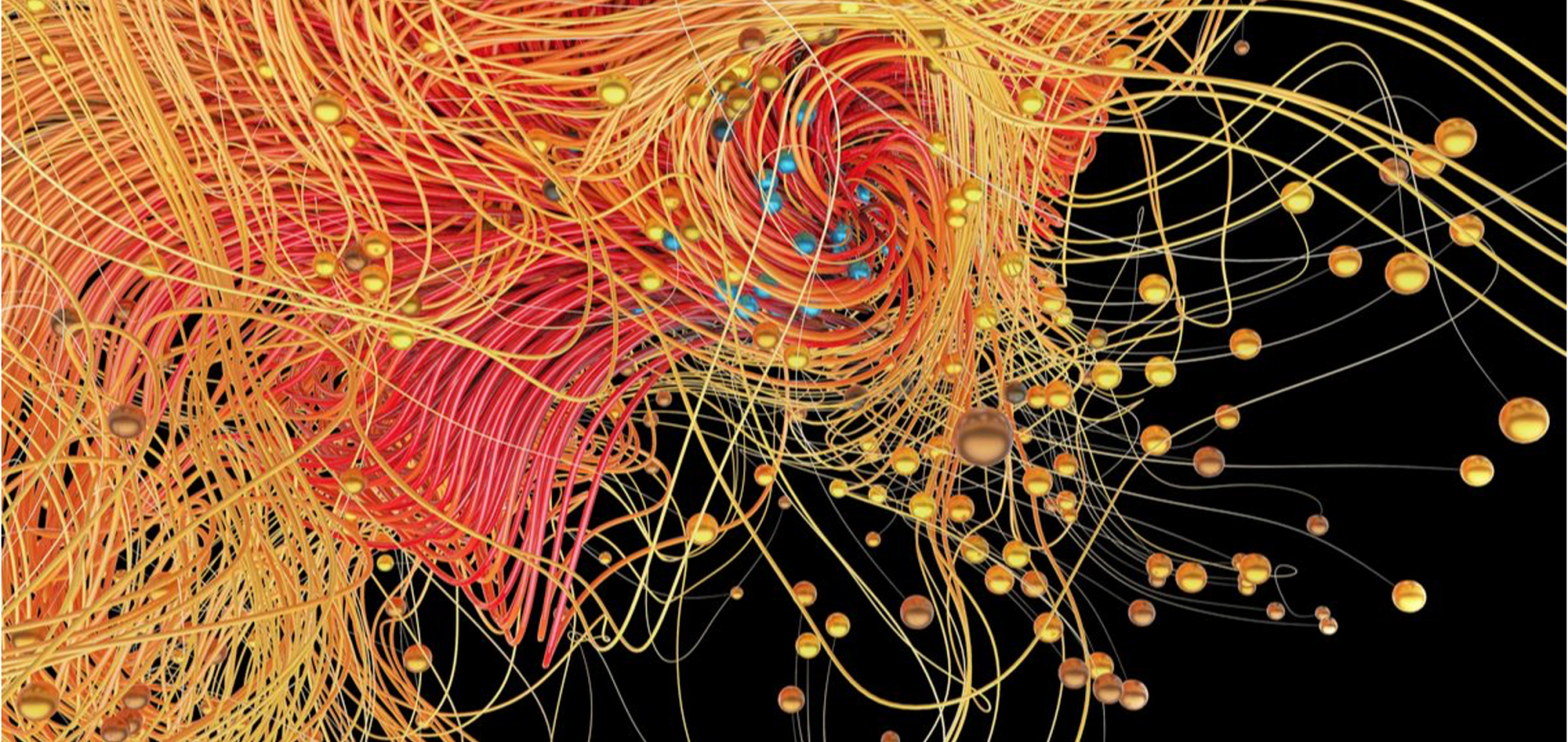
Cosmic strings in hematite

Professor Paolo G. Radaelli OSI

Dr Lee's Professor

Research theme

  • Quantum materials

Sub department

  • Condensed Matter Physics

Research groups

  • Oxide electronics
Paolo.Radaelli@physics.ox.ac.uk
Telephone: 01865 (2)70957
Clarendon Laboratory, room 111
  • About
  • Research
  • Publications

Prof Radaelli recognised with an MPLS "Excellent Supervisor" Award

Physics Award Winners
Prof Radaelli is one of the 5 Oxford Physicists recognised in the inaugural "Excellence in Research Supervision" award

Read the story at this link

Excellence in Research Supervision

MnSb2O6: a polar magnet with a chiral crystal structure

Acta Crystallographica Section A: Foundations and advances International Union of Crystallography (IUCr) 69:a1 (2013) s623-s623

Authors:

RD Johnson, K Cao, LC Chapon, F Fabrizi, N Perks, P Manuel, JJ Yang, YS Oh, S-W Cheong, PG Radaelli
More details from the publisher
More details

ChemInform Abstract: Ba2YFeO5.5: A Ferromagnetic Pyroelectric Phase Prepared by Topochemical Oxidation.

ChemInform Wiley 44:30 (2013) no-no

Authors:

Kun Luo, Roger D Johnson, Thao T Tran, P Shiv Halasyamani, Paolo G Radaelli, Michael A Hayward
More details from the publisher

MnSb2O6: A polar magnet with a chiral crystal structure

(2013)

Authors:

RD Johnson, K Cao, LC Chapon, F Fabrizi, N Perks, P Manuel, JJ Yang, YS Oh, S-W Cheong, PG Radaelli
More details from the publisher

MnSb2O6: A polar magnet with a chiral crystal structure

ArXiv 1306.3854 (2013)

Authors:

RD Johnson, K Cao, LC Chapon, F Fabrizi, N Perks, P Manuel, JJ Yang, YS Oh, S-W Cheong, PG Radaelli

Abstract:

Structural and magnetic chiralities are found to coexist in a small group of materials in which they produce intriguing phenomenologies such as the recently discovered skyrmion phases. Here, we describe a previously unknown manifestation of this interplay in MnSb2O6, a trigonal oxide with a chiral crystal structure. Unlike all other known cases, the MnSb2O6 magnetic structure is based on co-rotating cycloids rather than helices. The coupling to the structural chirality is provided by a magnetic axial vector, related to the so-called vector chirality. We show that this unique arrangement is the magnetic ground state of the symmetric-exchange Hamiltonian, based on ab-initio theoretical calculations of the Heisenberg exchange interactions, and is stabilised by out-of-plane anisotropy. MnSb2O6 is predicted to be multiferroic with a unique ferroelectric switching mechanism.
Details from ArXiV
More details from the publisher
More details
More details

Ba2YFeO5.5: A ferromagnetic pyroelectric phase prepared by topochemical oxidation.

Chemistry of Materials 25:9 (2013) 1800-1808

Authors:

K Luo, RD Johnson, TT Tran, PS Halasyamani, PG Radaelli, MA Hayward

Abstract:

Reaction of the anion-deficient, cation-ordered perovskite phase Ba 2YFeO5 with 80 atm of oxygen pressure at 410 C results in the formation of the Fe4+ phase Ba2YFeO5.5. The topochemical insertion of oxide ions lifts the inversion symmetry of the centrosymmetric host phase, Ba2YFeO5 (space group P2 1/n), to yield a noncentrosymmetric (NCS) phase Ba 2YFeO5.5 (space group Pb21m (No. 26), a = 12.1320(2) Å, b = 6.0606(1) Å, c = 8.0956(1) Å, V = 595.257(2) Å3) confirmed by the observation of second-harmonic generation. Dielectric and PUND ferroelectric measurements, however, show no evidence for a switchable ferroelectric polarization, limiting the material to pyroelectric behavior. Magnetization and low-temperature neutron diffraction data indicate that Ba2YFeO5.5 undergoes a magnetic transition at 20 K to adopt a state which exhibits a combination of ferromagnetic and antiferromagnetic order. The symmetry breaking from centrosymmetric to polar noncentrosymmetric, which occurs during the topochemical oxidation process is discussed on the basis of induced lattice strain and an electronic instability and represents a new strategy for the preparation of NCS materials that readily incorporate paramagnetic transition metal centers. © 2013 American Chemical Society.
More details from the publisher
More details

Pagination

  • First page First
  • Previous page Prev
  • …
  • Page 21
  • Page 22
  • Page 23
  • Page 24
  • Current page 25
  • Page 26
  • Page 27
  • Page 28
  • Page 29
  • …
  • Next page Next
  • Last page Last

Footer Menu

  • Contact us
  • Giving to the Dept of Physics
  • Work with us
  • Media

User account menu

  • Log in

Follow us

FIND US

Clarendon Laboratory,

Parks Road,

Oxford,

OX1 3PU

CONTACT US

Tel: +44(0)1865272200

University of Oxfrod logo Department Of Physics text logo
IOP Juno Champion logo Athena Swan Silver Award logo

© University of Oxford - Department of Physics

Cookies | Privacy policy | Accessibility statement

Built by: Versantus

  • Home
  • Research
  • Study
  • Engage
  • Our people
  • News & Comment
  • Events
  • Our facilities & services
  • About us
  • Giving to Physics
  • Current students
  • Staff intranet