Home
Department Of Physics text logo
  • Research
    • Our research
    • Our research groups
    • Our research in action
    • Research funding support
    • Summer internships for undergraduates
  • Study
    • Undergraduates
    • Postgraduates
  • Engage
    • For alumni
    • For business
    • For schools
    • For the public
  • Support
Menu
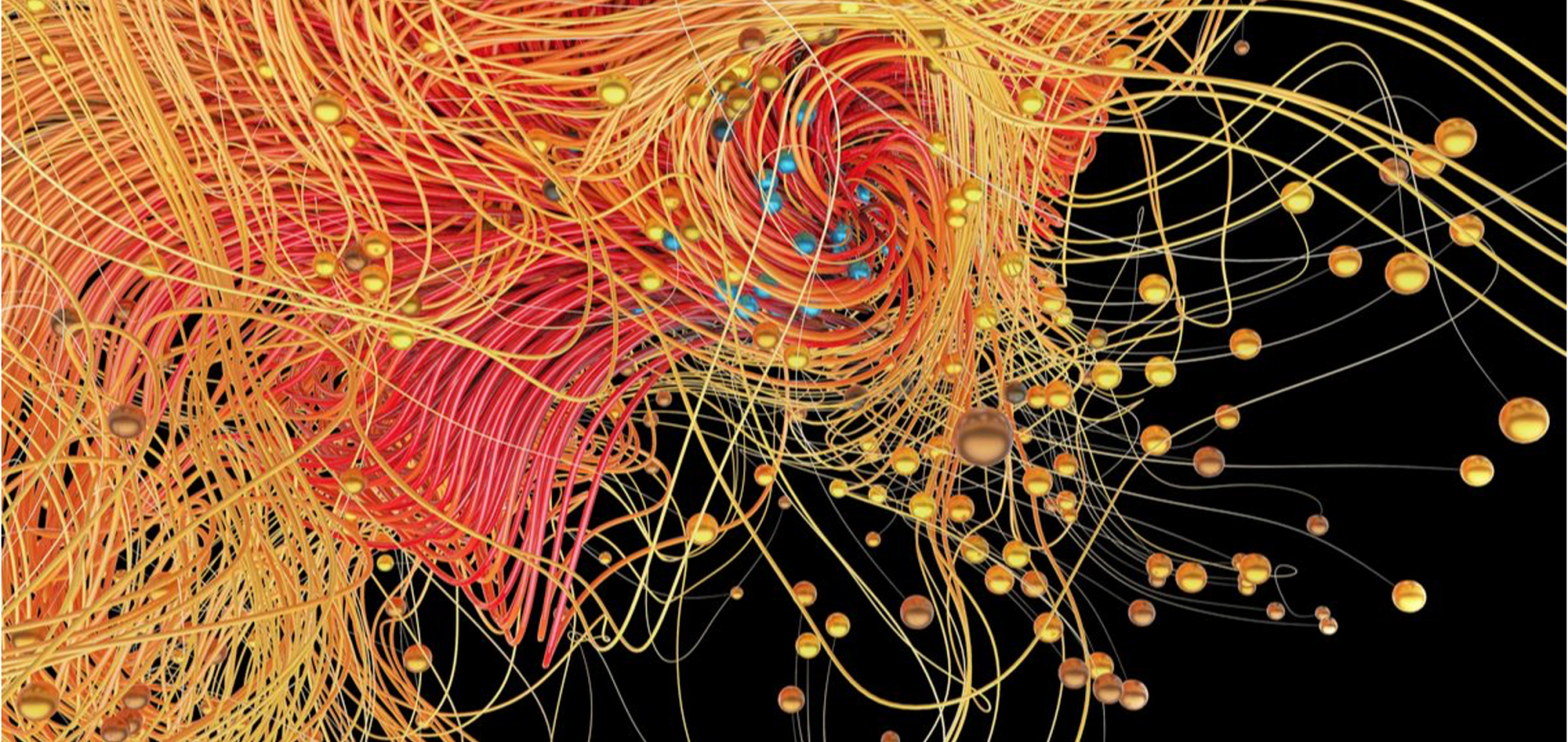
Cosmic strings in hematite

Professor Paolo G. Radaelli OSI

Dr Lee's Professor

Research theme

  • Quantum materials

Sub department

  • Condensed Matter Physics

Research groups

  • Oxide electronics
Paolo.Radaelli@physics.ox.ac.uk
Telephone: 01865 (2)70957
Clarendon Laboratory, room 111
  • About
  • Research
  • Publications

Prof Radaelli recognised with an MPLS "Excellent Supervisor" Award

Physics Award Winners
Prof Radaelli is one of the 5 Oxford Physicists recognised in the inaugural "Excellence in Research Supervision" award

Read the story at this link

Excellence in Research Supervision

Critical current decay with ageing for polycrystalline YBCO wires and rings

Cryogenics 30:7 (1990) 576-580

Authors:

L Gherardi, P Metra, G Vellego, P Radaelli

Abstract:

The effect of environmental factors such as moisture and temperature on the critical current of sintered YBCO was systematically investigated. The degradation rate of materials with different characteristics was also analysed. The synthesis procedure used, powder grain size, silver oxide addition, sintering conditions and final density were all considered as possible factors affecting the material's sensitivity to ageing. The transport critical current was measured using the d.c. four probe technique, with and without magnetic field, on wire specimens, and with an a.c. contactless method with no field on moulded rings. Complex susceptibility measurements were also carried out to further qualify the material's behaviour, especially in cases where the macroscopic Ic had dropped to zero. The results showed qualitatively similar Ic versus time behaviour for the various samples, but with strong quantitative differences, which were correlated to the above factors. © 1990.
More details from the publisher
More details

Evidence of the B and C superconducting phases in the Bi-Ca-Sr-Cu-O system

Il Nuovo Cimento D 11:6 (1989) 903-906

Authors:

A Migliori, PG Merli, FC Matacotta, P Radaelli

Abstract:

A sintering process of Bi-Ca-Sr-Cu-O superconductor is reported. The electrical and microstructural analysis of the pellets shows the coexistence of B and C phases with transition temperatures of about 85 K and 105 K, respectively. © 1989 Società Italiana di Fisica.
More details from the publisher
More details

Superconducting compounds in the Bi-Ca-Sr-Cu-O system from citrate polymer precursor: production and preliminary characterization

Vuoto Bologna 18:3 (1988) 208-211

Authors:

R Masini, FC Matacotta, R Mele, E Olzi, P Radaelli

Abstract:

In this work a procedure followed for the preparation of superconducting compounds in the Bi-Ca-Sr-Cu-O system using the cytrate polymer precursor route is reported. A preliminary characterization of the structure and superconducting properties of the samples so obtained is given through X-ray diffraction analysis, resistivity and a.c. susceptibility measurements. All the samples so obtained showed the presence of superconducting phases at 80 K and 110 K beyond other non superconducting ones.

Direct Observation of Charge Order in Triangular Metallic AgNiO2 by Single-Crystal Resonant X-Ray Scattering

PHYSICAL REVIEW LETTERS AMER PHYSICAL SOC 106 15

Authors:

GL Pascut, R Coldea, PG Radaelli, A Bombardi, G Beutier, II Mazin, MD Johannes, M Jansen

Abstract:

We report resonant x-ray scattering measurements on a single crystal of the orbitally degenerate triangular metallic antiferromagnet 2H-AgNiO2 to probe the spontaneous transition to a triple-cell superstructure at temperatures below T-S = 365 K. We observe a strong resonant enhancement of the supercell reflections through the Ni K edge. The empirically extracted K-edge shift between the crystallographically distinct Ni sites of 2.5(3) eV is much larger than the value expected from the shift in final states, and implies a core-level shift of similar to 1 eV, thus providing direct evidence for the onset of spontaneous honeycomb charge order in the triangular Ni layers. We also provide band-structure calculations that explain quantitatively the observed edge shifts in terms of changes in the Ni electronic energy levels due to charge order and hybridization with the surrounding oxygens.
More details from the publisher
More details
More details
Details from ArXiV

Evolution of magneto-orbital order upon B-site electron doping in Na1-xCaxMn7O12 quadruple perovskite manganites

Physical Review Letters American Physical Society

Authors:

Roger Johnson, F Mezzadri, P Manuel, DD Khalyavin, E Gilioli, PG Radaelli

Abstract:

We present the discovery and refinement by neutron powder diffraction of a new magnetic phase in the Na1-xCaxMn7O12 quadruple perovskite phase diagram, which is the incommensurate analogue of the well-known pseudo-CE phase of the simple perovskite manganites. We demonstrate that incommensurate magnetic order arises in quadruple perovskites due to the exchange interactions between A and B sites. Furthermore, by constructing a simple mean field Heisenberg exchange model that generically describes both simple and quadruple perovskite systems, we show that this new magnetic phase unifies a picture of the interplay between charge, magnetic and orbital ordering across a wide range of compounds.

Pagination

  • First page First
  • Previous page Prev
  • …
  • Page 76
  • Page 77
  • Page 78
  • Page 79
  • Page 80
  • Page 81
  • Page 82
  • Current page 83
  • Page 84
  • Next page Next
  • Last page Last

Footer Menu

  • Contact us
  • Giving to the Dept of Physics
  • Work with us
  • Media

User account menu

  • Log in

Follow us

FIND US

Clarendon Laboratory,

Parks Road,

Oxford,

OX1 3PU

CONTACT US

Tel: +44(0)1865272200

University of Oxfrod logo Department Of Physics text logo
IOP Juno Champion logo Athena Swan Silver Award logo

© University of Oxford - Department of Physics

Cookies | Privacy policy | Accessibility statement

Built by: Versantus

  • Home
  • Research
  • Study
  • Engage
  • Our people
  • News & Comment
  • Events
  • Our facilities & services
  • About us
  • Giving to Physics
  • Current students
  • Staff intranet