Home
Department Of Physics text logo
  • Research
    • Our research
    • Our research groups
    • Our research in action
    • Research funding support
    • Summer internships for undergraduates
  • Study
    • Undergraduates
    • Postgraduates
  • Engage
    • For alumni
    • For business
    • For schools
    • For the public
  • Support
Menu
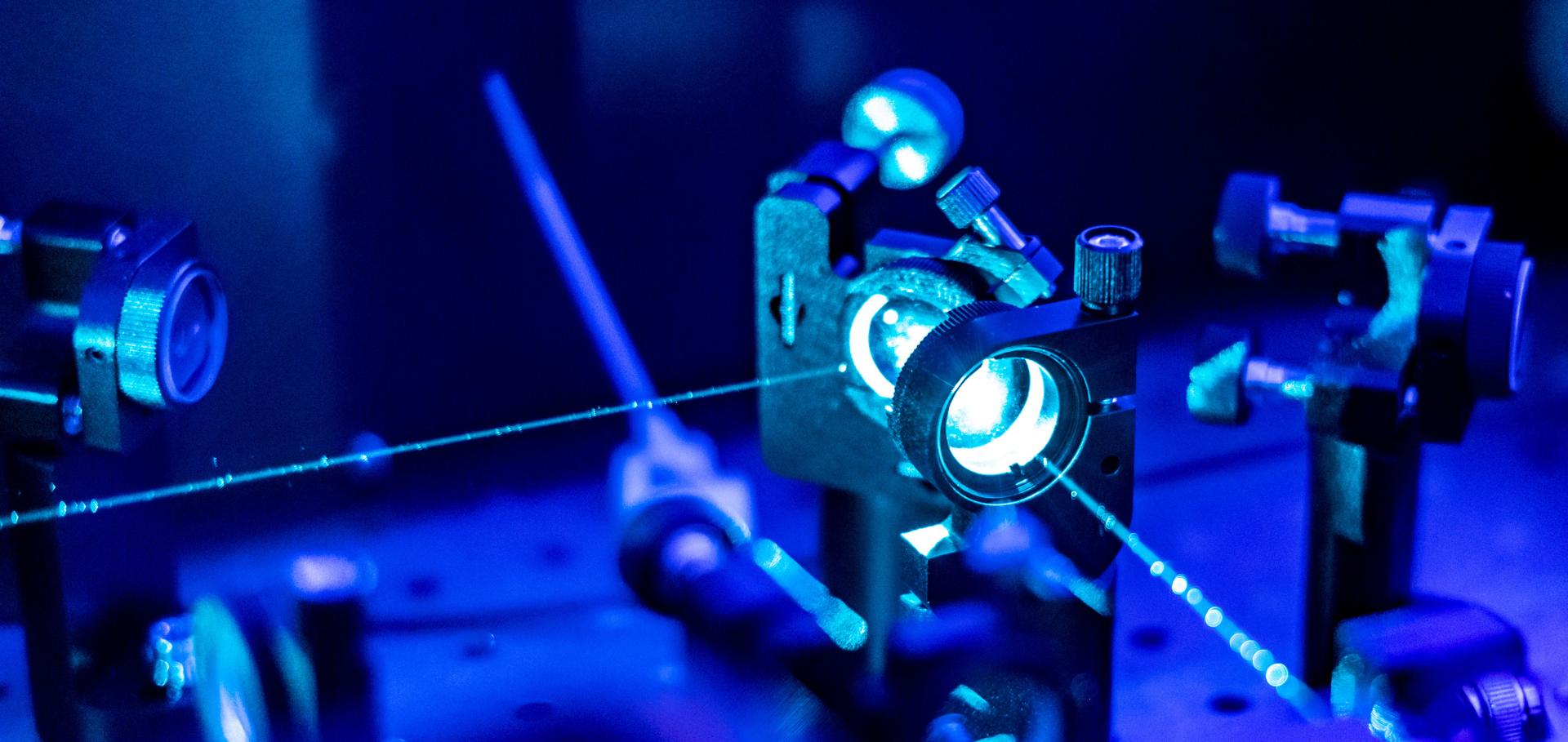
Blue Laser

Georgios Raftis MSci

DPhil Student

Research theme

  • Quantum information and computation
  • Quantum optics & ultra-cold matter

Sub department

  • Atomic and Laser Physics

Research groups

  • Quantum and optical technology
georgios.raftis@physics.ox.ac.uk
Clarendon Laboratory
  • About
  • Publications

Continuous-time quantum optimization without the adiabatic principle

Physical Review A American Physical Society (APS) 111:3 (2025) 032414

Authors:

Robert J Banks, Georgios S Raftis, Dan E Browne, PA Warburton

Abstract:

Continuous-time quantum algorithms for combinatorial optimization problems, such as quantum annealing, have previously been motivated by the adiabatic principle. A number of continuous-time approaches exploit dynamics, however, and therefore are no longer physically motivated by the adiabatic principle. In this work, we take Planck's principle as the underlying physical motivation for continuous-time quantum algorithms. Planck's principle states that the energy of an isolated system cannot decrease as the result of a cyclic process. We use this principle to justify monotonic schedules in quantum annealing, which are not adiabatic. This approach also highlights the limitations of reverse quantum annealing in an isolated system.
More details from the publisher
More details

Footer Menu

  • Contact us
  • Giving to the Dept of Physics
  • Work with us
  • Media

User account menu

  • Log in

Follow us

FIND US

Clarendon Laboratory,

Parks Road,

Oxford,

OX1 3PU

CONTACT US

Tel: +44(0)1865272200

University of Oxfrod logo Department Of Physics text logo
IOP Juno Champion logo Athena Swan Silver Award logo

© University of Oxford - Department of Physics

Cookies | Privacy policy | Accessibility statement

Built by: Versantus

  • Home
  • Research
  • Study
  • Engage
  • Our people
  • News & Comment
  • Events
  • Our facilities & services
  • About us
  • Giving to Physics
  • Current students
  • Staff intranet