Home
Department Of Physics text logo
  • Research
    • Our research
    • Our research groups
    • Our research in action
    • Research funding support
    • Summer internships for undergraduates
  • Study
    • Undergraduates
    • Postgraduates
  • Engage
    • For alumni
    • For business
    • For schools
    • For the public
  • Support
Menu
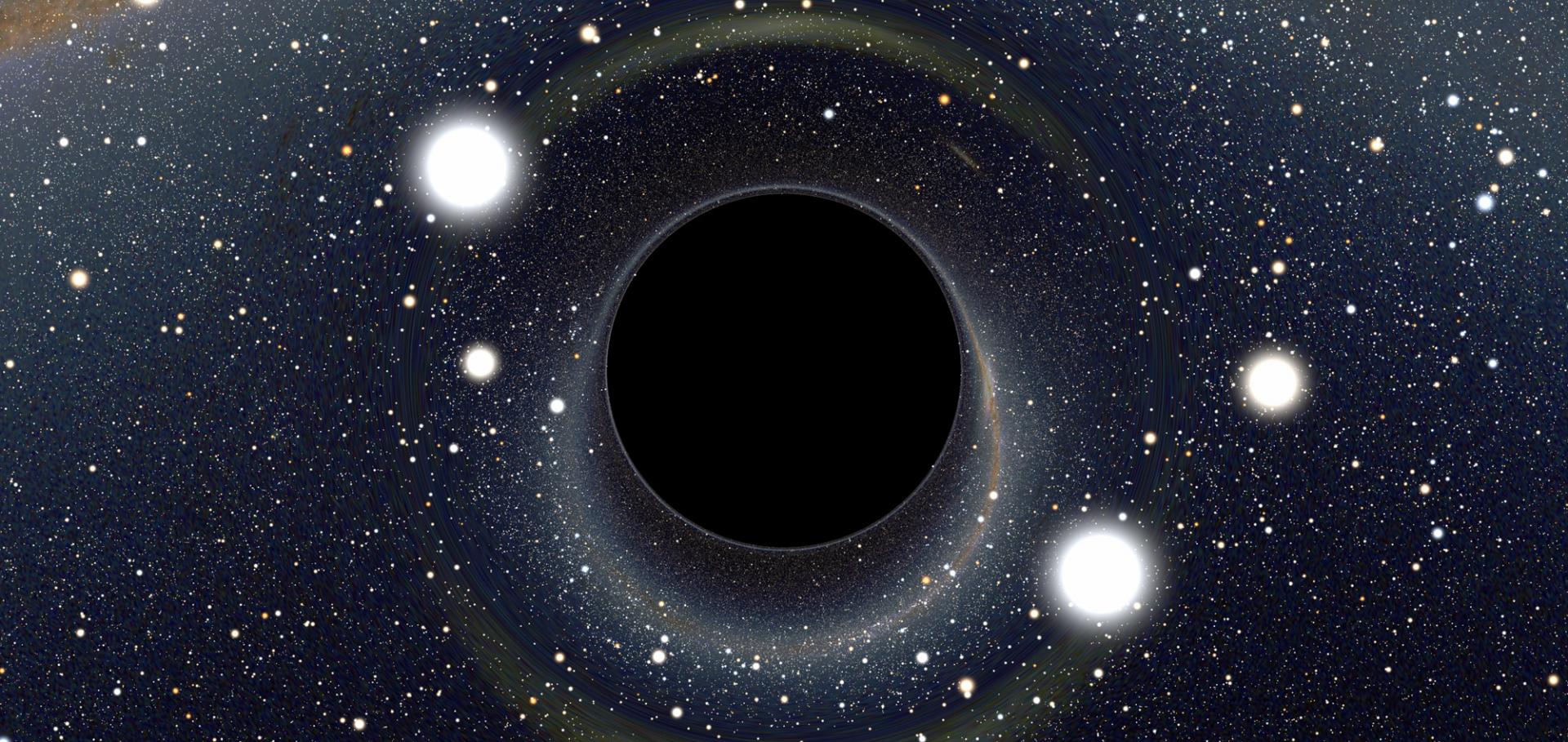
Black Hole

Lensing of space time around a black hole. At Oxford we study black holes observationally and theoretically on all size and time scales - it is some of our core work.

Credit: ALAIN RIAZUELO, IAP/UPMC/CNRS. CLICK HERE TO VIEW MORE IMAGES.

Dr Lauren Rhodes

TSI Postdoctoral Research Fellow

Research theme

  • Astronomy and astrophysics

Sub department

  • Astrophysics

Research groups

  • MeerKAT
  • Pulsars, transients and relativistic astrophysics
  • The Square Kilometre Array (SKA)
  • Gamma-ray astronomy
lauren.rhodes@physics.ox.ac.uk
laurenrhodes.github.io
  • About
  • Publications

Constraints on short gamma-ray burst physics and their host galaxies from systematic radio follow-up campaigns

Monthly Notices of the Royal Astronomical Society Oxford University Press (OUP) 532:2 (2024) 2820-2831

Authors:

SI Chastain, AJ van der Horst, GE Anderson, L Rhodes, D d’Antonio, ME Bell, RP Fender, PJ Hancock, A Horesh, C Kouveliotou, KP Mooley, A Rowlinson, SD Vergani, RAMJ Wijers, PA Woudt
More details from the publisher
More details

Discovery of the Optical and Radio Counterpart to the Fast X-Ray Transient EP 240315a

The Astrophysical Journal Letters American Astronomical Society 969:1 (2024) L14

Authors:

JH Gillanders, L Rhodes, S Srivastav, F Carotenuto, J Bright, ME Huber, HF Stevance, SJ Smartt, KC Chambers, T-W Chen, R Fender, A Andersson, AJ Cooper, PG Jonker, FJ Cowie, T de Boer, N Erasmus, MD Fulton, H Gao, J Herman, C-C Lin, T Lowe, EA Magnier, H-Y Miao

Abstract:

Fast X-ray Transients (FXTs) are extragalactic bursts of soft X-rays first identified ≳10 yr ago. Since then, nearly 40 events have been discovered, although almost all of these have been recovered from archival Chandra and XMM-Newton data. To date, optical sky surveys and follow-up searches have not revealed any multiwavelength counterparts. The Einstein Probe, launched in 2024 January, has started surveying the sky in the soft X-ray regime (0.5–4 keV) and will rapidly increase the sample of FXTs discovered in real time. Here we report the first discovery of both an optical and radio counterpart to a distant FXT, the fourth source publicly released by the Einstein Probe. We discovered a fast-fading optical transient within the 3′ localization radius of EP 240315a with the all-sky optical survey ATLAS, and our follow-up Gemini spectrum provides a redshift, z = 4.859 ± 0.002. Furthermore, we uncovered a radio counterpart in the S band (3.0 GHz) with the MeerKAT radio interferometer. The optical (rest-frame UV) and radio luminosities indicate that the FXT most likely originates from either a long gamma-ray burst or a relativistic tidal disruption event. This may be a fortuitous early mission detection by the Einstein Probe or may signpost a mode of discovery for high-redshift, high-energy transients through soft X-ray surveys, combined with locating multiwavelength counterparts.
More details from the publisher
Details from ORA
More details

The dense and non-homogeneous circumstellar medium revealed in radio wavelengths around the Type Ib SN 2019oys★

Astronomy & Astrophysics EDP Sciences 686 (2024) a129

Authors:

I Sfaradi, A Horesh, J Sollerman, R Fender, L Rhodes, DRA Williams, J Bright, DA Green, S Schulze, A Gal-Yam
More details from the publisher
More details

Testing EMRI Models for Quasi-periodic Eruptions with 3.5 yr of Monitoring eRO-QPE1

The Astrophysical Journal American Astronomical Society 965:1 (2024) 12-12

Authors:

Joheen Chakraborty, Riccardo Arcodia, Erin Kara, Giovanni Miniutti, Margherita Giustini, Alexandra J Tetarenko, Lauren Rhodes, Alessia Franchini, Matteo Bonetti, Kevin B Burdge, Adelle J Goodwin, Thomas J Maccarone, Andrea Merloni, Gabriele Ponti, Ronald A Remillard, Richard D Saxton

Abstract:

Quasi-periodic eruptions (QPEs) are luminous X-ray outbursts recurring on hour timescales, observed from the nuclei of a growing handful of nearby low-mass galaxies. Their physical origin is still debated, and usually modeled as (a) accretion disk instabilities or (b) interaction of a supermassive black hole (SMBH) with a lower mass companion in an extreme mass-ratio inspiral (EMRI). EMRI models can be tested with several predictions related to the short- and long-term behavior of QPEs. In this study, we report on the ongoing 3.5 yr NICER and XMM-Newton monitoring campaign of eRO-QPE1, which is known to exhibit erratic QPEs that have been challenging for the simplest EMRI models to explain. We report (1) complex, non-monotonic evolution in the long-term trends of QPE energy output and inferred emitting area; (2) the disappearance of the QPEs (within NICER detectability) in 2023 October, and then the reappearance by 2024 January at a luminosity of ∼100× fainter (and temperature of ∼3× cooler) than the initial discovery; (3) radio non-detections with MeerKAT and Very Large Array observations partly contemporaneous with our NICER campaign (though not during outbursts); and (4) the presence of a possible ∼6 day modulation of the QPE timing residuals, which aligns with the expected nodal precession timescale of the underlying accretion disk. Our results tentatively support EMRI-disk collision models powering the QPEs, and we demonstrate that the timing modulation of QPEs may be used to jointly constrain the SMBH spin and disk density profile
More details from the publisher
Details from ORA
More details

Heavy-element production in a compact object merger observed by JWST

Nature Springer Nature 626:8000 (2024) 737-741

Authors:

Andrew J Levan, Benjamin P Gompertz, Om Sharan Salafia, Mattia Bulla, Eric Burns, Kenta Hotokezaka, Luca Izzo, Gavin P Lamb, Daniele B Malesani, Samantha R Oates, Maria Edvige Ravasio, Alicia Rouco Escorial, Benjamin Schneider, Nikhil Sarin, Steve Schulze, Nial R Tanvir, Kendall Ackley, Gemma Anderson, Gabriel B Brammer, Lise Christensen, Vikram S Dhillon, Phil A Evans, Michael Fausnaugh, Wen-fai Fong, Andrew S Fruchter, Chris Fryer, Johan PU Fynbo, Nicola Gaspari, Kasper E Heintz, Jens Hjorth, Jamie A Kennea, Mark R Kennedy, Tanmoy Laskar, Giorgos Leloudas, Ilya Mandel, Antonio Martin-Carrillo, Brian D Metzger, Matt Nicholl, Anya Nugent, Jesse T Palmerio, Giovanna Pugliese, Jillian Rastinejad, Lauren Rhodes, Andrea Rossi, Andrea Saccardi, Stephen J Smartt, Heloise F Stevance, Aaron Tohuvavohu, Alexander van der Horst, Susanna D Vergani, Darach Watson, Thomas Barclay, Kornpob Bhirombhakdi, Elmé Breedt, Alice A Breeveld, Alexander J Brown, Sergio Campana, Ashley A Chrimes, Paolo D’Avanzo, Valerio D’Elia, Massimiliano De Pasquale, Martin J Dyer, Duncan K Galloway, James A Garbutt, Matthew J Green, Dieter H Hartmann, Páll Jakobsson, Paul Kerry, Chryssa Kouveliotou, Danial Langeroodi, Emeric Le Floc’h, James K Leung, Stuart P Littlefair, James Munday, Paul O’Brien, Steven G Parsons, Ingrid Pelisoli, David I Sahman, Ruben Salvaterra, Boris Sbarufatti, Danny Steeghs, Gianpiero Tagliaferri, Christina C Thöne, Antonio de Ugarte Postigo, David Alexander Kann
More details from the publisher
More details
More details

Pagination

  • First page First
  • Previous page Prev
  • …
  • Page 4
  • Page 5
  • Page 6
  • Page 7
  • Current page 8
  • Page 9
  • Page 10
  • Page 11
  • Page 12
  • …
  • Next page Next
  • Last page Last

Footer Menu

  • Contact us
  • Giving to the Dept of Physics
  • Work with us
  • Media

User account menu

  • Log in

Follow us

FIND US

Clarendon Laboratory,

Parks Road,

Oxford,

OX1 3PU

CONTACT US

Tel: +44(0)1865272200

University of Oxfrod logo Department Of Physics text logo
IOP Juno Champion logo Athena Swan Silver Award logo

© University of Oxford - Department of Physics

Cookies | Privacy policy | Accessibility statement

Built by: Versantus

  • Home
  • Research
  • Study
  • Engage
  • Our people
  • News & Comment
  • Events
  • Our facilities & services
  • About us
  • Giving to Physics
  • Current students
  • Staff intranet