Home
Department Of Physics text logo
  • Research
    • Our research
    • Our research groups
    • Our research in action
    • Research funding support
    • Summer internships for undergraduates
  • Study
    • Undergraduates
    • Postgraduates
  • Engage
    • For alumni
    • For business
    • For schools
    • For the public
  • Support
Menu
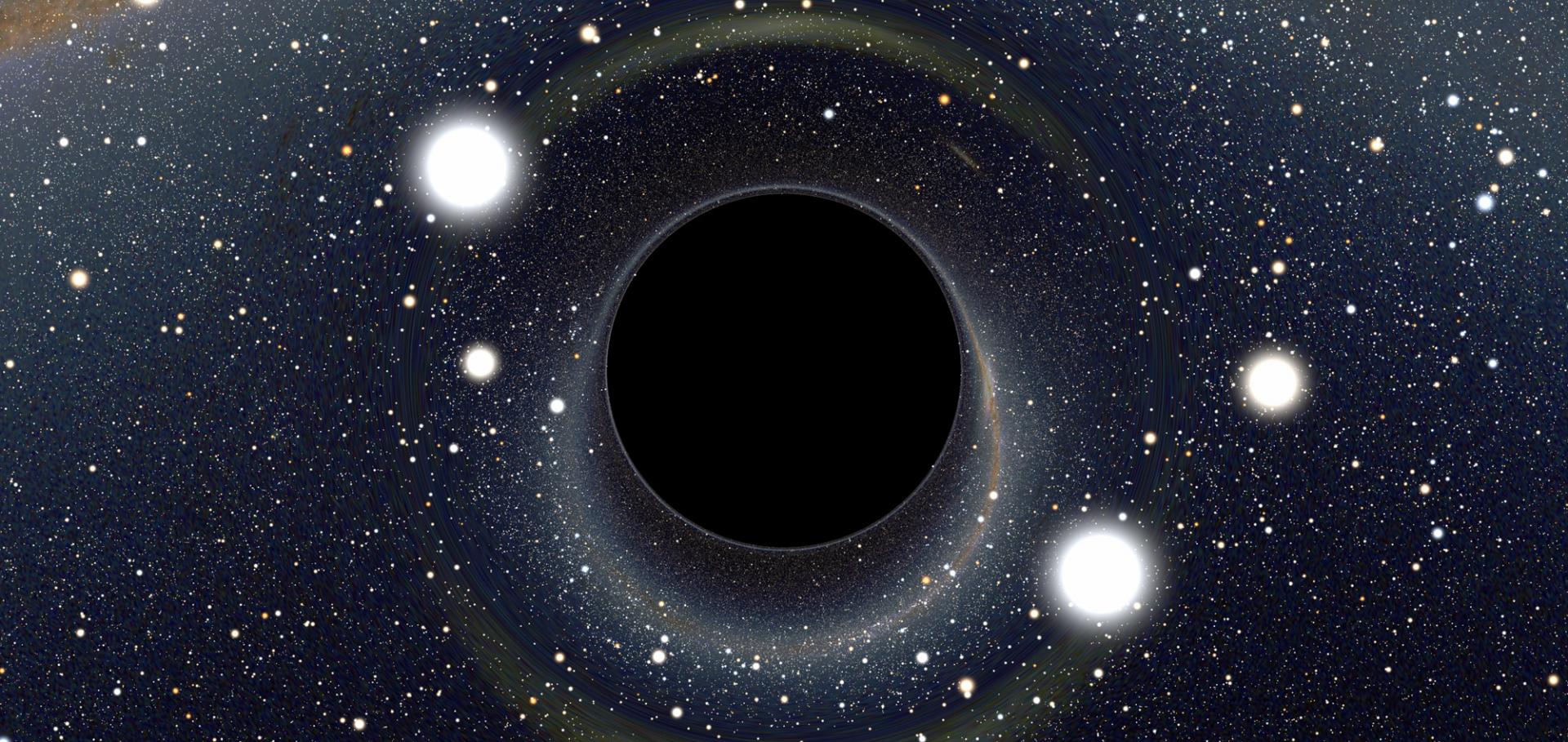
Black Hole

Lensing of space time around a black hole. At Oxford we study black holes observationally and theoretically on all size and time scales - it is some of our core work.

Credit: ALAIN RIAZUELO, IAP/UPMC/CNRS. CLICK HERE TO VIEW MORE IMAGES.

Prof. Dimitra Rigopoulou

Professor of Astrophysics

Research theme

  • Astronomy and astrophysics

Sub department

  • Astrophysics

Research groups

  • Galaxy formation and evolution
Dimitra.Rigopoulou@physics.ox.ac.uk
Telephone: 01865 (2)73296
Denys Wilkinson Building, room 75419514947
  • About
  • Research
  • Publications

What Powers Ultra-luminous IRAS Galaxies?

ArXiv astro-ph/9711255 (1997)

Authors:

R Genzel, D Lutz, E Sturm, E Egami, D Kunze, AFM Moorwood, D Rigopoulou, HWW Spoon, A Sternberg, LE Tacconi-Garman, L Tacconi, N Thatte

Abstract:

We present an ISO SWS and ISOPHOT-S, mid-infrared spectroscopic survey of 15 ultra-luminous IRAS galaxies. We combine the survey results with a detailed case study, based on near-IR and mm imaging spectroscopy, of one of the sample galaxies (UGC 5101). We compare the near- and mid-IR characteristics of these ultra-luminous galaxies to ISO and literature data of thirty starburst and active galactic nuclei (AGN), template galaxies. We find that 1) 70-80% of the ultra-luminous IRAS galaxies in our sample are predominantly powered by recently formed massive stars. 20-30% are powered by a central AGN. These conclusions are based on a new infrared 'diagnostic diagram' involving the ratio of high to low excitation mid-IR emission lines on the one hand, and on the strength of the 7.7um PAH feature on the other hand. 2) at least half of the sources probably have simultaneously an active nucleus and starburst activity in a 1-2 kpc diameter circum-nuclear disk/ring. 3) the mid-infrared emitting regions are highly obscured. After correction for these extinctions, we estimate that the star forming regions in ULIRGs have ages between 10^7 and 10^8 years, similar to but somewhat larger than those found in lower luminosity starburst galaxies. 4) in the sample we have studied there is no obvious trend for the AGN component to dominate in the most compact, and thus most advanced mergers. Instead, at any given time during the merger evolution, the time dependent compression of the circum-nuclear interstellar gas, the accretion rate onto the central black hole and the associated radiation efficiency may determine whether star formation or AGN activity dominates the luminosity of the system.
Details from ArXiV
More details from the publisher
More details

Diagnostics of dust obscured galactic nuclei with ISO spectroscopy

ASTROPHYS SPACE SC L 212 (1997) 341-344

Abstract:

Soon after the IRAS mission, the first ever mission in exploring the Infrared world from space, it was realised that there exists a great number of galaxy populations that are extremely luminous at infrared wavelengths. Yet, their optical output was significantly smaller when compared to their infrared one. The enormous amounts of dust present in these galaxies is of course the reason for the different appearence of these galaxies at different wavelengths. And although optical spectroscopy is generally a useful tool, it can not provide much inside on these galactic nuclei as their centers suffer high extinctions. However, infrared spectroscopy although difficult to be performed from the ground, is the ideal tool for probing the obscured nuclei of galaxies. The Infrared Space Observatory (ISO) provides the best opportunity to probe these obscured nuclei, and even more, promises to open up our view of the infrared world.
More details from the publisher
More details

Extragalactic spectroscopy with the infrared space observatory

REV MEX AST ASTR 6 (1997) 70-74

Authors:

R Genzel, D Lutz, E Egami, D Kunze, D Rigopoulou, E Sturm, AFM Moorwood, T DeGraauw, A Sternberg

Abstract:

The Infrared Space Observatory is opening the 2.5 to 200 mu m band for detailed studies of galaxies. Based an the first results on ionic emission lines obtained with the Short-Wavelength-Spectrometer me discuss the nature of ultra-luminous IR, galaxies.
More details

ISO observations of starburst and ultraluminous galaxies

REV MEX AST ASTR 6 (1997) 87-89

Authors:

D Rigopoulou, D Lutz, R Genzel, E Egami, D Kunze, E Sturm

Abstract:

We report first results on Infrared Space Observatory (ISO) spectroscopic observations of Starburst and Ultraluminous Galaxies. Observations of a wide range of ionic, atomic, and molecular infrared lines enable us to explore in detail the physical conditions in the circumnuclear regions of these galaxies, and to determine, as a first step, parameters such as gas densities and temperatures of ionizing stars. With the help of theoretical modeling this multi-line spectroscopic database is used to further probe the central emission mechanism, discriminate between stellar and non-thermal processes and finally constrain the current models of galactic nuclei.
More details

ISO spectroscopy of luminous galaxies

ESA SP PUBL 419 (1997) 143-148

Authors:

D Lutz, R Genzel, E Sturm, D Kunze, HWW Spoon, D Rigopoulou, M Thornley, T Alexander, AFM Moorwood, A Sternberg, T de Graauw

Abstract:

Spectroscopy with SWS and ISOPHOT-S has opened a new window for studies of the nuclei of external galaxies. We present selected results of observations of starburst galaxies and active galactic nuclei and discuss the mid-infrared extinction law. The flux ratio of high and low excitation fine structure lines and the strength of the 'PAH' emission features are mid-infrared spectroscopic tools that allow to distinguish between starburst and AGNs in heavily obscured galactic nuclei. We have verified these tools on template starburst and AGN galaxies and apply them to a sample of ultraluminous infrared galaxies, finding that most of them are predominantly powered by starburst activity.
More details

Pagination

  • First page First
  • Previous page Prev
  • …
  • Page 97
  • Page 98
  • Page 99
  • Page 100
  • Page 101
  • Current page 102
  • Page 103
  • Page 104
  • Page 105
  • Next page Next
  • Last page Last

Footer Menu

  • Contact us
  • Giving to the Dept of Physics
  • Work with us
  • Media

User account menu

  • Log in

Follow us

FIND US

Clarendon Laboratory,

Parks Road,

Oxford,

OX1 3PU

CONTACT US

Tel: +44(0)1865272200

University of Oxfrod logo Department Of Physics text logo
IOP Juno Champion logo Athena Swan Silver Award logo

© University of Oxford - Department of Physics

Cookies | Privacy policy | Accessibility statement

Built by: Versantus

  • Home
  • Research
  • Study
  • Engage
  • Our people
  • News & Comment
  • Events
  • Our facilities & services
  • About us
  • Giving to Physics
  • Current students
  • Staff intranet